An excavation can look ready to work at first light and be unsafe by midday. Seepage through a cut face, rising water in a trench or pressure beneath a slab can quickly change ground conditions, restrict access and put a critical programme under pressure. Effective groundwater control is not simply about removing water from a hole. It is about managing groundwater behaviour so excavation, construction and environmental obligations remain under control.
For civil, construction and mining projects, the difference is significant. A well-designed system protects formation levels, supports stable excavation conditions and gives site teams a predictable operating environment. A poorly matched system can increase pumping costs while failing to achieve the drawdown needed for safe, productive work.
Why groundwater control starts before excavation
Groundwater is rarely uniform across a site. Permeable sands can transmit water quickly, while clay lenses, weathered rock, fractured ground and variable fill can create unexpected seepage paths. Tidal influence, rainfall, nearby drainage, recharge from surrounding ground and adjacent construction activity can all affect inflows.
That is why the first question is not, “What pump do we need?” It is, “What is the water doing beneath this site?” The answer informs the system design, the installation sequence, discharge arrangements and the level of monitoring required.
A practical groundwater control plan considers anticipated groundwater levels, soil and rock conditions, excavation depth and footprint, likely inflow rates, nearby assets and the duration of works. It must also account for where extracted water will go. Water quality, sediment, hydrocarbons, salinity and possible contaminants can determine whether water can be reused, discharged, treated or transported off site.
In Western Australia and Queensland, local ground knowledge matters. Conditions can change considerably over short distances, especially where sites include variable alluvial material, coastal sands, reactive soils or fractured rock. Investigation data provides the starting point, but experienced site observation during installation and operation is equally valuable.
The right groundwater control method depends on the ground
There is no single dewatering method that suits every excavation. Selecting the wrong approach may lead to excessive drawdown time, repeated pump failures, unstable ground or unnecessary plant running costs. The preferred method should match ground permeability, required drawdown, excavation geometry and construction sequence.
Wellpoint systems for shallow, permeable ground
Wellpoint dewatering is commonly used where groundwater needs to be lowered across a broad, relatively shallow excavation. A series of closely spaced wellpoints is installed around or alongside the work area and connected to a header main and vacuum-assisted pump.
This method can be highly effective in sands and similar permeable materials, particularly for trenches, services works and basement excavations. Its performance relies on correct spacing, effective installation depth, sound connections and adequate vacuum. A single poorly installed point or air leak can reduce efficiency across part of the system.
Deep wells for greater drawdown
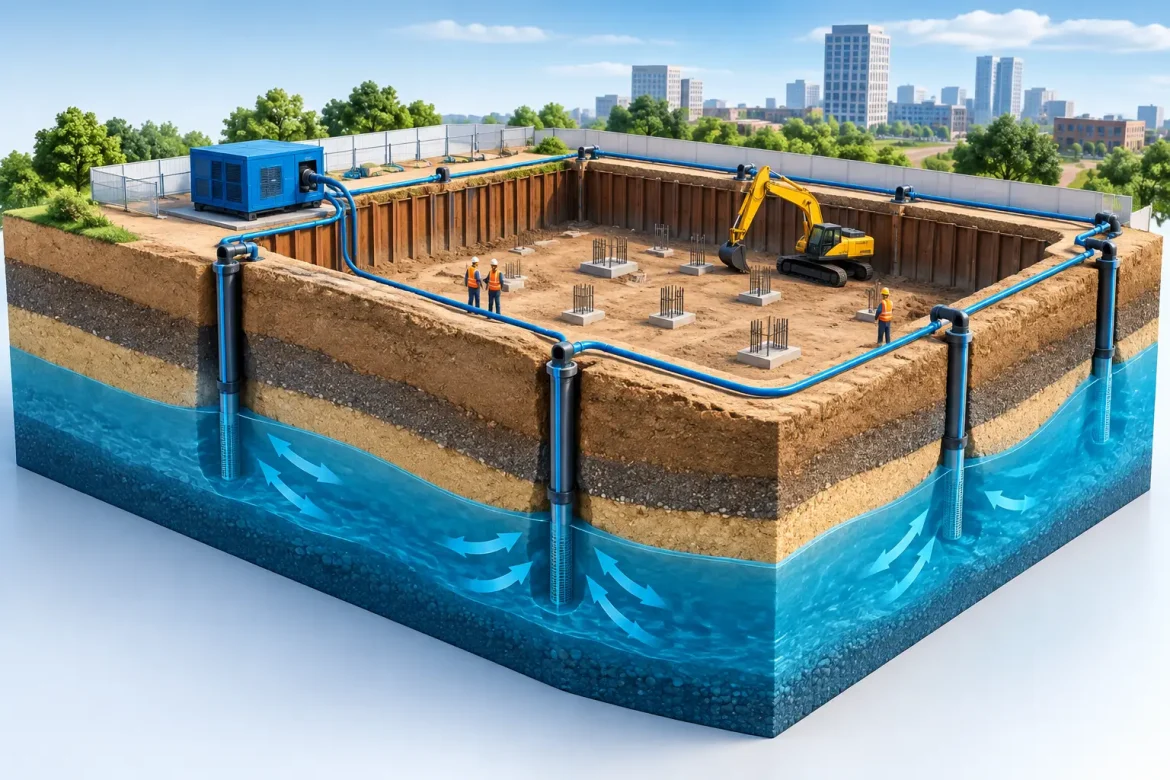
Deep well dewatering is generally suited to deeper excavations or conditions where groundwater must be lowered significantly below the working level. Submersible pumps are installed in screened wells, allowing groundwater to be drawn down before and during excavation.
Deep wells can provide substantial capacity, but they require careful design. Screen selection, filter pack, well development, pump sizing and discharge management all influence performance. They also need to be assessed for potential off-site effects, including ground settlement or changes to nearby groundwater-dependent infrastructure.
Sumps and open pumping for controlled inflows
Sump and open pumping is often appropriate where inflows are modest, temporary or concentrated at low points in an excavation. Water is directed through shallow drains or channels to a sump before being pumped out.
It is a straightforward method, but it is not a substitute for groundwater lowering where seepage is persistent or soil is prone to erosion. Pumping directly from an excavation can draw fines from surrounding ground, soften formation material and create local instability. In the right setting it is efficient. In the wrong setting it can turn a manageable seepage issue into a ground-control problem.
Design for construction, not just for drawdown
The best dewatering design is one that supports how the job will actually be built. It must allow for access routes, crane pads, shoring, service installation, concrete pours, plant movements and changes in excavation depth. A system that achieves target water levels but blocks a work front or requires constant reconfiguration will still affect programme and cost.
Timing is equally important. Installing dewatering after an excavation has already encountered water often means working reactively in unstable conditions. Where possible, systems should be installed, tested and brought to the required drawdown before excavation reaches critical levels. This allows the team to confirm response rates and identify any areas that need supplementary control.
A staged approach is often appropriate for large or complex works. Initial wells or wellpoints can lower groundwater ahead of excavation, with further sections commissioned as the works progress. This limits unnecessary operating costs while maintaining control where it is needed.
Monitoring turns a pumping system into a controlled process
Pumps running continuously do not necessarily mean groundwater is under control. Reliable management depends on measuring performance and responding early when conditions change.
Water levels should be checked against agreed targets using observation points or monitoring wells. Flow rates, pump runtime, discharge volumes and water quality can provide valuable indications of system condition. A falling flow rate may show successful drawdown, but it can also indicate a blocked screen, damaged pump or loss of suction. The site team needs context before making changes.
Rainfall and construction activity should also be considered. A significant weather event may increase surface water entering an excavation even when the groundwater system is performing as intended. Separating surface-water management from groundwater management helps avoid misdiagnosis and makes the response more effective.
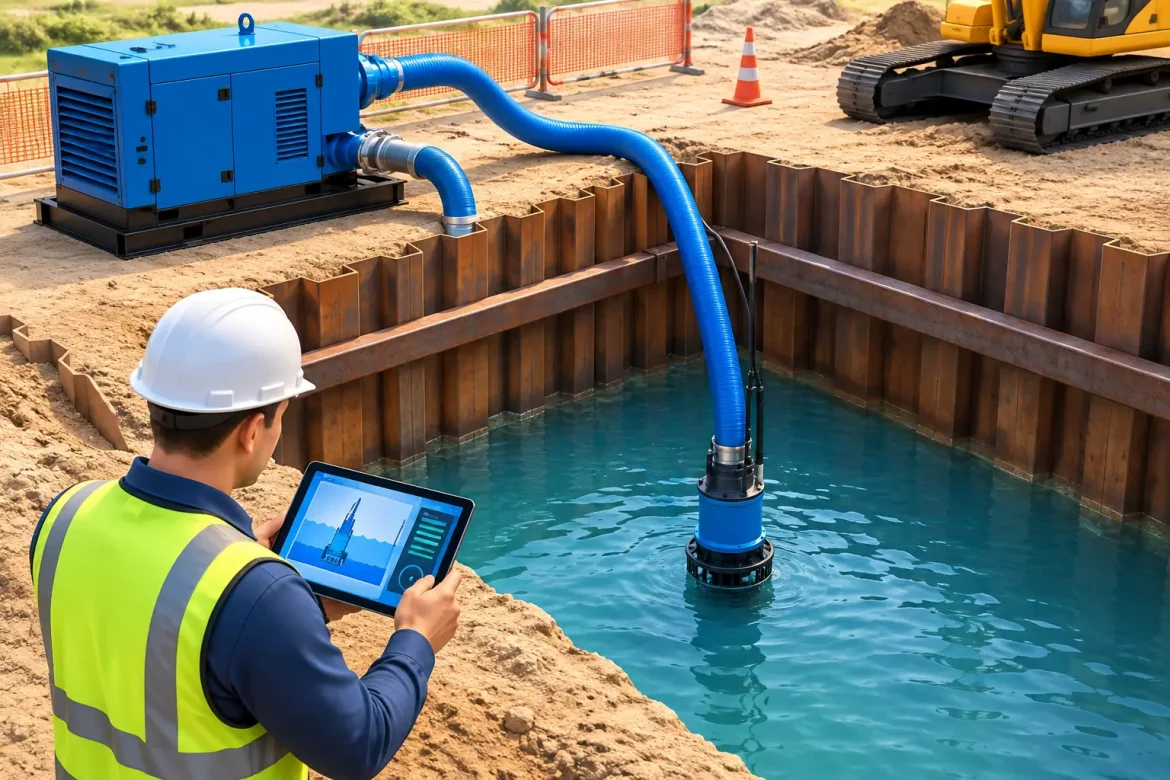
Remote alarms and telemetry can improve response times on critical sites, particularly where systems operate outside normal hours. However, technology does not replace inspection. Hoses, discharge lines, sediment controls, power supply, pump condition and excavation faces still require routine site checks by competent personnel.
Water treatment and discharge need early attention
Extracted groundwater is a project material that must be managed responsibly. Clear water is not automatically suitable for discharge, and turbid water is not always a treatment failure. The applicable requirements depend on water quality, discharge location, approvals and the receiving environment.
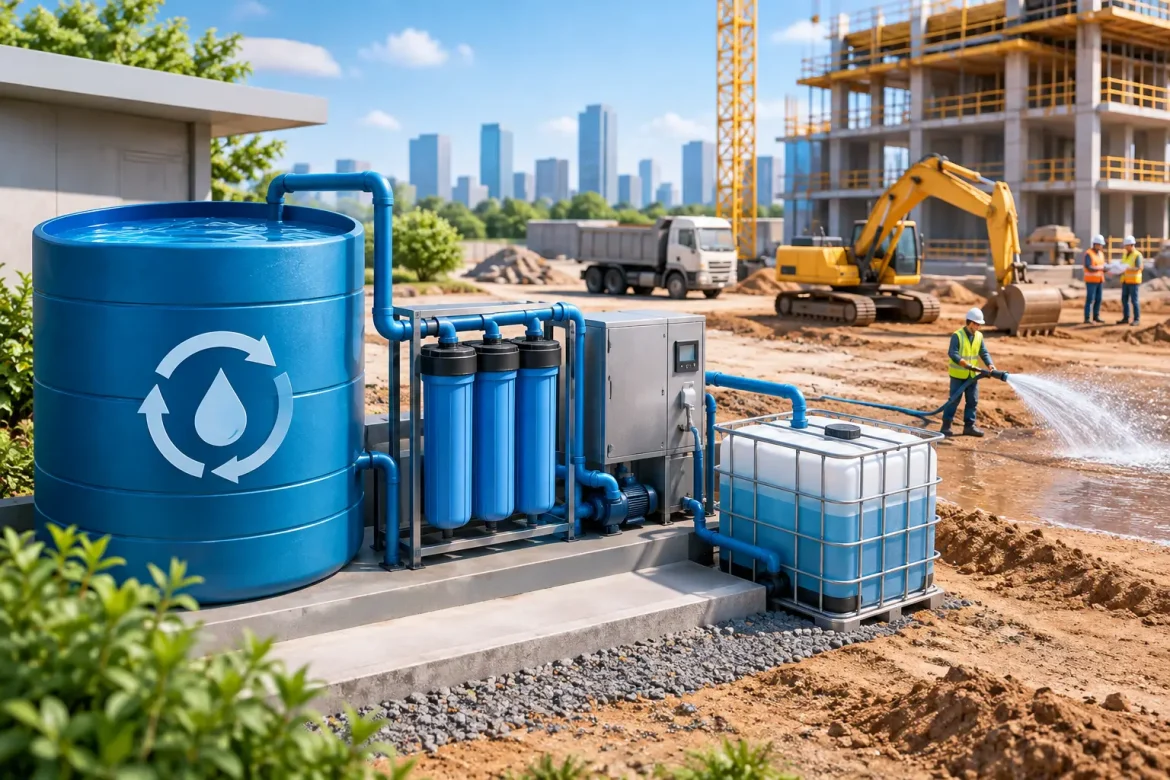
A treatment train may include settlement, sediment control, filtration, pH adjustment, oil-water separation or other measures based on the water characteristics. The objective is to meet the relevant discharge criteria without creating avoidable delays or relying on treatment plant that is oversized, undersized or poorly maintained.
Discharge routes must be practical as well as compliant. Long temporary lines may cross access paths, require protection from plant damage or need pumping capacity to overcome elevation changes. If discharge is constrained, storage, controlled release, reuse or off-site removal may need to be considered during planning rather than after pumping begins.
Controlling the risks beyond the excavation
Groundwater lowering can affect more than the work area. In some conditions, drawdown outside the excavation may contribute to settlement, alter groundwater conditions near neighbouring structures or affect existing services. The risk level depends on soil type, drawdown extent, proximity of assets and the sensitivity of the surrounding environment.
This is where design controls and verification matter. Monitoring points beyond the excavation, defined trigger levels and clear response actions give project teams a practical framework for managing change. If monitoring shows unexpected movement or drawdown, the system may need adjustment through reduced pumping, staged operation, recharge measures or revised well configuration.
Safety also remains central. Dewatering plant introduces electrical, mechanical and hose-management risks, while wet excavations create slip hazards, unstable edges and potentially difficult emergency access. Systems need disciplined installation, isolation procedures, inspection routines and housekeeping. Water control should reduce site risk, not introduce another unmanaged work front.
Groundwater control is a programme protection measure
Projects often assess dewatering as a temporary preliminaries cost. That view misses its wider value. When water is managed effectively, crews can access formation levels, complete works in sequence, protect completed structures and avoid repeated stoppages caused by wet ground.
The commercial benefit comes from reliability rather than simply selecting the lowest initial price. A system that is correctly sized, monitored and maintained can reduce rework, protect productivity and prevent expensive recovery measures later in the programme. Dewatering Solutions approaches groundwater management as an operational scope tied directly to site safety, compliance and delivery performance.
The most useful question for a project team is not whether groundwater will become an issue. On many sites, it will. The question is whether the control plan has enough site knowledge, capacity and discipline behind it to keep water from deciding the day’s work.