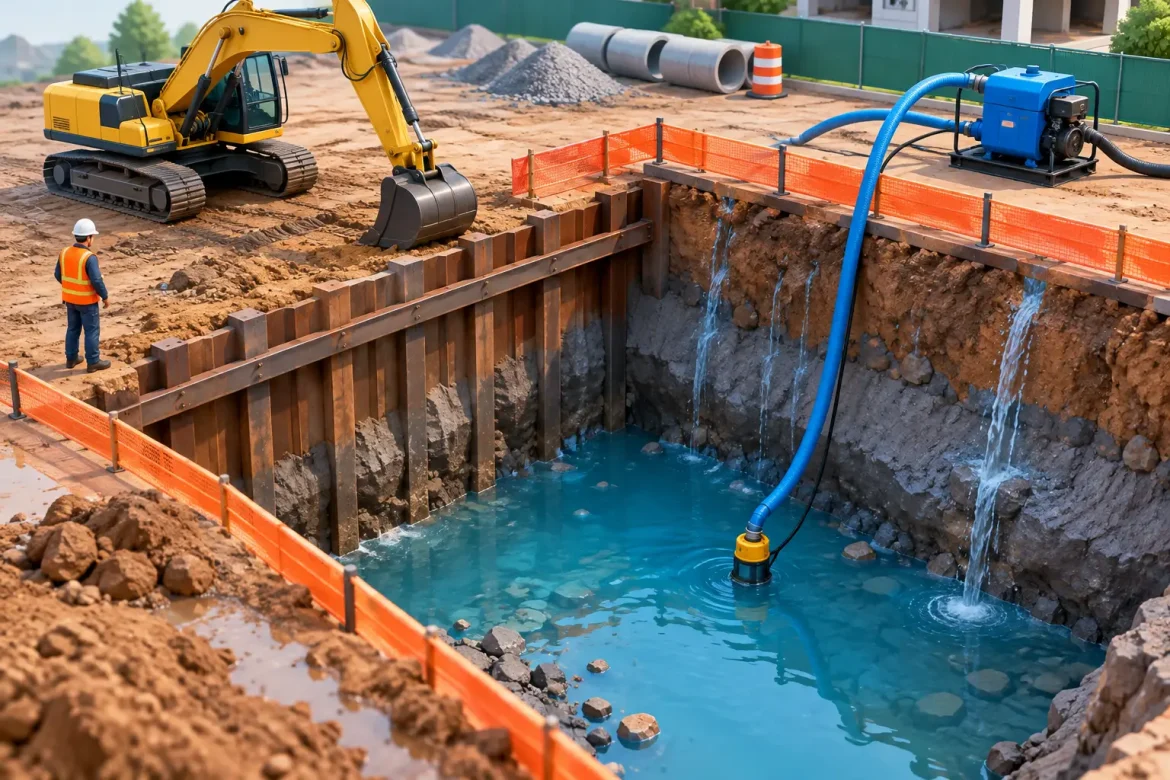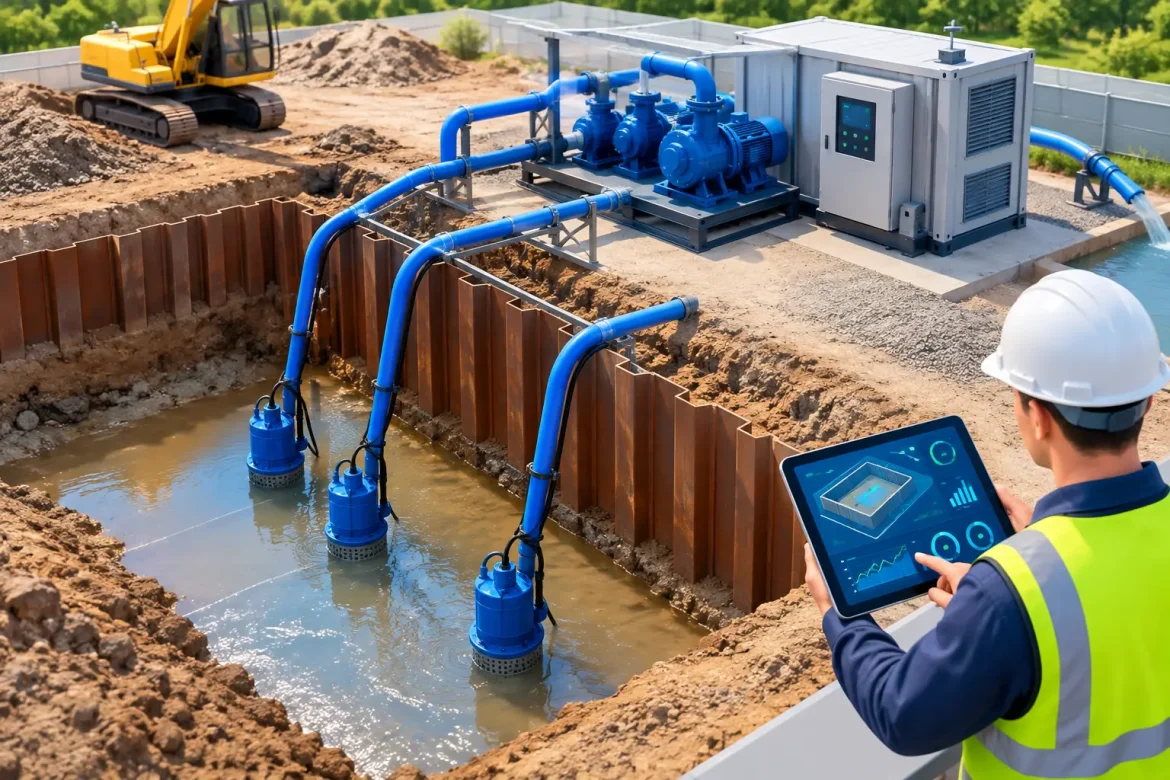
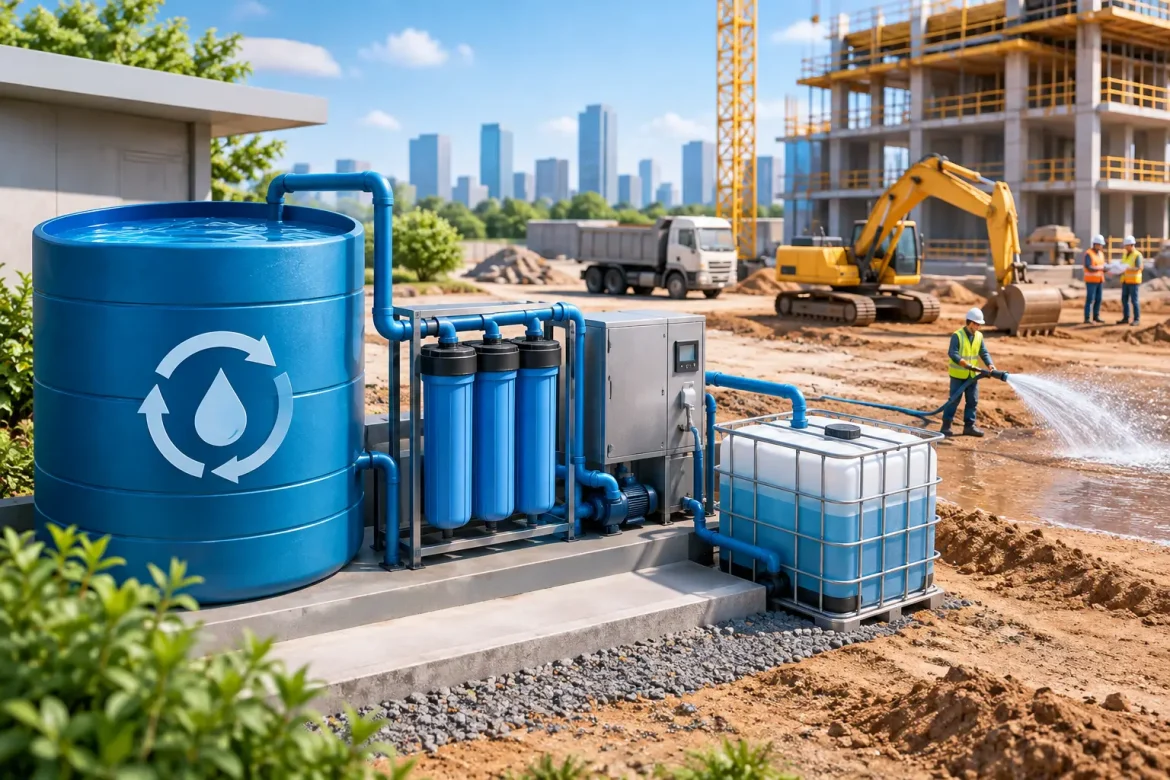
A dewatering system can move significant volumes of water over the life of an excavation, mine development or civil works package. Treating that water solely as a discharge stream can create avoidable costs, approval pressure and operational exposure. Planned water reuse gives project teams another option: use suitable site water where it delivers a practical benefit, while maintaining control of quality, safety and compliance.
For construction, mining and infrastructure sites, this is not a generic sustainability exercise. Water reuse must work within real site constraints: variable groundwater quality, changing flows, limited storage, dust suppression demand, tight programmes and environmental conditions attached to the project. The best outcome is usually a fit-for-purpose system designed around the water available and the work being undertaken.
Why water reuse matters on active sites
Groundwater inflows are often essential to manage before foundations, services, shafts, pits and structures can be built safely. Once extracted, that water may require treatment before it can be discharged, used onsite or transferred elsewhere. Reusing an appropriate portion can reduce reliance on potable or imported water and, in some cases, reduce the volume requiring discharge.
The operational value is clear where a project has a regular non-potable water demand. Haul road and stockpile dust suppression, wheel wash supply, washdown, compaction, drilling support and certain process applications may all be suitable uses. On remote sites or large linear infrastructure projects, reducing carted-water demand can also improve logistics and lower traffic movements.
However, reuse is not automatically the lowest-cost option. A temporary treatment plant, additional tanks, reticulation, monitoring and operational oversight all carry cost. The case becomes stronger when reuse demand is consistent, the water quality is manageable and the alternative supply or disposal route is expensive, constrained or exposed to interruption.
Start with the water, not the intended use
A reliable reuse strategy begins with characterising the source water. Project teams need more than a single sample taken during mobilisation. Groundwater chemistry can vary across an alignment, between aquifers, after rainfall events and as drawdown changes. Construction water may also pick up sediment, hydrocarbons, concrete residues or other contaminants before it reaches a sump or collection point.
Baseline sampling should identify the parameters that matter for the proposed application and any approvals. Common considerations include turbidity, total suspended solids, pH, electrical conductivity, salinity, hydrocarbons, metals, nutrients and microbiological indicators. The relevant suite depends on site history, geology and intended use.
For example, water acceptable for dust suppression may still be unsuitable where high salinity could affect nearby vegetation, unsealed pavement performance or receiving land. Water intended for washdown may need further controls to prevent sediment tracking and manage runoff. Water used near sensitive environments requires a more cautious assessment than water used within a contained mine operating area.
This is where local ground knowledge matters. In Western Australia and Queensland, groundwater conditions can change sharply over relatively short distances. A treatment approach that performs well in one formation should not be assumed suitable for another without testing and verification.
Define a fit-for-purpose quality target
The question is not whether water is simply “clean” or “dirty”. The question is whether it meets the quality requirements for a defined use without creating a new risk. Set the proposed end use first, establish the applicable water-quality criteria, then select the treatment and controls needed to meet that target.
This approach avoids over-treating water for low-risk uses and under-treating water where environmental or worker exposure is greater. It also provides a clear basis for monitoring, hold points and site instructions.
Build reuse into the dewatering design
Retrofitting reuse after dewatering has commenced can be done, but it is usually less efficient. Space for tanks may be limited, pipelines may cross active haul routes, and the selected pumps may not have the required duty for both extraction and distribution. Early planning gives the project more control over equipment selection and layout.
A typical arrangement separates water extraction, settlement or primary treatment, storage and reuse distribution. Depending on water quality, the treatment train may include settlement tanks, sediment controls, filtration, oil-water separation, pH adjustment, adsorption media or disinfection. Not every site needs every process. The objective is to use the simplest treatment arrangement that can consistently achieve the required standard.
Storage is often the difference between a workable system and one that creates daily disruption. Dewatering flows and reuse demand rarely match hour by hour. Adequate buffer storage allows the dewatering system to maintain excavation control while water is held for later use. It also provides capacity during wet weather, plant downtime or shifts with lower water demand.
Distribution needs the same attention as extraction. Consider pipe routing, isolation points, vehicle crossings, pressure requirements, backflow prevention, tanker loading arrangements and protection from damage. Clearly identify non-potable lines, outlets and tanks so workers do not mistake reused water for drinking water or connect it to unsuitable equipment.
Manage environmental and safety controls at the point of use
A reuse system is only as controlled as its final application. The project must manage where water is applied, at what rate and what happens to runoff. Dust suppression, for instance, can be effective at low application rates but may create ponding, erosion or sediment-laden runoff if applied excessively or during unsuitable weather.
Sites should also consider the potential for aerosols, worker contact and public access. Where water quality creates a health concern, restrict use to applications that minimise exposure, provide signage and ensure crews understand the controls. Standing water in tanks and low-flow lines may require management for microbial growth, particularly when water is stored for extended periods.
Environmental approvals, licences and project conditions must be checked before implementation. Reuse does not remove compliance obligations. It may introduce new requirements relating to sampling, application areas, volume records, land access or reporting. A documented plan that links source water quality, treatment, intended use, monitoring frequency and corrective actions will support better site control and clearer communication with regulators and principals.
Keep operations simple enough to sustain
The most effective systems are designed for site conditions, not ideal conditions. They account for power outages, changing excavation stages, plant maintenance, rainfall, restricted access and the fact that reuse demand can stop without warning. Automated level controls, alarms and bypass arrangements can help, but they do not replace regular inspection by experienced operators.
Monitoring should be proportionate to risk. High-volume or environmentally sensitive applications may need routine field checks supported by laboratory analysis. Lower-risk, contained uses may require less intensive testing, provided the source remains consistent and the quality target is clear. Record keeping matters because it demonstrates that the system is operating as intended and makes trends visible before they become a compliance issue.
A practical contingency plan should answer several questions: What happens if treated water fails specification? Where does water go if storage is full? Can dewatering continue while treatment equipment is serviced? Who has authority to stop reuse? These decisions should be made before the excavation is wet and the programme is under pressure.
Measure the project value, not just water volume
The litres reused are a useful figure, but they are not the whole story. Project teams should assess the avoided cost of imported water, reduced discharge handling, lower trucking movements, improved water availability and any benefit to environmental performance. They should also include treatment consumables, power, labour, testing, equipment hire and maintenance in the assessment.
Water reuse can be particularly valuable where it supports a critical activity that would otherwise wait on water deliveries. On the other hand, where the source water is highly variable or treatment requirements are extensive, controlled discharge may remain the more reliable option. The right choice depends on the site, programme, water quality and end use.
For project managers, the practical lesson is straightforward: assess reuse while the dewatering scope is being developed, not after water is already being pumped. A well-defined, fit-for-purpose system can turn a necessary groundwater management task into a dependable onsite resource without compromising excavation safety, environmental obligations or delivery certainty.