
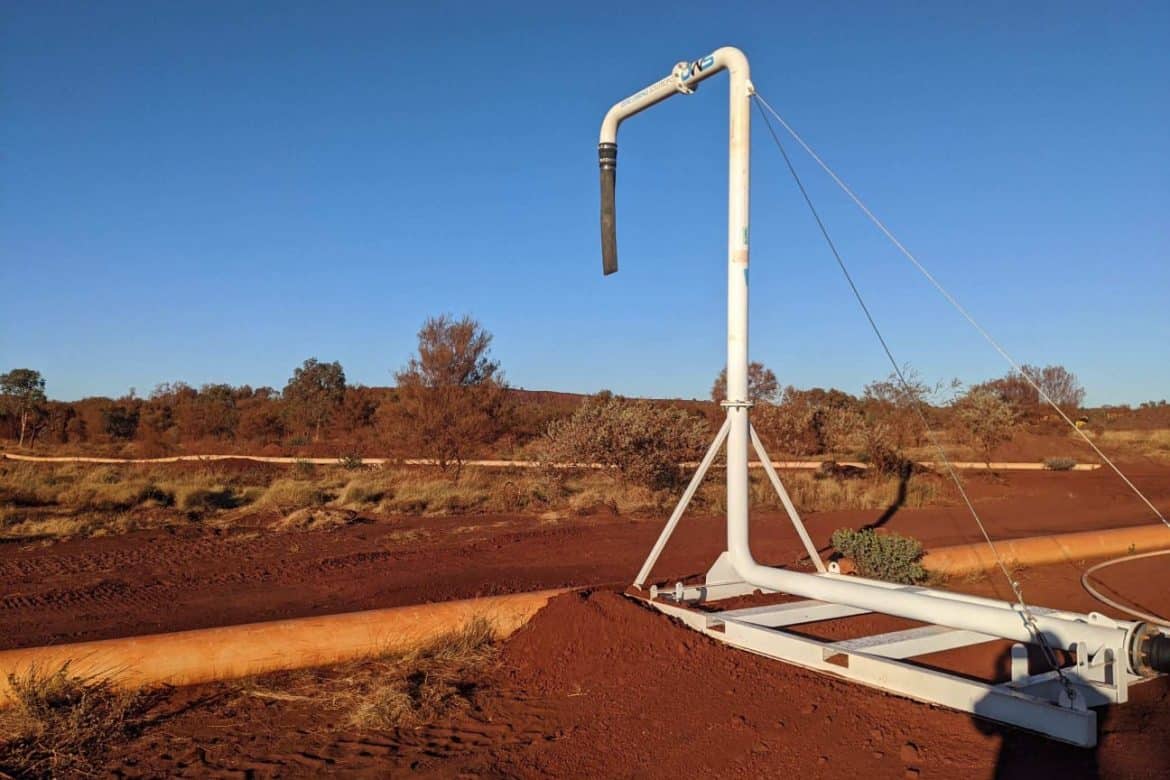
Groundwater rarely announces itself before it becomes a programme problem. It can seep through excavation faces, soften formation material, add pressure beneath a slab and turn otherwise manageable earthworks into a safety and production risk. So, how does a deep well work? In dewatering terms, it provides a controlled path for groundwater to be extracted from below the excavation, lowering the water table so construction can proceed in drier, more stable conditions.
A deep well system is not simply a collection of pumps. Its performance depends on the ground conditions, aquifer characteristics, excavation depth, discharge requirements and the way the system is designed, installed and monitored. When those elements are managed properly, deep wells can provide dependable groundwater control for major civil, mining and infrastructure works.
How does a deep well work in dewatering?
A deep well is a drilled bore fitted with a well screen, filter pack, casing and a submersible pump. The bore extends below the level of the proposed excavation, into the groundwater-bearing formation. Once pumping begins, water is drawn through the surrounding soil or rock, passes through the filter pack and screen, then is lifted to the surface through the rising main.
As water is removed, the groundwater level around the well falls. This local reduction is known as drawdown. With a correctly designed array of wells operating together, the drawdown zones overlap to lower groundwater across the excavation footprint, rather than at one isolated point.
The objective is usually to keep the groundwater level below the base of excavation by a nominated allowance. That reduces seepage into the work area and lowers pore water pressure in the ground. Lower pore pressure can improve effective stress and help maintain the stability of excavation faces, working platforms and the founding level for permanent works.
Deep wells are typically suited to deeper excavations and more permeable ground, including sands, gravels, fractured rock and transmissive aquifers. They are often selected where wellpoint systems would not achieve the required drawdown depth or where high flows make open pumping impractical.
The components that determine performance
Each part of a deep well system has a specific job. A drilled bore creates access to the aquifer. The screened interval is positioned across the water-bearing strata so water can enter while minimising the movement of fines. A correctly graded filter pack supports the surrounding formation and helps prevent sand entering the well.
The submersible pump is set at a depth that allows it to operate within the expected drawdown range without running dry. It transfers water through a discharge line to a nominated treatment, storage or release point. Depending on the site, this may involve sediment control, settlement tanks, filtration, pH adjustment, oil-water separation or other water treatment measures before discharge or reuse.
Electrical supply, control panels, flow meters and level monitoring are equally important. A well may be physically capable of pumping significant volumes, but it must be operated within the system design and environmental approvals. Automatic controls can respond to changing groundwater levels, while telemetry and regular inspections give the project team visibility over flows, pump status and performance trends.
From drilling to drawdown
Deep well dewatering starts well before the first pump is switched on. A site investigation provides the baseline information: groundwater levels, soil and rock profiles, permeability, anticipated inflows and potential connections to nearby water bodies, services or structures. On complex sites, pumping tests may be used to confirm how the aquifer responds and to refine the well layout.
The wells are then positioned around, or sometimes within, the excavation footprint. Spacing and depth are determined by the required drawdown, the permeability and thickness of the aquifer, the excavation geometry and the effect of boundaries such as cut-off walls or low-permeability geological layers. There is no universal spacing rule. A layout that works in free-draining sand may underperform in layered ground containing silt lenses or variable weathered rock.
After drilling, the well is constructed with the appropriate casing, screen and filter material, then developed. Well development removes drilling residue and mobilised fines from around the screen. It is a critical step because a poorly developed well can produce sand, lose capacity or cause unnecessary pump wear.
Once commissioned, the wells are pumped and groundwater levels are measured through purpose-installed monitoring points. The dewatering contractor compares actual drawdown against the target and adjusts pump duty, well operation or the system configuration where necessary. This operational feedback is what turns a theoretical design into reliable on-site water control.
Why lowering groundwater changes excavation conditions
Water in the ground affects more than the amount of visible water at the bottom of a hole. In granular soils, groundwater can flow towards an excavation and carry fine particles with it. This may cause loss of ground, local instability, piping or erosion beneath adjacent assets. In cohesive soils, elevated pore pressure can reduce shear strength and contribute to soft, difficult working conditions.
By lowering groundwater before excavation reaches its final depth, deep wells reduce the hydraulic forces acting on the excavation. This gives plant operators firmer access, helps maintain cleaner founding surfaces and reduces reliance on constant sump pumping. It can also assist with installation of drainage, utilities, pits, lift stations and below-ground structures where dry work conditions are needed for quality construction.
That said, more drawdown is not automatically better. Excessive groundwater lowering can create settlement risk where surrounding soils compress as water pressure reduces. It may also affect nearby bores, wetlands, waterways or existing structures. The target is controlled drawdown to meet construction needs while managing off-site and environmental impacts.
Deep wells versus other dewatering methods
Deep wells are one option within a broader groundwater management strategy. The right method depends on site conditions and the project objective.
Wellpoints are commonly effective for shallow to moderate drawdown in permeable soils, particularly where a closely spaced system can be installed around the excavation. They are often flexible and efficient, but their practical drawdown range may not suit deep basement excavations or high-yield aquifers.
Sump and open pumping collects water after it enters the excavation. It can be suitable for minor, localised inflows or temporary works, but it does not lower groundwater pressure outside the excavation. In sensitive granular ground, relying solely on open pumping can increase erosion and instability risks.
Deep wells offer greater drawdown depth and can manage substantial groundwater volumes, but they require drilling access, sound hydrogeological assessment, reliable power and disciplined operation. They are generally a higher-planning solution, selected when the consequences of inadequate groundwater control are significant.
Managing water after extraction
Extracted groundwater remains a project responsibility. Before a system is installed, the team needs a clear discharge pathway that aligns with approvals, site constraints and water quality. Water may be suitable for approved reuse, such as dust suppression, or it may require treatment before release.
Monitoring should consider both quantity and quality. Flow rates show whether the dewatering system is meeting its drawdown objective and whether discharge limits are being approached. Water quality testing can identify sediment, hydrocarbons, salinity, pH or other parameters that affect treatment and disposal requirements.
Physical controls matter as well. Discharge lines need to be secured, protected from plant traffic and routed to prevent uncontrolled erosion or flooding. Backup arrangements for power or pumps may be necessary where a failure could flood an excavation, delay a critical pour or compromise ground stability.
What reliable deep well dewatering looks like
A reliable system is one that matches actual site conditions, not just the tender drawing. It accounts for variable geology, changing excavation stages, wet-weather events, treatment needs and the consequences of downtime. It also has clear inspection, maintenance and response procedures, because pump performance can change as groundwater levels fall or sediment accumulates.
For project managers, the practical measure is straightforward: the excavation remains safe, accessible and on programme without creating avoidable environmental or cost exposure. Achieving that outcome requires competent drilling, fit-for-purpose equipment, monitoring and experienced site crews who can identify a developing issue before it becomes a delay.
On demanding projects across Western Australia and Queensland, deep well dewatering is most effective when it is treated as an integrated part of the construction methodology, not a temporary service brought in after water has already affected the works. Early planning gives the project team more control over risk, water handling and the conditions needed to build with confidence.