An excavation can be dry and still create a problem. Excessive drawdown may affect neighbouring assets, mobilise sediment, increase treatment requirements or place a project outside its environmental approvals. Low impact dewatering methods are designed to achieve the required water control while limiting those downstream consequences.
For construction, mining and civil works, the objective is not simply to remove water as quickly as possible. It is to maintain stable, workable ground conditions with a system that is safe to operate, proportionate to the site conditions and capable of meeting discharge obligations. That requires sound investigation, disciplined installation and monitoring that informs day-to-day decisions.
What low impact dewatering means on site
Low impact does not mean low capacity or a lighter approach to risk. It means selecting and operating a dewatering system that removes only the water required, from the right location, at a controlled rate and with suitable management of the discharge.
The best approach depends on ground conditions, excavation depth, groundwater level, recharge rate, water quality, nearby structures and the available discharge pathway. A shallow sandy excavation beside sensitive services has a different risk profile to a deep shaft in fractured ground or a mine site managing process-affected water.
A practical low-impact strategy considers three connected outcomes: excavation stability, off-site groundwater effects and water quality. If one is overlooked, short-term pumping performance can create longer-term cost, programme or compliance exposure.
Start with the groundwater model, not the pump
The most effective dewatering systems are planned before plant reaches site. Available geotechnical information should be reviewed alongside groundwater observations, bore logs, site levels, excavation staging and proposed discharge arrangements. Where the risks warrant it, field testing and monitoring bores provide a clearer picture of aquifer response and expected pumping rates.
This early work helps determine whether water is entering through a permeable sand layer, isolated seepage zones, fractured rock or surface runoff. It also identifies whether an aquifer may be connected to neighbouring bores, watercourses, wetlands or structures that could be sensitive to drawdown or settlement.
A groundwater model does not need to be unnecessarily complex to be useful. It must be good enough to support decisions on well spacing, pump duty, anticipated drawdown, treatment needs and contingency measures. On constrained sites, the cost of this planning is generally far less than the cost of redesigning a system after an excavation is wet, unstable or behind programme.
Match the method to the ground conditions
Wellpoint systems for shallow, permeable ground
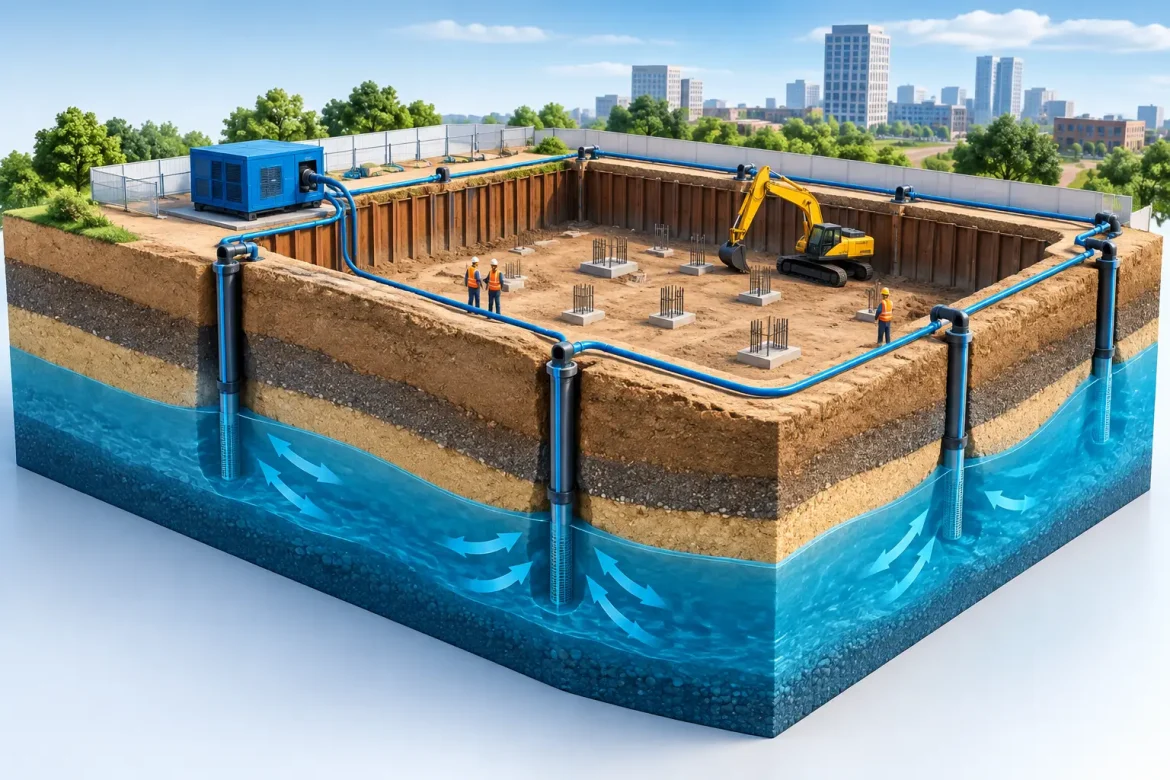
Wellpoint dewatering is often a suitable low-impact option for shallow to moderate excavations in sands and other permeable soils. A series of closely spaced wellpoints is connected to a header main and vacuum-assisted pump, creating controlled drawdown around the work area.
Because the system can be installed in stages and adjusted as excavation progresses, it offers good control where broad, relatively shallow trenches, pits or foundations need dry working conditions. Correct filter selection and installation are critical. Poorly designed wellpoints can draw fine material into the system, cause sand boils or produce turbid water that requires additional treatment.
Deep wells for deeper excavations
Deep well dewatering is generally better suited to larger or deeper excavations where groundwater must be lowered over a greater depth. Fewer, higher-capacity wells may be used to create the required drawdown while keeping pumping equipment outside the immediate excavation.
The trade-off is that deep wells can influence a larger area if not properly designed. Pumping rates, well depth and screen intervals need to reflect the target water-bearing zones rather than simply extracting from every available layer. Targeted abstraction reduces unnecessary drawdown and helps protect surrounding ground conditions.
Sumps and open pumping where conditions allow
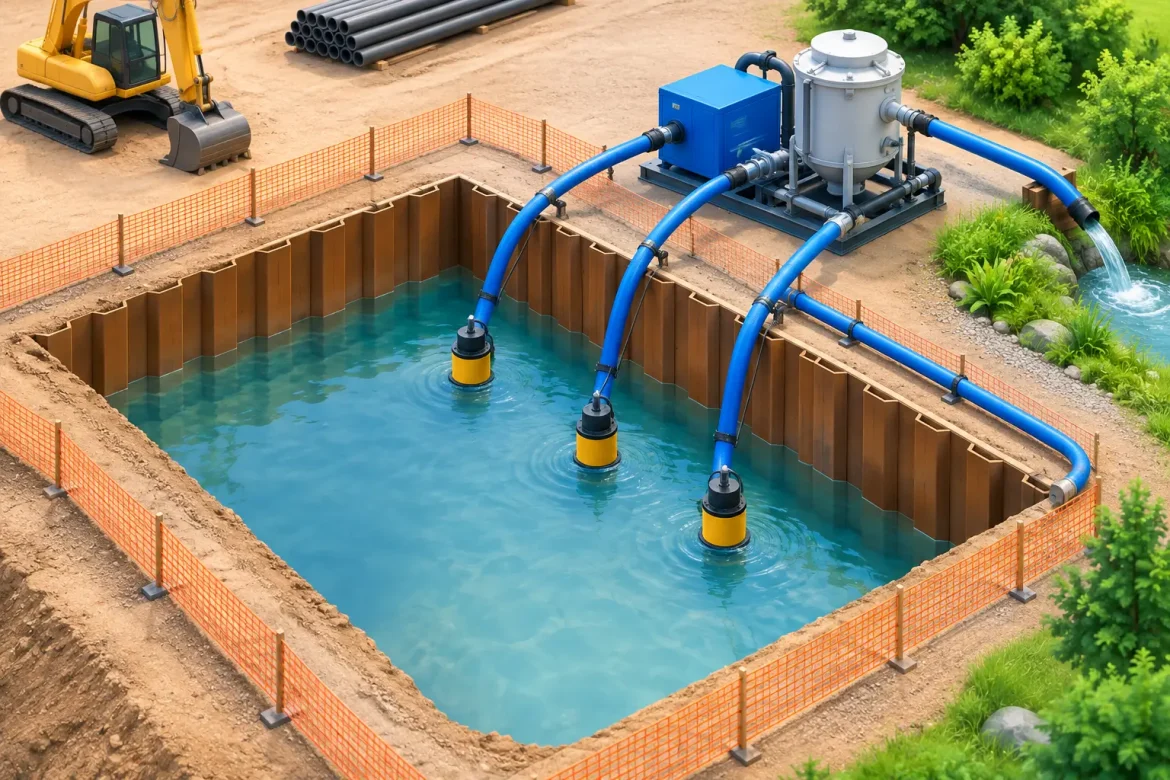
Sump pumping can be an efficient solution for localised seepage, surface water and low-volume inflows, particularly where the excavation is in competent material and groundwater drawdown is not required beyond the pit face. It is not automatically the lowest-impact choice, however.
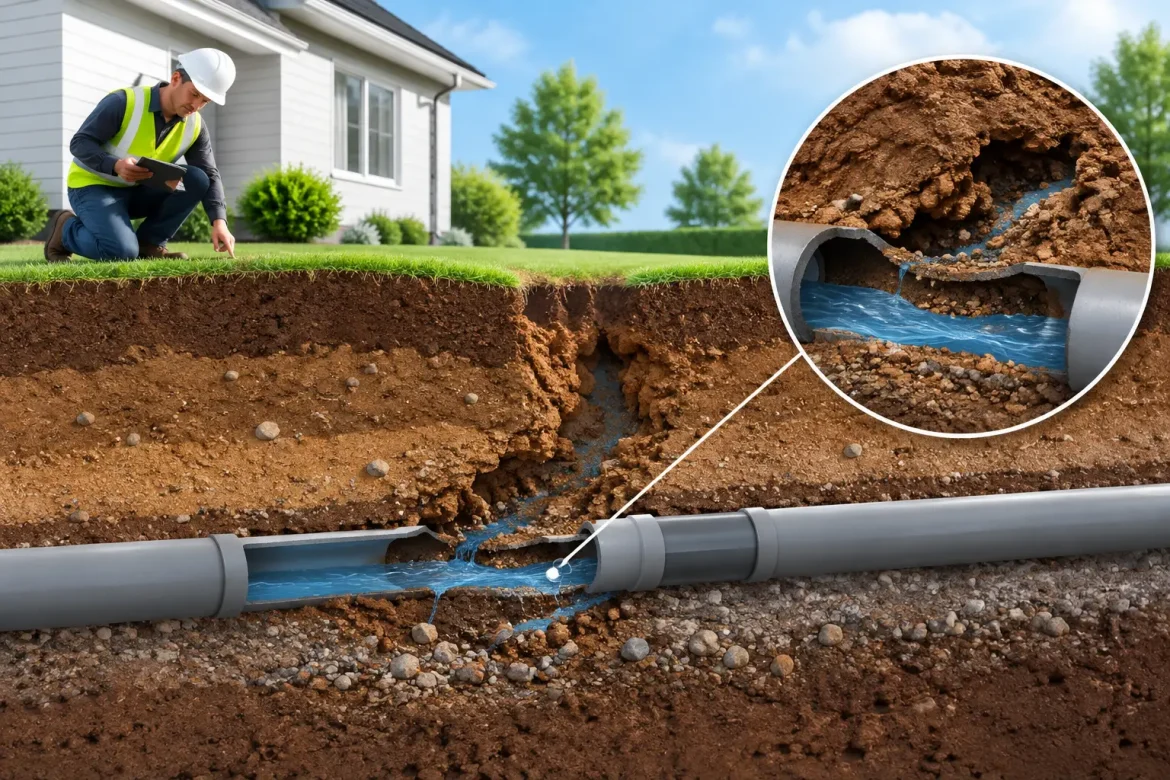
In loose granular soils, uncontrolled sump pumping can pull fines towards the excavation, weaken batters and create instability. Where open pumping is appropriate, properly graded drainage layers, filter media and protected sump locations help limit erosion and sediment mobilisation.
Cut-off and exclusion measures
Sometimes the lowest-impact litre of water is the litre that never reaches the excavation. Sheet piles, grout curtains, secant walls, liners and temporary diversion drains can reduce inflow before pumping begins. These measures may be used alone or combined with wells and sumps.
Exclusion methods can reduce pumping volumes and treatment demand, but they are not suitable for every site. Installation may be difficult in variable ground, and a cut-off that is incomplete or poorly keyed into low-permeability material can allow concentrated seepage beneath or around the barrier. The system must be designed as a whole, not as a collection of separate controls.
Manage discharge as carefully as extraction
Water quality can change during a project. Initial groundwater may be clear, while later stages introduce sediment, elevated iron, hydrocarbons, concrete washout risk or process-related contaminants. Treating every discharge the same way is inefficient, but assuming clean water can be discharged without verification is equally risky.
A fit-for-purpose treatment train may include settlement tanks, sediment basins, filtration, pH correction, oil-water separation or specialist treatment for identified contaminants. The right arrangement is determined by water testing, approval conditions and the nominated receiving environment.
Reuse can also reduce the project footprint where water quality and site controls permit. Treated water may be suitable for dust suppression, washdown or construction activities, subject to the relevant requirements. Reuse should be planned, monitored and documented, rather than treated as an informal outlet for excess water.
Discharge controls need practical attention at ground level. Hoses, pipes and outlets should be secured, protected from vehicle damage and positioned to prevent scour, flooding or sediment release. A well-designed treatment system still fails if a connection comes loose during a night shift or a discharge point is left unprotected before heavy rain.
Use monitoring to keep impacts within limits
Monitoring is what turns a dewatering design into controlled field performance. Water levels in extraction wells and monitoring bores show whether the required drawdown is being achieved and whether influence is extending beyond expectations. Flow meters provide evidence of actual extraction volumes, while regular water-quality checks confirm that treatment remains effective.
Monitoring frequency should reflect the project stage and risk. Early pumping, excavation below the water table, major rainfall events and changes to pump settings are all times when closer observation is justified. Data should be reviewed by people who can act on it, not simply filed for compliance purposes.
Trigger levels are particularly valuable on complex sites. If drawdown extends too far, turbidity rises or flows exceed predicted rates, the response should be clear: reduce pumping, adjust well operation, inspect for leakage, improve filtration or seek technical review. Defined actions prevent a minor variance becoming an expensive site issue.
Installation and operation determine the real outcome
Even a well-selected method can have a high impact if installation and operation are poor. Well screens must be suited to the formation, pipework must be leak-free, electrical systems must be protected, and plant must be accessible for inspection and maintenance. Temporary works need the same discipline as permanent infrastructure because workers rely on them every day.
For sites in Western Australia and Queensland, local ground conditions can vary sharply across short distances. Seasonal rainfall, reactive soils, coastal sands, fractured rock and variable groundwater quality all affect how a system performs. Field experience matters because operators need to recognise when actual site behaviour is departing from the design assumptions.
Dewatering Solutions approaches low-impact water control as an operational task, not a pump hire exercise. The focus is on selecting the right system, installing it safely and maintaining reliable performance as the site changes.
Build low impact into the programme
Low impact dewatering methods work best when they are included in the construction programme early. Allow time for investigation, bore installation, water testing, treatment setup and controlled commissioning before excavation reaches critical depth. This reduces the pressure to make rushed pumping decisions when water is already affecting production.
Procurement teams should also assess capability beyond pump size and quoted rates. Ask how the contractor will manage sediment, monitor drawdown, respond to changing inflows, maintain equipment and document environmental performance. These details are where programme certainty and risk control are won or lost.
A dewatering system should leave the project team with fewer problems than it solves. When groundwater control is planned around the ground, the excavation and the receiving environment, it protects safe access and productive work without creating avoidable impacts beyond the site boundary.