
A muddy excavation after heavy rain can stop work just as effectively as groundwater entering a trench. The question, what is a surface water treatment plant?, matters because water collected from rainfall, runoff, washdown areas and exposed ground cannot simply be pumped away. Before discharge, it may need to meet defined environmental, asset-owner and project requirements.
For construction, civil and mining projects, surface water treatment is not a background utility. It is a control measure that protects downstream waterways, keeps sediment out of drainage systems, reduces compliance exposure and helps crews maintain access to a safe, workable site.
What is a surface water treatment plant?
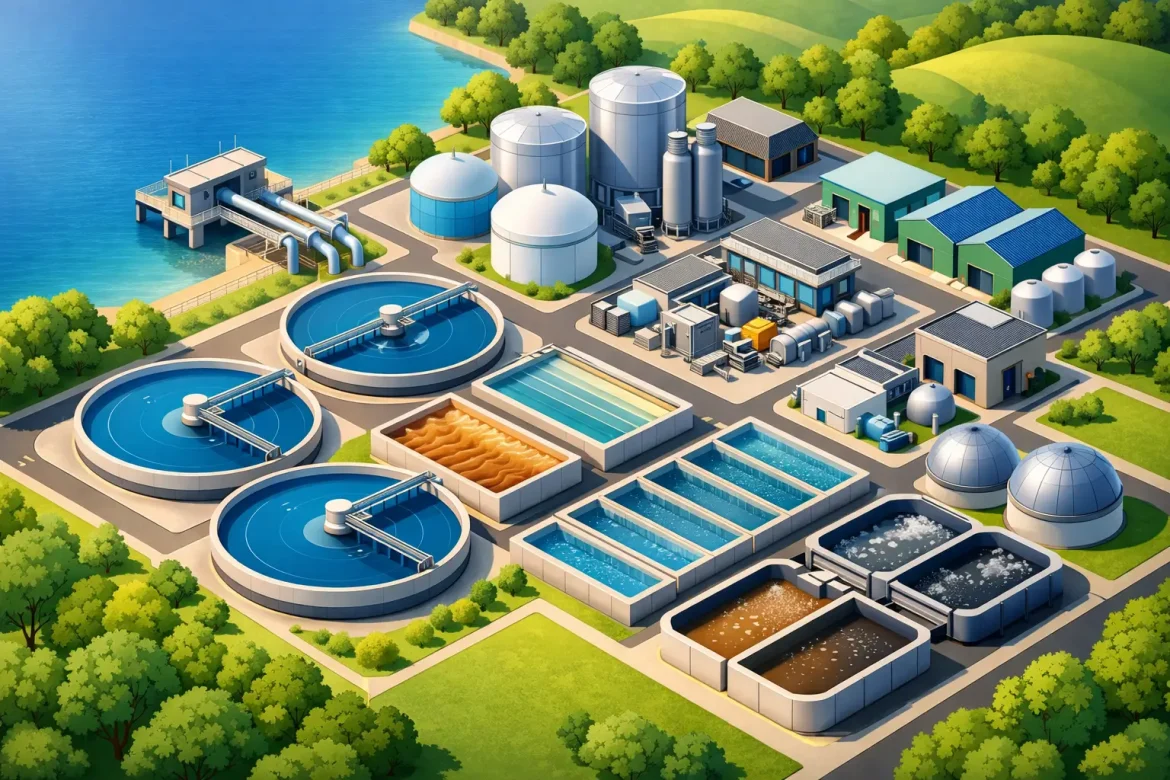
A surface water treatment plant is a system designed to collect, treat and manage water originating above ground. Depending on the project, this may include stormwater runoff, water in pits and excavations, sediment-laden water from disturbed soils, runoff from stockpiles, or water used in washdown activities.
The plant removes or reduces contaminants so the water can be discharged, reused on site or directed to an approved disposal point. In a municipal setting, a surface water treatment plant may process water from a river, reservoir or dam for public supply. On a project site, the objective is more commonly to manage variable water quality and discharge volumes safely and reliably while works continue.
Surface water is different from groundwater. Groundwater is held within soil and rock formations and is generally managed through wellpoints, deep wells or sumps to lower water levels around an excavation. Surface water moves across the ground or collects in low points after rainfall and site activities. The two can mix on active sites, which is why treatment planning needs to consider the full project water balance rather than treating each source in isolation.
Why surface water requires treatment
When rain falls on undisturbed land, vegetation and stable soils naturally slow flows and filter some sediment. Construction and mining activities change that behaviour. Cleared ground, haul roads, open trenches, stockpiles and temporary hardstands can rapidly carry soil, fine particles, hydrocarbons or other contaminants into drains and waterways.
Turbidity is often the most visible issue. High turbidity means water contains suspended particles that make it cloudy. Those particles can settle in drainage infrastructure, smother aquatic habitat and carry attached contaminants. However, clear-looking water is not automatically suitable for discharge. Depending on site history and activities, it may also contain elevated metals, hydrocarbons, nutrients, salts, acids or alkalis.
The treatment requirement depends on the receiving environment, the relevant approvals, the discharge point and the water-quality criteria set for the project. A short-duration pump-out from a clean rainwater sump is not the same as ongoing management of runoff from an industrial work area. Treating both scenarios with the same equipment and operating approach can create unnecessary cost in one case and unacceptable risk in the other.
How a surface water treatment plant works
A practical treatment plant is usually a treatment train rather than one piece of equipment. Each stage addresses a particular water-quality issue, and the sequence is selected after assessing likely flows, contaminant types and required discharge quality.
The first stage is normally collection and control. Diversion drains, bunds, silt fences, sumps, pumps and temporary pipework direct water away from active workfaces and into a controlled treatment area. Good collection design matters. A treatment unit cannot perform properly if runoff bypasses it, if inflows exceed its capacity, or if highly contaminated water is mixed unnecessarily with clean stormwater.
Settling and solids removal
Treatment commonly begins by slowing the water down. Sedimentation basins, settlement tanks or clarifiers allow heavier particles to settle before water progresses through the system. This is highly effective for larger soil particles, but fine clays and silts can remain suspended for long periods, particularly in the dispersive soils found across parts of Western Australia and Queensland.
Where fine material is present, a coagulant or flocculant may be dosed into the water. These chemicals help small particles bind together into larger flocs that can settle or be filtered out. Dosing must be controlled carefully. The correct product and dose depend on the water chemistry, turbidity, pH and flow rate. Jar testing and routine field monitoring are often needed to confirm the approach is working under actual site conditions.
Filtration and polishing
Following settlement, water may pass through bag filters, cartridge filters, media filters or specialised treatment units to capture remaining fine solids. The filtration stage is often the difference between broadly improved water and water that is suitable for a sensitive discharge point.
If hydrocarbons are a concern, the plant may include oil-water separation, absorbent media or activated carbon. Activated carbon can also assist with some dissolved organic contaminants. For water affected by acidity, alkalinity or dissolved metals, pH adjustment and chemical precipitation may be required before solids separation. These processes generate sludge, which must be contained, tested where required and disposed of through an appropriate pathway.
The final stage is verification. Operators may check pH, turbidity, electrical conductivity, flow and visual condition in the field, supported by laboratory analysis where approvals or risk levels require it. Monitoring is not paperwork after the fact. It tells the project team whether water can be discharged, whether treatment needs adjustment and whether changing site activities are affecting water quality.
Selecting the right plant for the site
The right surface water treatment plant is determined by site conditions, not simply by the pump flow rate. A system must handle both the expected water volume and the likely peak flow during significant rainfall. It must also allow for treatment time. Fast pumping through an undersized settlement tank may move water quickly, but it does not give particles time to settle.
Water characterisation is equally important. Samples taken before mobilisation can identify likely issues and help determine whether standard sediment treatment is sufficient or whether a more specialised plant is needed. Site conditions should then be reviewed as works progress. Water quality can change when excavation reaches different materials, when exposed areas expand, or when runoff contacts new work zones.
Available footprint is another practical constraint. Large basins can provide effective settlement, but they may not suit a restricted urban site or a linear infrastructure corridor. In those cases, modular tanks, compact clarification systems and mobile filtration units can provide a more controlled solution. They may require more active management, so the trade-off is between footprint, treatment capacity, operating effort and cost.
Power supply, access for sludge removal, wet-weather response and plant redundancy should also be considered before the first major rainfall event. A treatment system that operates well in dry conditions but cannot be accessed, monitored or maintained during a storm is not a dependable site control.
Operational controls that protect programme and compliance
Surface water treatment performs best when it is integrated with erosion and sediment controls. Keeping clean water separate from dirty water reduces the treatment load and can significantly lower operating costs. Upstream controls such as staged clearing, stabilised access points, covered stockpiles and diversion drains are often as valuable as the treatment plant itself.
Plant operation also requires disciplined inspection. Pumps, hoses, dosing systems, filters and containment structures need checks before forecast rainfall and throughout dewatering activities. Sediment storage has to be monitored so capacity is not lost when it is needed most. Any change in water appearance, odour, pH or turbidity should trigger investigation rather than an assumption that the existing system will manage it.
For principal contractors and project managers, clear records provide confidence that controls are being actively managed. Flow volumes, treatment settings, field results, maintenance actions and discharge events create an operational picture that supports environmental reporting and helps resolve issues early.
Surface water treatment as part of project water management
A surface water treatment plant is most effective when designed alongside dewatering, drainage and excavation planning. For example, a pit may receive both rainfall runoff and groundwater inflow. If these streams have different characteristics, separating them can reduce treatment complexity and avoid overloading the plant during wet weather.
This is where experienced, site-based water management makes a difference. Dewatering Solutions assesses how water moves through a work area, what it may contact and how treatment can be delivered without creating bottlenecks for excavation, haulage or follow-on trades. The goal is controlled water, a safe work environment and a discharge approach that stands up to scrutiny.
A well-chosen surface water treatment plant does more than clean water at the end of a pipe. It gives the project team a practical way to keep work moving when weather, ground conditions and environmental obligations all demand attention.