Bridge pier groundwater control is not a temporary pumping task to be addressed once excavation starts. It is a foundation risk that can affect programme, pile integrity, worker safety, concrete quality and environmental compliance. On bridge projects, groundwater often sits alongside variable alluvial soils, tidal influences, river levels and restricted working areas. A system that performs on a dry inland excavation may be unsuitable at a pier location.
The right approach begins with understanding how water will behave before the first excavation is opened. That means designing a control method around the ground conditions, the foundation methodology and the receiving environment, then operating it with enough capacity and monitoring to respond when site conditions change.
Why groundwater changes bridge pier construction
Bridge piers are commonly founded in or near waterways, floodplains and low-lying corridors where saturated sand, silt, gravel and soft clay can occur within short distances of each other. Excavation below the water table reduces effective stress in the soil. If water is not controlled properly, the formation can soften, running sand can enter the excavation, and the sides can become unstable.
For bored piles, uncontrolled water can also compromise the work at the base of the bore. Sediment, loose material or inflowing groundwater can affect cleanliness before concrete placement. For pile caps and spread footings, seepage can undermine the prepared founding surface or make it difficult to place reinforcement and concrete to specification.
The issue is not simply whether water is visible in the excavation. A dry-looking base may still be losing fines through seepage paths, while high pumping rates may draw down groundwater beyond the work area and cause settlement in sensitive adjacent ground. Bridge abutments, existing services, rail corridors and nearby structures all need consideration.
Start with the ground model, not the pump selection
A dependable dewatering design is built from site investigation data and a realistic construction sequence. Borehole logs, groundwater monitoring, permeability testing and water-quality results provide the starting point, but field conditions must be verified as works progress. Seasonal rainfall, river stage, tides and upstream releases can all change the water pressures acting on a pier excavation.
The design team needs to establish the target drawdown, expected inflow rates and the consequences of lowering groundwater. It also needs to identify whether the excavation will be protected by a cofferdam, sheet piles, secant piles, drilled shafts or an open cut. Each containment method changes the likely inflow pathways.
This early assessment should address four practical questions: where the water is coming from, how quickly it can enter, where it can be discharged or treated, and what must be monitored to demonstrate control. Leaving any one of these questions unresolved creates avoidable pressure once critical path works begin.
Selecting the right control method
There is no single bridge pier groundwater control system that suits every site. The choice depends on soil permeability, required drawdown, excavation depth, available footprint and environmental constraints.
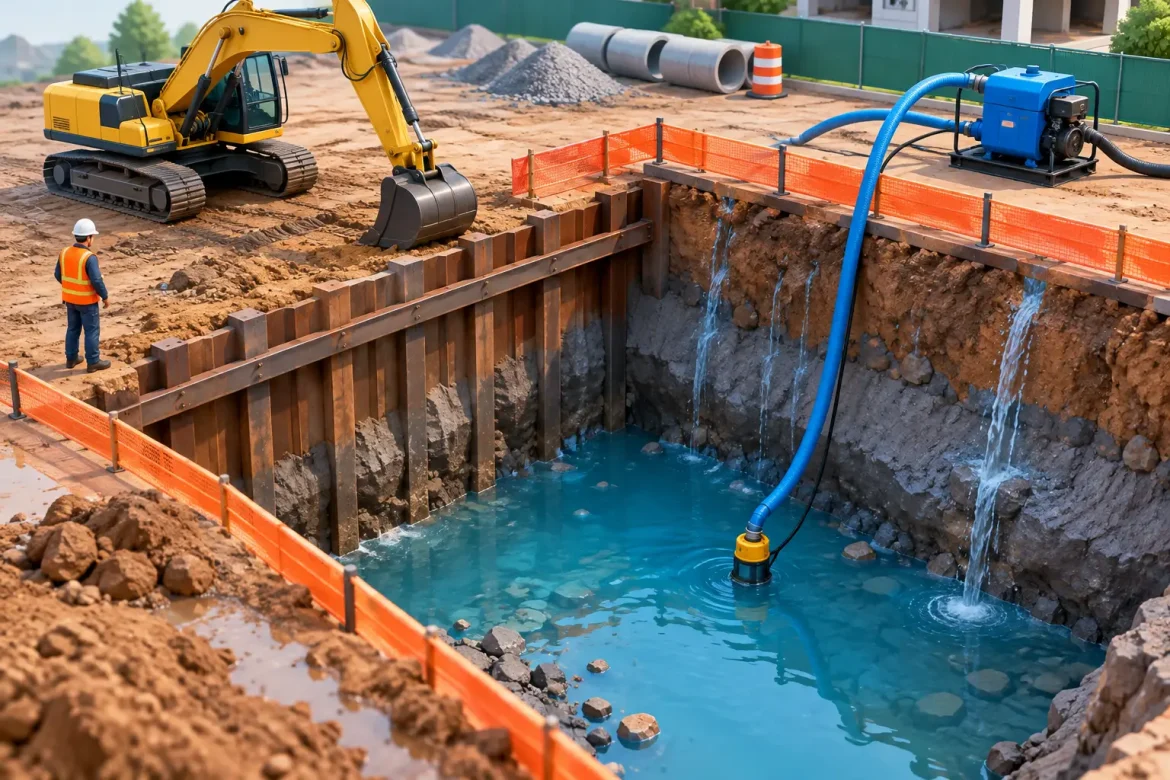
Wellpoint systems are often effective in permeable sands and gravels where a relatively shallow, controlled drawdown is required. Multiple wellpoints installed around the excavation can lower groundwater evenly and reduce seepage pressure before bulk excavation. Staged wellpoint arrangements may be required as the dig progresses deeper.
Deep wells are generally suited to deeper excavations and higher-volume groundwater conditions. They can provide significant drawdown while keeping pumps outside the main working area. Their design requires careful spacing, pump sizing and observation points, particularly where adjacent assets could be affected by groundwater movement.
Sump and open pumping can be appropriate where inflows are modest and the excavation base is stable. It is often used as a supplementary measure inside a contained excavation. It should not be treated as a substitute for proper drawdown in fine, unstable or highly permeable materials. Drawing water through an exposed formation can cause erosion, loss of fines and local instability.
In some locations, exclusion is as important as extraction. Cofferdams, sheet piling, grout curtains and sealed cut-off walls can reduce incoming flow, allowing a smaller pumping system to manage residual seepage. This can reduce treatment volumes and help limit off-site drawdown. The trade-off is that these systems require accurate installation and verification. A small defect or unsealed toe can become the dominant inflow path.
Protect the excavation without creating a new problem
High pumping capacity is not automatically good groundwater control. Excessive drawdown can create settlement risk, alter water levels in nearby wetlands or affect existing foundations. Conversely, an undersized system may appear adequate during dry weather, then fail when rainfall or river levels increase.
Control needs to be measured, not assumed. Standpipe piezometers, vibrating-wire piezometers, flow meters and water-level checks provide evidence that groundwater is being lowered to the required level without exceeding agreed limits. Monitoring points should be installed inside and outside the work zone so the team can distinguish local excavation performance from wider groundwater response.
Trigger levels are particularly useful. If a piezometer level rises above the construction limit, the response might include activating standby pumps, checking headers and suction lines, clearing blocked filters or reducing excavation activity. If external drawdown approaches an agreed threshold, pumping may need to be adjusted while the cause is assessed. These decisions are faster and more defensible when the response plan has been agreed before work begins.
Water quality and discharge require equal attention
Water from a bridge pier excavation can carry sediment, hydrocarbons, elevated turbidity, naturally occurring metals or saline influence. Discharging it directly to a waterway, drain or surrounding land without assessment can create environmental exposure and delay the project.
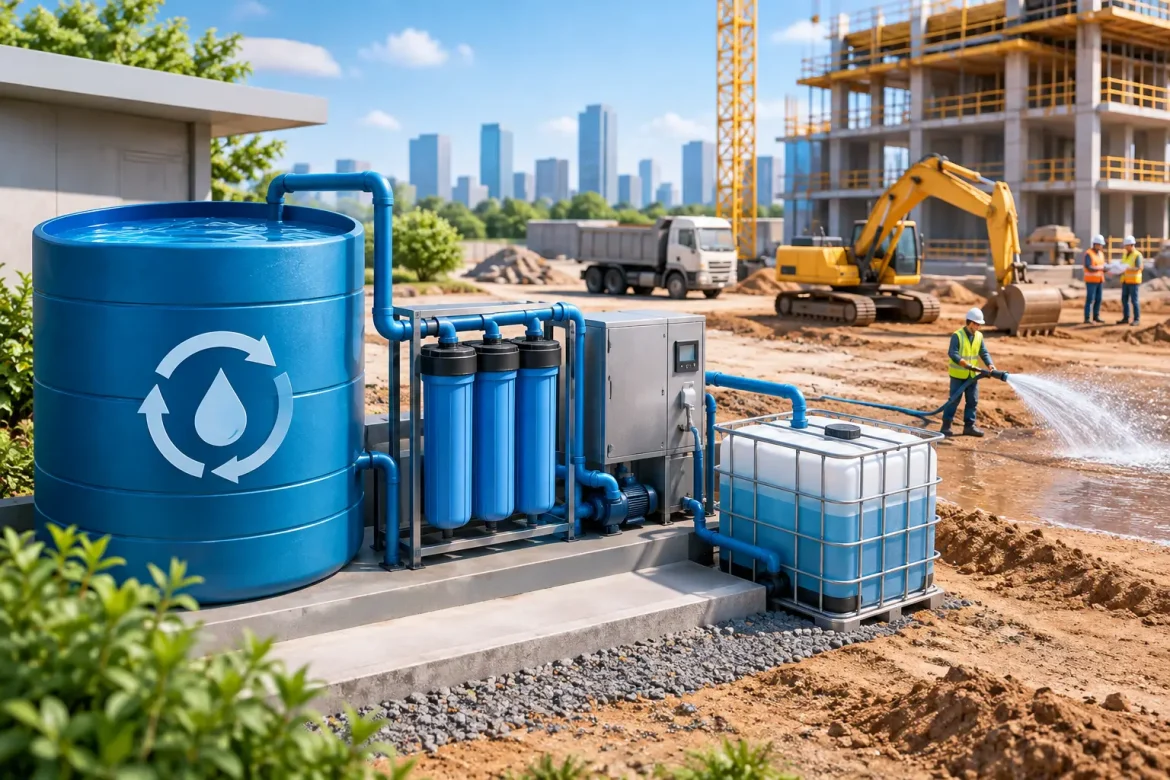
A practical treatment train may include settlement tanks, sediment basins, filtration, oil-water separation, pH adjustment or specialist treatment where water quality demands it. The arrangement should match the actual water chemistry and discharge conditions rather than relying on a standard tank setup. Turbid water is not the only concern, and clear water is not automatically suitable for release.
Discharge approvals, sampling requirements and hold points should be built into the construction programme. On constrained bridge sites, the treatment area and discharge route also need to be planned around access, flood risk and safe hose or pipe runs. Temporary pipework must be protected from plant movements and inspected regularly. A failed line can quickly turn an effective dewatering operation into a sediment-control incident.
Integrate water control with the construction sequence
The most effective systems are operated as part of the civil works, not alongside them. Dewatering needs to be commissioned early enough to achieve drawdown before excavation reaches the formation level. The system must then remain reliable through pile construction, cap excavation, reinforcement placement and concrete pours.
This requires clear coordination between the dewatering crew, superintendent, geotechnical engineer and foundation contractor. Excavation should not advance beyond the system’s proven capacity. Similarly, pumps should not be shut down immediately after a pour simply because the concrete is in place. Hydrostatic pressure and uplift risk may remain until the structure has gained sufficient strength or backfilling has been completed.
Standby capacity matters on critical bridge works. Duty and standby pumps, backup power, remote alarms and accessible spare parts all reduce the chance that a minor equipment fault becomes a flooded excavation or lost shift. Dewatering Solutions applies this field-first approach by matching equipment and operating plans to the conditions that crews actually encounter on site.
Common failures that put pier works at risk
Many groundwater problems originate in planning assumptions rather than equipment failure. A system may be designed from limited bore data, with no allowance for a permeable lens or a change in river level. In other cases, the pumps are adequate but the headers leak, filters clog, discharge treatment is undersized or monitoring is too infrequent to identify deterioration early.
Another common issue is relying on open pumping in ground that cannot tolerate it. If the excavation base starts to boil, soften or carry fines into the sump, increasing pump output may worsen the problem. The correct response may be to reduce hydraulic gradients through wellpoints, deep wells or a cut-off solution, then stabilise and rework the affected formation under engineering direction.
Plan for changing conditions, not average conditions
Bridge projects rarely proceed under average conditions. Rainfall events, flood warnings, tidal cycles, plant breakdowns and changes to excavation depth all test the water-control plan. The system should therefore be assessed against credible peak conditions, with clear escalation procedures and personnel who understand the ground response as well as the equipment.
For project teams, the practical test is straightforward: can the excavation remain stable, accessible and compliant while the construction sequence changes? If the answer is uncertain, groundwater control needs attention before it reaches the critical path. Early specialist input gives the project more options, lower treatment risk and a far better chance of keeping foundation works moving safely.