A dry excavation is not simply easier to work in. It is more stable, safer to access and more likely to stay on programme. The top excavation water risks often develop before water is visibly pooling at the base of a cut: rising pore pressure, softened formation, uncontrolled runoff or a discharge pathway that has not been properly planned.
For project managers and site teams, the cost is rarely limited to pumping water away. Water can compromise batter stability, undermine temporary works, delay concrete pours, restrict plant movements and create an environmental compliance issue in the same shift. Effective control starts with understanding how water will behave in the ground, across the site and after it leaves the dewatering system.
Why excavation water needs a site-specific plan
No two dewatering scopes are identical. Ground conditions can change significantly across a single work area, particularly where fill, sand lenses, fractured rock, tidal influences or perched water are present. A system that performs well during early bulk earthworks may become inadequate once an excavation reaches a more permeable layer or encounters a recharge source.
The target is not always to remove every litre of water. In many excavations, the objective is to lower groundwater to a level that keeps the formation stable and provides safe, workable conditions. Excessive drawdown can create its own problems, including settlement beyond the excavation, impacts on neighbouring assets and unnecessary pumping costs.
A practical water control plan identifies the expected inflows, the required drawdown, pumping capacity, discharge arrangements, standby requirements and monitoring points before critical works begin. It should also make clear who has authority to respond when conditions change.
Top excavation water risks to control early
Groundwater pressure and wall instability
Water within soil creates pore pressure. When that pressure increases, the effective strength of the ground reduces. In an excavation, this can lead to sloughing batters, movement behind retaining systems, loss of bearing capacity and instability around trench edges.
The risk is especially acute in loose sands, silts and variable fill, where groundwater can move quickly towards an open excavation. A dry-looking wall is not necessarily a stable wall. Seepage emerging from a batter, localised wet patches, sand boils or cracking near the crest can indicate that groundwater is affecting ground performance.
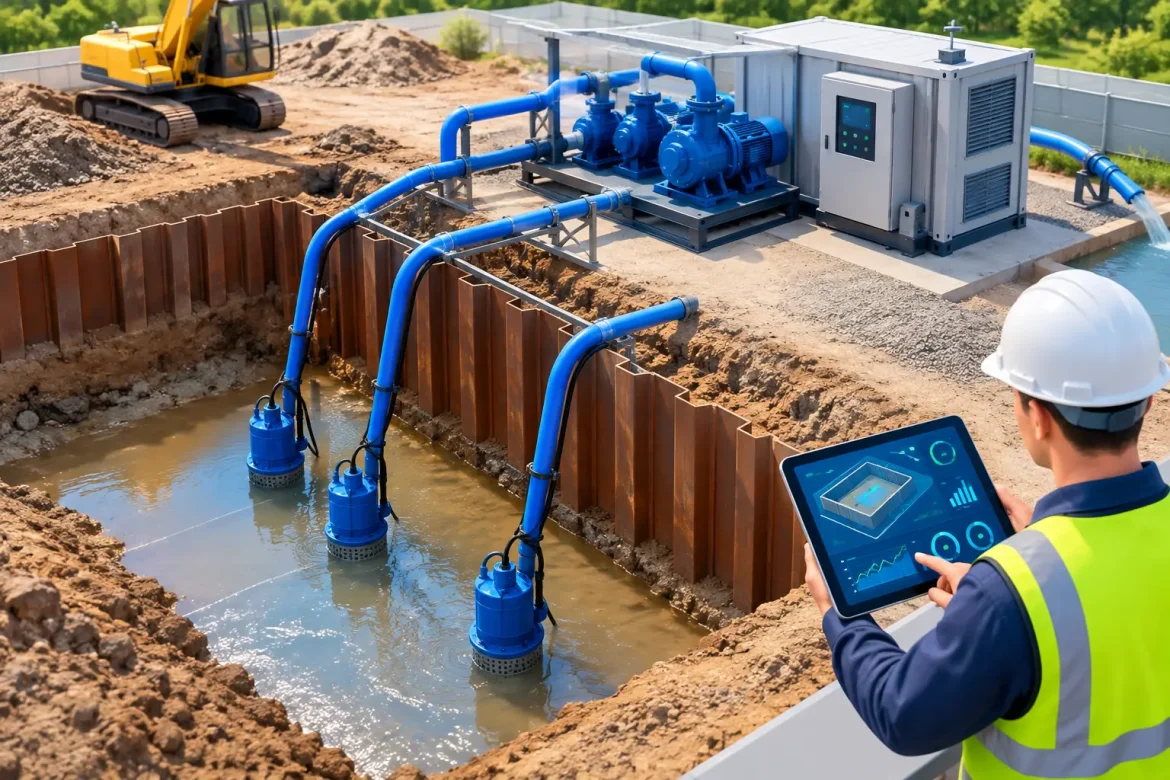
Dewatering needs to achieve the required water level before personnel, plant or structural works rely on the excavation. Depending on depth, soil profile and site constraints, this may involve wellpoints, deep wells, sump pumping or a combined approach. The correct method depends on the ground, not simply the size of the excavation.
Surface water entering the excavation
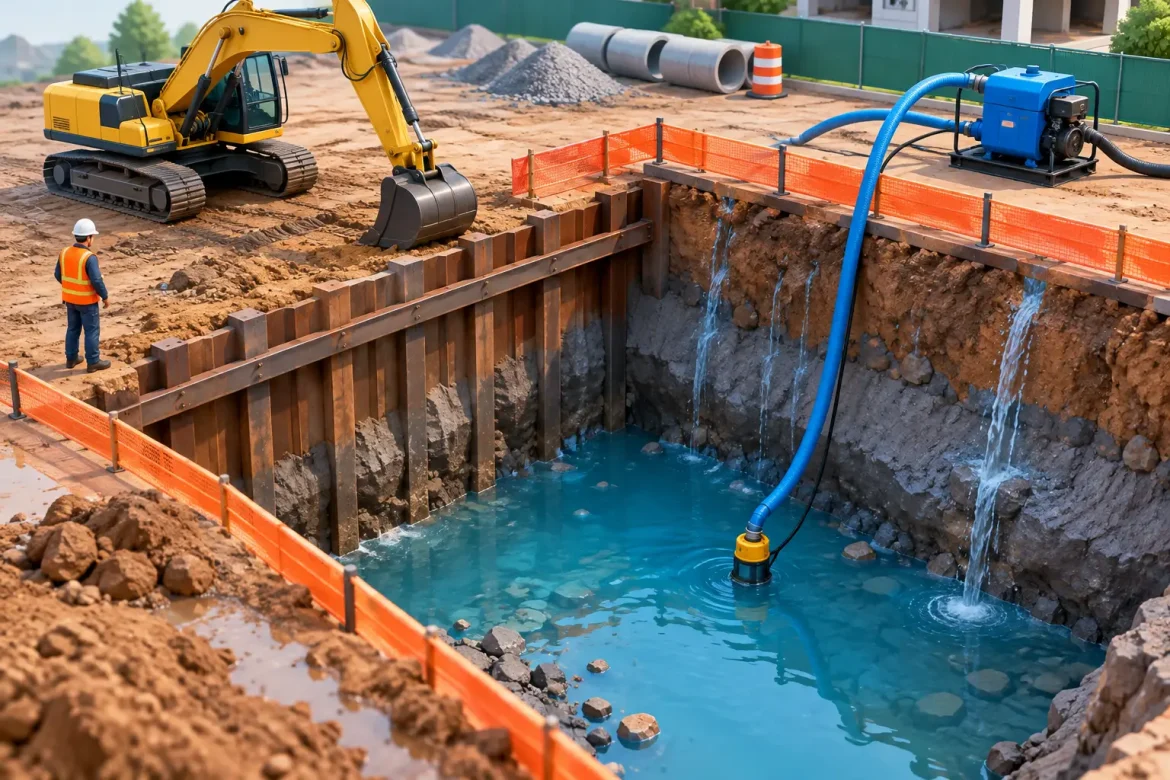
Rainfall runoff is often treated as a short-term inconvenience, but it can quickly become a major operational risk. Water flowing over disturbed ground carries sediment into sumps, blocks pumps, erodes batters and can flood work areas faster than a temporary pumping arrangement can respond.
Poorly positioned stockpiles, incomplete diversion drains and unprotected access ramps can direct runoff straight into the excavation. In Western Australia and Queensland, intense rainfall events can expose weaknesses in a site water plan within minutes.
Surface water should be managed separately from groundwater wherever possible. Diversion drains, bunding, stabilised access, sediment controls and appropriately sized sumps reduce the volume that needs to be pumped from the excavation. This also limits sediment loading and makes downstream treatment more manageable.
Base heave, piping and loss of ground
Water pressure beneath an excavation can be more dangerous than water entering from the sides. Where upward hydraulic pressure exceeds the weight and strength of the overlying material, the base may heave or become unstable. In granular soils, seepage can also carry fine particles towards a low-pressure area, creating piping, voids and progressive ground loss.
These conditions are not resolved by placing a larger pump in a sump. Aggressive localised pumping can worsen the flow path, draw fines into the system and destabilise the formation. The solution may require controlled drawdown through a wellpoint or deep well system, staged excavation, filters designed for the formation, or a review of the temporary works sequence.
Warning signs include cloudy discharge, persistent sand movement, softening at the base and water appearing under pressure through localised points. These should trigger an immediate review by competent personnel rather than an assumption that more pumping capacity is the answer.
Contaminated water and uncontrolled discharge
Excavation water may contain sediment, hydrocarbons, elevated salinity, acid-forming material, naturally occurring metals or legacy contaminants. Even where groundwater quality is acceptable, runoff from active construction areas can pick up fuels, concrete washout residue and fine sediment.
Discharging untreated water to a drain, waterway or neighbouring land can create regulatory exposure, clean-up costs and project delays. It can also damage relationships with the principal contractor, asset owner and surrounding community.
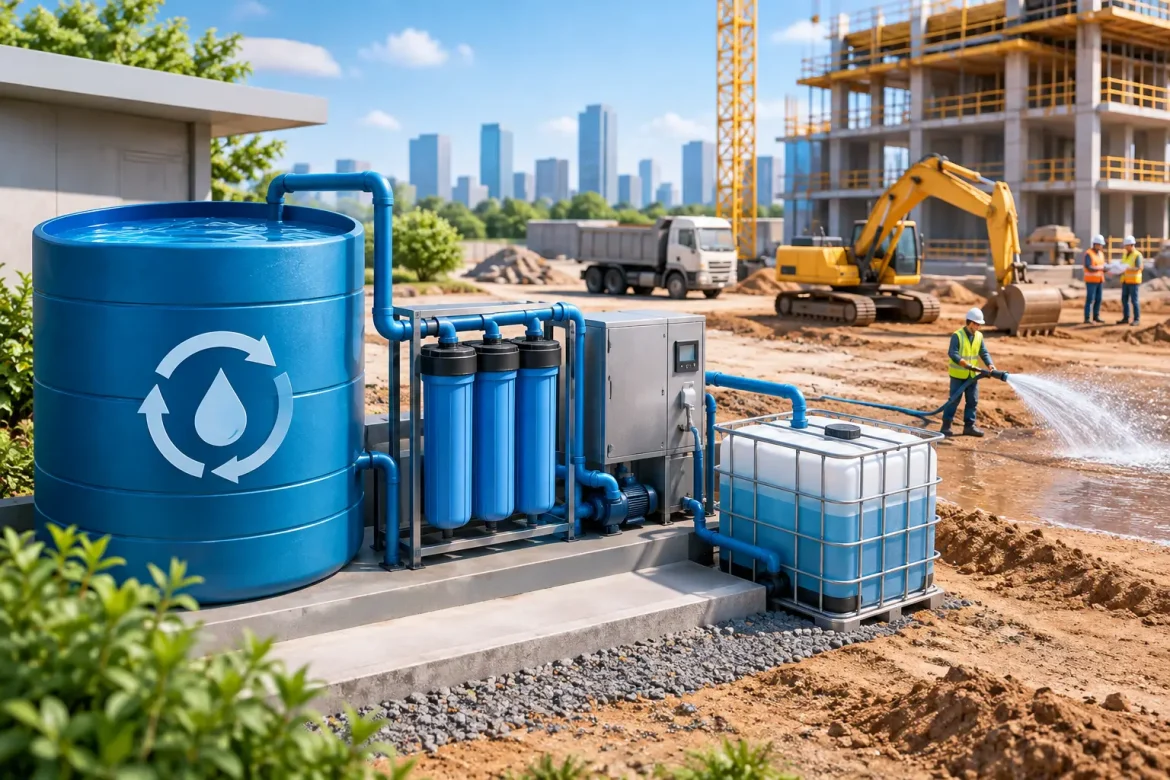
Water quality requirements need to be considered at planning stage, not after pumps are running. Sampling may be required to confirm the treatment approach and discharge destination. Settlement tanks, filtration, oil-water separation, pH adjustment and controlled off-site disposal may all be appropriate, depending on the water and the approval conditions. Treatment capacity must match likely peak flows, not only average daily volumes.
Pump failure and insufficient redundancy
A dewatering system can be well designed and still fail operationally if it relies on one pump, one power source or one person noticing a problem. Pumps block, hoses split, power trips and float switches fail. During night works or wet weather, a small failure can become a flooded excavation before the morning crew arrives.
Critical excavations need redundancy matched to the consequence of water returning. This may include duty and standby pumps, backup power, high-level alarms, telemetry, spare hoses and fittings, and clearly assigned after-hours response arrangements. The level of redundancy should reflect the site risk. A shallow, open excavation with limited inflow does not need the same arrangement as a deep excavation beside sensitive structures.
Design dewatering around the programme
Dewatering is most effective when it is planned as part of the construction methodology. Bringing a contractor in after an excavation has filled with water usually limits the available options and increases cost. By then, access may be poor, the formation may already be damaged and critical works may be waiting.
Early investigation should confirm groundwater levels, likely recharge, permeability, formation variability and potential water quality issues. Installation locations should account for excavation support, crane and plant movements, haul routes, service clashes and future stages of work. A well system that cannot be accessed for maintenance is not a reliable system.
System selection involves trade-offs. Wellpoint dewatering can provide controlled drawdown for shallow to moderate excavations in suitable permeable soils. Deep wells are often better suited to deeper drawdown requirements and larger groundwater volumes. Sump and open pumping can be practical for managing minor seepage or surface water, but it is not always appropriate where the formation is susceptible to erosion or piping.
The most efficient solution is rarely the system with the lowest initial hire cost. It is the system that protects the excavation, supports the work sequence and avoids repeated stoppages, remedial ground treatment or damage to surrounding assets.
Monitor conditions, not just water levels
A water level reading is useful, but it is only one part of the picture. Site teams should also monitor pump performance, discharge clarity, flow rates, rainfall forecasts, batter condition, settlement indicators and the condition of discharge controls.
Routine inspections should increase during excavation advances, rainfall events, changes in pumping demand and before high-consequence activities such as foundation pours or installation of underground services. Records provide evidence of control and help identify a developing issue before it becomes an incident.
Communication matters just as much. The excavation supervisor, dewatering crew, temporary works coordinator and environmental representative need a shared understanding of trigger levels and escalation actions. If a pump stops, a sump rises or discharge quality changes, the response should be immediate and predefined.
Treat discharge as part of the dewatering scope
Removing water from an excavation only transfers the problem if there is no controlled destination. Discharge routing, treatment equipment, monitoring and contingency storage should be established before commissioning. Hoses and pipelines require protection from traffic, inspection for leaks and secure connections at all times.
Where approvals impose limits on turbidity, pH or contaminants, testing frequency and reporting responsibilities need to be clear. It is also worth allowing for changing water quality over the life of the project. Early clean groundwater can become sediment-laden once rainfall, excavation activity and vehicle movements affect the catchment.
Experienced dewatering teams bring value by managing the complete water pathway: abstraction, treatment, monitoring and discharge. Dewatering Solutions applies that site-based approach so water control supports safety, compliance and productive construction rather than becoming a recurring constraint.
The best time to manage excavation water risk is before the first cut reaches groundwater. A measured plan, suitable equipment and active monitoring give the project team room to keep working when site conditions become less predictable.