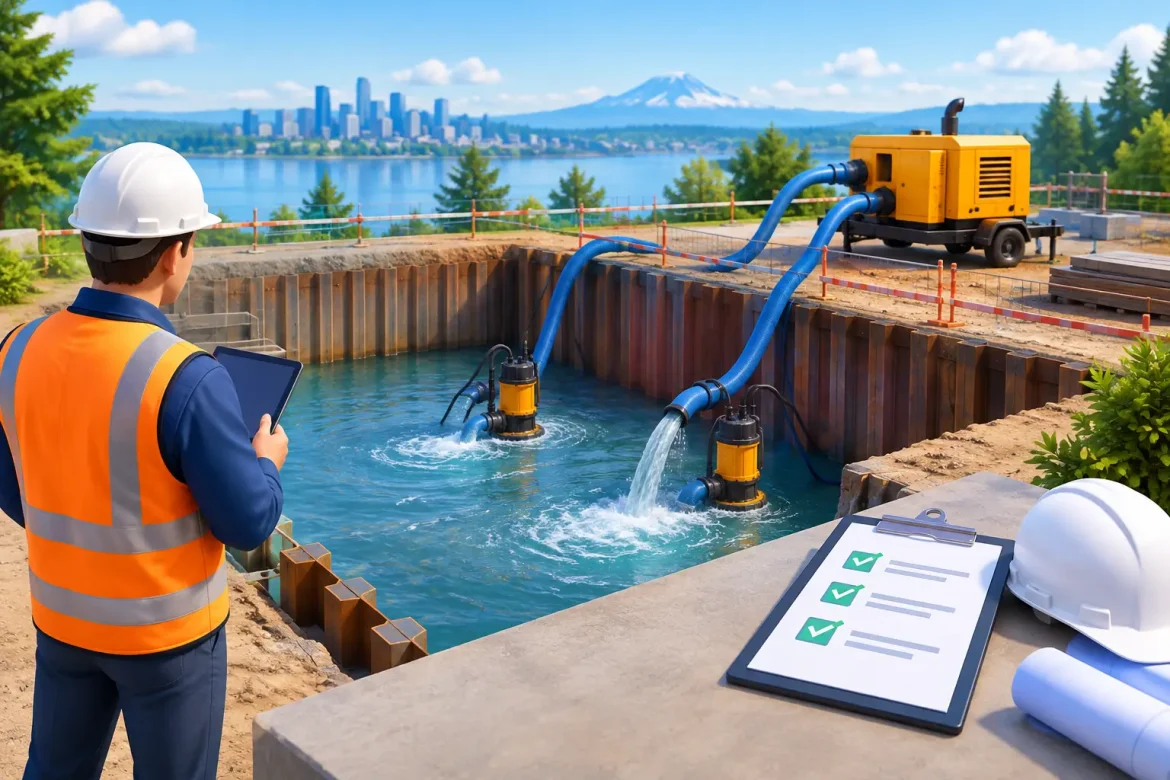
A mine pit water control example is most useful when it shows how decisions made before and during excavation prevent water from becoming a production, safety and compliance problem. Consider a representative open-pit operation approaching a deeper mining stage after seasonal rainfall. Water is entering through runoff from the catchment, seepage along weathered fractures and localised inflows from the pit wall. The issue is not simply removing water from the floor. The site needs to keep haul routes serviceable, preserve wall and batter performance, maintain access to the ore zone and manage discharge responsibly.
The site problem: water is affecting production
The pit has been operating with temporary sumps and mobile pumps. That approach worked while the excavation was shallow, but inflows have increased as mining progresses. After heavy rain, the lowest benches pond quickly. Fine sediment builds up in the sump, pumps lose efficiency and water trucks are diverted from other work to manage dust and road conditions.
More concerning, seepage is visible on sections of the highwall. This does not automatically mean the wall is unstable, but it is a condition that requires attention. Elevated pore pressures can reduce effective strength in susceptible materials, while persistent wet areas create rilling, soft ground and difficult inspection conditions. A delayed response can force the mine to stand down equipment, change traffic routes or restrict access to an active area.
At this point, a larger pump alone is rarely the answer. Pump capacity matters, but the water control plan must deal with where water originates, how it moves through the pit, what quality it has and where it can be stored or treated.
Mine pit water control example: a staged response
In this example, the project team develops a staged system rather than relying on one method. The first stage separates clean runoff from contact water. Diversion drains and bunding are installed above the crest where practical, directing upslope runoff away from the excavation. This reduces the volume entering the pit before it becomes contaminated by mining activity.
The second stage intercepts groundwater before it reaches critical working areas. Depending on hydrogeology, this may involve a series of deep wells outside the pit crest, relief wells in targeted locations, or horizontal drainage installed into selected batters. In fractured ground, bore locations and pump settings need to be based on investigation data and verified against actual drawdown. A well field designed around assumed conditions can underperform if fractures, faults or low-permeability zones behave differently from the model.
The third stage manages water that still enters the excavation. Graded benches, cut-off drains and in-pit sumps direct flows to controlled collection points. Duty and standby pumps transfer water through appropriately sized pipelines to a sediment basin, treatment system or approved storage location. Installing standby capacity is not excess expenditure. It is protection against pump failure, power interruptions, blocked lines and rainfall events that do not occur on a convenient timetable.
Finally, the team establishes a water quality pathway. Contact water may carry suspended solids, hydrocarbons, dissolved metals or elevated salinity, depending on the site. Treatment requirements should be confirmed early, along with discharge limits, monitoring points and any reuse opportunities. Water suitable for dust suppression may still require controls before it is used on haul roads, particularly where salinity or contaminants could affect soil, infrastructure or the environment.
Start with a water balance, not a pump selection
A practical water balance is the foundation of the system. It estimates all credible inputs, including direct rainfall, catchment runoff, groundwater seepage, process water and any inflow from adjacent workings. It also identifies the available outputs: pumping, evaporation, reuse, treatment, controlled discharge and storage.
The water balance must cover normal operations as well as upset conditions. A system that performs well at average inflow may fail during a short-duration storm or when a major sump is unavailable for cleaning. For mine planning purposes, it is useful to model at least the expected operating condition, a wet-weather condition and a contingency event based on the site’s risk profile.
This assessment informs pump duty, sump volume and pipeline capacity. It also avoids a common problem: installing pumps that can move water faster than the treatment plant, storage dam or discharge point can accept it. Every downstream constraint matters. If the settlement basin is undersized, increasing pumping rates simply moves the bottleneck and can create a compliance exposure.
Designing for the actual ground conditions
Dewatering performance is governed by geology as much as equipment. In highly permeable sands or gravels, well-based systems can produce broad drawdown when designed and developed correctly. In low-permeability clays, water may move slowly enough that well pumping provides limited short-term benefit. Where seepage travels through narrow fractures, targeted drilling and local drainage can be more effective than a wide-spaced, uniform bore pattern.
This is why field verification is essential. Trial bores, pumping tests, water-level monitoring and observed inflows provide the information needed to refine the design. The original plan should be treated as an operational starting point, not a document that cannot change once mobilisation begins.
In Western Australian and Queensland mining environments, seasonal rainfall patterns, variable regolith profiles and hard-rock structures can produce very different responses over short distances. A contractor with local groundwater experience can help translate investigation results into equipment placement, operating procedures and realistic contingency planning.
Operating controls that keep the system reliable
Once installed, pit water control needs disciplined daily management. Operators should inspect sump levels, pump run hours, discharge lines, sediment build-up, electrical connections and visible seepage areas. Remote level alarms and telemetry can improve response times, particularly where the pit is large or access becomes difficult in wet conditions. They do not replace physical inspections, as blocked strainers, damaged hoses and erosion around outlets are often identified first in the field.
A clear trigger-action plan gives the crew direction when conditions change. For example, rising sump levels may require a standby pump to start, while increased turbidity at a treatment outlet may require flows to be reduced or redirected to storage. New seepage on a wall may trigger geotechnical review, increased monitoring or temporary exclusion zones. The relevant trigger values should be agreed between mining, geotechnical, environmental and water management teams before an event occurs.
Maintenance also deserves planned downtime. Sumps need desilting, pumps need servicing and pipelines need inspection. Deferring these tasks to maintain short-term production often creates longer stoppages later. A well-maintained dewatering system is easier to operate safely and is less likely to fail when rainfall or groundwater inflow is at its highest.
Managing safety and environmental obligations together
Water control is not only a production activity. Open sumps, temporary hoses, electrical installations and soft ground create site hazards that must be managed through the project’s safety system. Pump stations need secure access, suitable guarding, safe electrical arrangements and clear traffic separation. Where personnel enter confined or restricted areas, the appropriate permits and procedures apply.
Environmental controls should be built into the layout, rather than added after the system is operating. This includes erosion protection at discharge points, sediment management, spill response provisions and sampling at nominated locations. Accurate pump records, water-quality results and inspection reports provide evidence that the site is managing its obligations, while also helping the team identify performance trends.
There is a commercial benefit as well. When clean and contact water are separated early, treatment volumes are often lower and the site retains more options for reuse. When inflows are intercepted before they reach the pit floor, less time is lost to bogged equipment, road repairs and reactive pumping.
What success looks like on site
For this mine pit water control example, success is not defined by a single flow rate. It is demonstrated by dry, accessible work areas; stable and inspectable batters; predictable pump operation; compliant water handling; and fewer weather-related interruptions to the mining sequence.
The exact solution will depend on the pit geometry, hydrogeology, rainfall exposure, mine life and discharge requirements. Some sites need a substantial perimeter well field. Others gain better value from surface diversion, targeted in-pit drainage and a properly managed pumping network. The right approach is the one that controls risk at the lowest practical whole-of-project cost, rather than the one with the largest pump.
When water management is planned alongside mine development, it becomes a controlled production system rather than an emergency response after the pit starts filling.