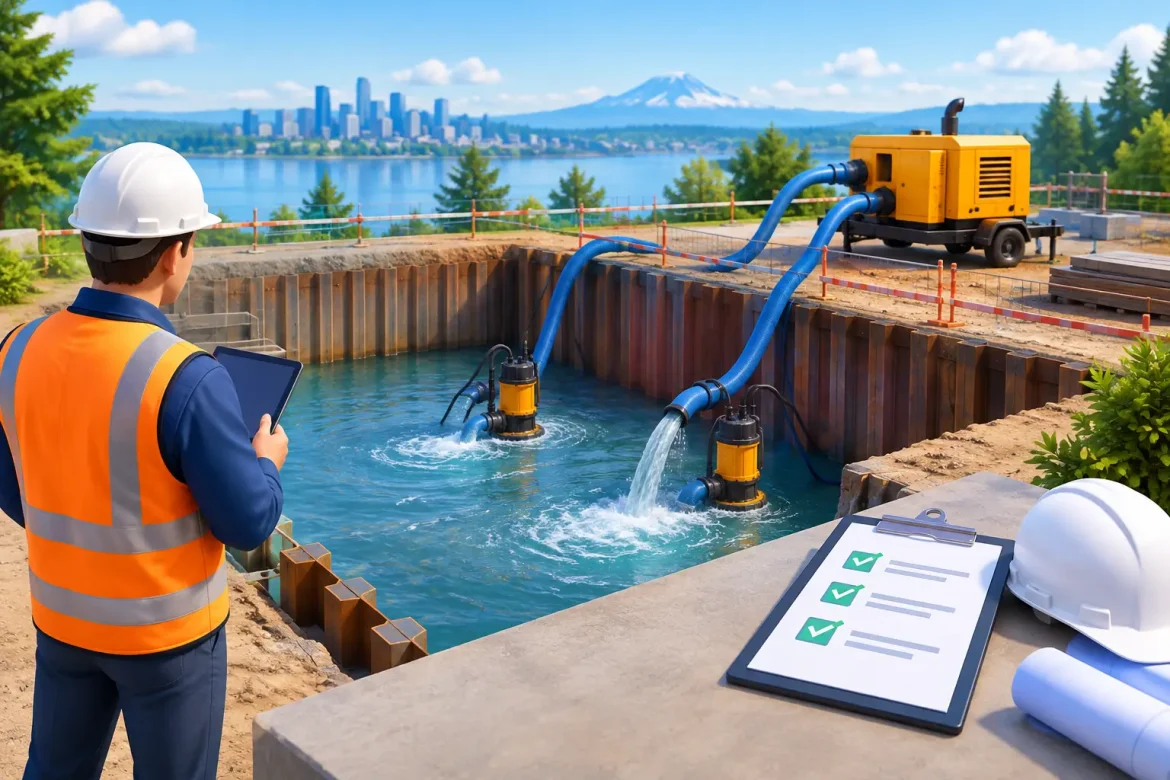
Water in an excavation is rarely just water. It can carry sediment, fine clays, hydrocarbons, dissolved metals, concrete washout residue or naturally occurring contaminants that cannot be pumped straight to a drain, waterway or surrounding land. A properly planned excavation water treatment process protects the programme, keeps the work area safe and gives project teams confidence that discharge or reuse is managed responsibly.
For civil, construction and mining works, treatment is not a separate task added after dewatering begins. It should be designed alongside the dewatering system, excavation sequence and discharge pathway. The right approach depends on site conditions, water quality, flow rates and approval requirements.
Start with the water, not the equipment
The most common mistake on temporary water treatment scopes is selecting equipment before understanding the water being managed. A basic settling tank may be sufficient for clean groundwater with suspended sediment. The same setup can fail quickly where water contains very fine clay, elevated iron, hydrocarbons or high salinity.
Before treatment equipment is mobilised, the project team should establish the likely source of water. Groundwater, rainwater runoff, process water, drilling returns and water entering from adjacent services can each require a different response. Sampling provides the baseline needed to assess turbidity, pH, total suspended solids, hydrocarbons, metals, salinity and other parameters relevant to the proposed discharge conditions.
Water quality can also change as excavation progresses. A deepening basement, trench or mine pit may encounter different ground layers, while rainfall can sharply increase sediment loading. Treatment design needs sufficient flexibility to respond without stopping the dewatering operation.
The excavation water treatment process in practice
A reliable treatment train removes contaminants in stages rather than relying on one piece of equipment to solve every issue. The sequence is determined by the water quality and the required outcome, whether that is compliant discharge, reuse for dust suppression or controlled off-site disposal.
1. Capture and control the inflow
The first priority is keeping clean and dirty water separate. Surface runoff should be diverted away from the excavation where practical, while water collected within the work area is directed to sumps, settlement areas or a dedicated treatment system.
Sump pumps, wellpoints and deep wells must be sized and operated to maintain stable groundwater conditions without overwhelming downstream treatment equipment. A pump capable of moving high volumes is of limited value if the treatment system cannot process the flow. Flow control, duty and standby pumping, and appropriate sump management are all part of maintaining a stable system.
2. Remove coarse sediment and settleable solids
Excavation water commonly contains sand, silt and other suspended material. The first treatment stage often uses settlement tanks, sediment basins, weirs or lamella clarifiers to slow the water and allow heavier particles to settle.
This stage reduces load on filters and chemical treatment systems further down the line. It also requires active maintenance. Sediment that is allowed to build up reduces effective capacity and can be disturbed during high-flow events, sending solids back into the discharge stream.
Where sites have limited space, compact modular settlement systems can provide better control than an oversized open basin. The trade-off is that smaller systems generally need closer monitoring and more frequent desludging.
3. Treat fine particles with coagulation and flocculation
Fine clays can remain suspended for long periods and may not settle through gravity alone. This is a frequent issue in challenging ground conditions, particularly where excavation water appears cloudy despite adequate retention time.
Coagulation and flocculation introduce carefully selected chemicals to bind fine particles into larger flocs that can settle or be filtered out. The treatment can be highly effective, but dosing must be based on actual water characteristics. Overdosing can create its own water quality issues, increase chemical consumption and generate unnecessary sludge.
Jar testing and regular field checks help determine appropriate dosing. On live sites, operators should adjust treatment in response to changes in turbidity, flow and pH rather than treating the system as a set-and-forget installation.
4. Filter and polish the treated water
After settlement or clarification, filtration provides a final barrier for remaining suspended solids. Bag filters, cartridge filters, sand media filters and specialist units can be selected according to the required flow rate and water quality target.
Filters are particularly useful where discharge limits are tight or where water will be reused in site activities. They do, however, need routine inspection. A blocked filter can reduce flow, cause bypassing or place unnecessary load on pumps. The selected filtration method should be practical for the site team to service safely and efficiently.
5. Address dissolved contaminants where required
Not every water quality issue is visible. Dissolved iron, metals, hydrocarbons, salinity or pH outside acceptable limits may require targeted treatment beyond sediment removal.
Oil-water separation and activated carbon can be used where hydrocarbons are present. pH correction may involve controlled acid or alkaline dosing. Metals can require precipitation, clarification and filtration, while saline water may have limited options for reuse or discharge depending on the receiving environment and project approvals.
This is where early sampling matters. A treatment system designed only for turbid water will not necessarily manage dissolved contaminants, even if the final water looks clear.
Discharge, reuse and disposal decisions
The treatment objective should be agreed before the system is designed. Discharging to a stormwater network, sewer connection, waterway or land area can each involve different conditions. Some projects may be able to reuse treated water for dust suppression, washdown or other non-potable purposes, reducing imported water demand and disposal volumes.
Reuse is not automatically the best option. Water used for dust suppression can leave sediment, salts or contaminants on haul roads and surrounding ground. Where salinity is elevated, repeated reuse may create environmental or asset-management problems. The operational benefit must be weighed against the quality of the treated water and the location where it will be used.
If water cannot be discharged or reused compliantly, off-site disposal may be necessary. This adds transport, handling and scheduling considerations, so it is best identified early rather than becoming an emergency response once excavation is underway.
Monitoring keeps treatment defensible
A treatment plant is only as reliable as the records and checks supporting it. Field teams should monitor flow rates, turbidity, pH and other relevant indicators at suitable intervals. The monitoring plan should reflect the approval conditions, risk profile and variability of the source water.
Visual checks are useful but not enough on their own. Clear water can still contain dissolved contaminants, while a sudden increase in turbidity may signal a failed filter, excessive pump disturbance or a change in incoming water quality. Routine sampling, calibrated instruments and documented results provide evidence that the system is operating as intended.
Monitoring also supports better cost control. Identifying rising sediment loads or declining filter performance early allows planned maintenance instead of unplanned shutdowns. On critical programmes, this can prevent a minor treatment issue from becoming an excavation delay.
Designing for site conditions, not ideal conditions
Temporary water treatment needs to work through rain events, variable inflows, plant access constraints and changing excavation depths. Systems should include practical contingencies such as duty and standby pumps, sufficient storage capacity, protected hose routes, spill controls and safe access for chemical handling and sludge removal.
In Western Australia and Queensland, local ground conditions and seasonal weather can strongly influence treatment requirements. A system that performs well on one project may be unsuitable a short distance away if the geology, groundwater chemistry or discharge point changes. Site-specific assessment remains the most reliable way to reduce risk.
Safety must also be built into the layout. Treatment areas can introduce hoses, wet surfaces, confined spaces, moving plant, chemicals and electrical equipment into already busy work zones. Clear exclusion zones, bunding, traffic management and disciplined housekeeping reduce the likelihood of incidents.
Treatment performance is a project outcome
Effective excavation water management protects more than a discharge point. It supports stable excavation conditions, safer access, cleaner work areas and predictable progress for downstream trades. It also reduces the risk of reactive pumping, environmental non-compliance and costly changes after the excavation is open.
For project managers, the practical question is not simply whether water can be removed. It is whether it can be removed, treated and managed at the required rate without compromising safety, approvals or the construction programme. Planning that answer early gives the site team more control when conditions inevitably change.