
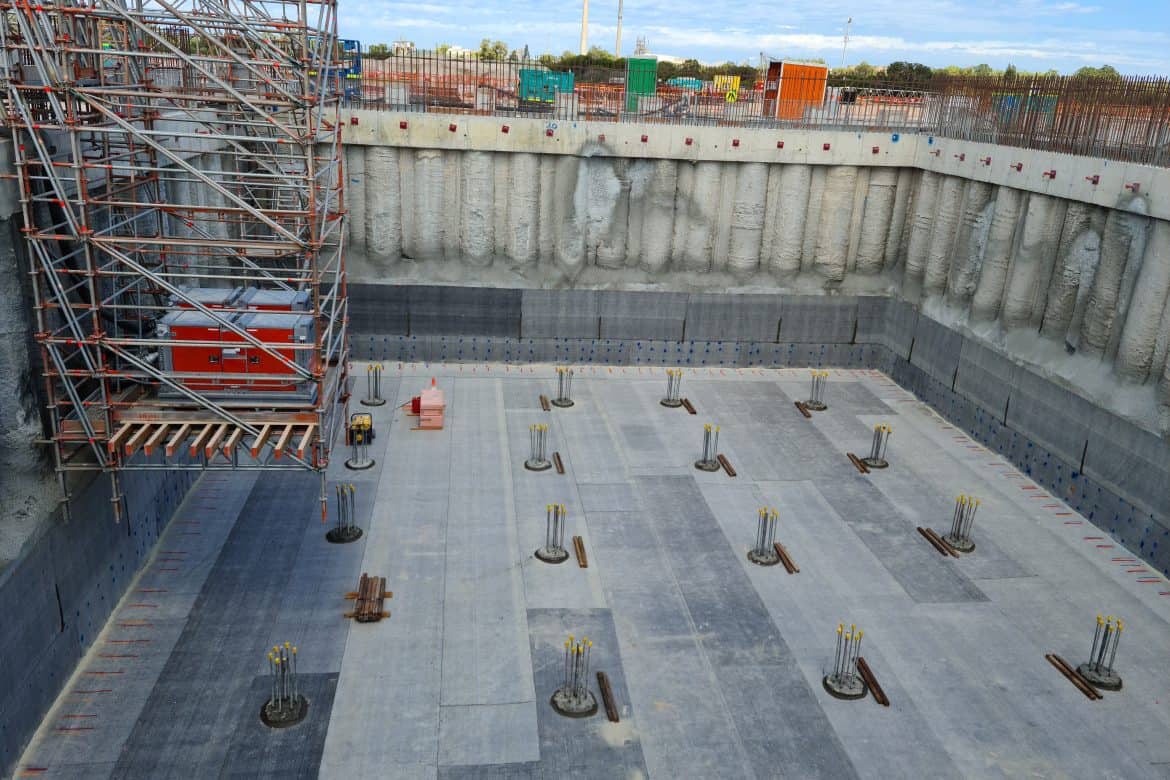
Groundwater rarely announces itself politely. It shows up when an excavation starts to soften, when a trench slumps after rain, or when a programme begins to slip because pumps are working harder than expected. If you are asking what is a dewatering well, the practical answer is simple – it is a drilled well used to lower groundwater so construction, mining, or civil works can proceed safely and efficiently.
A dewatering well is not just a hole in the ground with a pump dropped in. It is part of a controlled groundwater management system designed to reduce pore water pressure, keep excavation areas stable, and limit water inflow to the work zone. On the right site, it can be the difference between steady production and repeated stoppages.
What is a dewatering well and how does it work?
A dewatering well is typically a vertical drilled bore installed below the level where groundwater needs to be controlled. Inside the bore, a well screen allows water to enter while restricting surrounding sand and sediment. A submersible pump then draws groundwater from the well, lowering the local water table around the excavation or work area.
As water is pumped out, the groundwater level around the well drops into a cone-shaped drawdown zone. When several wells are installed around a site, these drawdown zones overlap and lower groundwater across a broader area. That creates drier and more stable ground conditions for excavation, piling, pipeline work, basements, shafts, or mine infrastructure.
The key point is control. Dewatering wells are used when groundwater needs to be managed at depth, over a wider footprint, or in ground conditions where surface pumping and shallow systems are not enough.
When a dewatering well is the right choice
Not every wet site needs a dewatering well. The method depends on excavation depth, soil profile, inflow rates, recharge conditions, discharge requirements, and the consequences of getting it wrong.
Dewatering wells are often selected where excavations are relatively deep, where groundwater sits below shallow wellpoint capability, or where the formation has enough permeability to allow meaningful flow into the well. Sands, gravels, and some weathered formations often suit deep well dewatering well. In tighter silts or clays, performance can be limited, and another approach may be more effective.
For project teams, the decision is usually commercial as much as technical. If groundwater is threatening programme, access, foundation quality, slope stability, or safety, a properly designed dewatering well system can reduce risk early rather than reacting once the site is already under pressure.
Main components of a dewatering well system
The well itself is only one part of the setup. Performance depends on the full system being designed and installed to suit site conditions.
The bore is drilled to the required depth and diameter, then fitted with casing and screen across the water-bearing zone. A graded filter pack is commonly placed around the screen to improve flow and minimise fine migration. The well is then developed to remove drilling fines and improve hydraulic connection with the aquifer.
A submersible pump is installed within the well, sized to match expected inflow and drawdown targets. Discharge pipework directs water to settlement, treatment, storage, reuse, or approved release points, depending on site and environmental requirements. Monitoring is equally important. Water levels, pump performance, discharge quality, and nearby ground response all need to be tracked so the system performs as intended.
Why dewatering wells matter on active project sites
On a working site, groundwater is not just an inconvenience. It affects production, geotechnical behaviour, access, plant movement, and compliance.
Lowering groundwater can improve excavation stability by reducing hydrostatic pressure and softening. It can help maintain dry working areas for crews and equipment. It can also support better formation conditions for concrete, pipelines, services installation, and earthworks. On some sites, the real value is schedule protection. A controlled dewatering system reduces the chance of unplanned shutdowns, rework, and emergency pumping.
There is also a safety and environmental dimension. Waterlogged excavations increase the risk of slips, collapses, and uncontrolled inflows. Poorly managed discharge can create erosion, turbidity issues, or regulatory exposure. A dewatering well system needs to work operationally, not just hydraulically.
Dewatering well vs wellpoint system
This is where confusion often starts. Both systems lower groundwater, but they suit different site conditions.
A wellpoint system uses a series of closely spaced shallow points connected to a header pipe and vacuum pump. It is generally effective for shallower excavations and can be efficient in sandy ground where broad but modest drawdown is needed. A dewatering well, by contrast, is deeper, larger in diameter, and usually fitted with an individual submersible pump. It is better suited to deeper groundwater control and larger pumping volumes.
If the excavation is too deep for wellpoints to achieve the required drawdown, or if inflows are too high, deep wells are often the better option. That said, deeper does not always mean better. Deep wells can be more complex to install and may not perform well in low-permeability soils. Good design comes from ground investigation and realistic pumping assessment, not from choosing the biggest system available.
Site conditions that affect performance
A dewatering well can only perform as well as the ground allows. Soil and rock profile, aquifer thickness, permeability, recharge sources, and boundary conditions all shape the result.
High-permeability sands and gravels usually respond well because groundwater can move freely toward the well. Interbedded soils can be more complicated. A clean sand lens may produce strongly, while adjacent silty layers restrict flow and create uneven drawdown. Fractured rock can also behave unpredictably, particularly where water movement follows discrete features rather than uniform layers.
In Western Australia and Queensland, local ground behaviour matters. Coastal sands, alluvial deposits, weathered rock, and variable mining ground each bring different dewatering challenges. This is why local field experience has real value. Two sites can sit in the same region and still require different well spacing, pump sizing, development methods, and discharge controls.
Design, operation and monitoring
A dewatering well should be treated as an engineered site control, not a last-minute hire item. The design process generally starts with hydrogeological and geotechnical information, expected excavation levels, construction staging, and discharge constraints.
From there, the contractor determines likely well depth, screen intervals, pump duties, spacing, and the number of wells required to achieve target drawdown. Once installed, the system needs commissioning and ongoing adjustment. Pump rates may need to be balanced. Water levels should be checked against design assumptions. Discharge quality may require treatment before release or reuse.
Monitoring matters because conditions change. Rainfall, tidal influence, adjacent works, seasonal recharge, and excavation progression can all alter groundwater behaviour. A dewatering system that starts well can still drift out of performance if no one is watching the data.
Common risks and trade-offs
The biggest mistake on dewatering projects is assuming groundwater control is straightforward. It often is not.
Over-pumping can cause unnecessary settlement or drawdown beyond the work area. Under-pumping can leave the excavation unstable and delay the programme. Poorly developed wells may sand up or deliver less yield than expected. Inadequate discharge planning can shift the problem from the excavation to an environmental non-compliance issue.
There are also cost trade-offs. A cheaper temporary setup may look attractive during procurement, but if it cannot hold drawdown consistently, the project can lose far more through downtime, rework, and programme extension. Reliable dewatering is usually less expensive than unreliable dewatering.
What project teams should ask before installing a dewatering well
Before committing to a dewatering well system, it helps to ask a few direct questions. Is the ground actually suitable for deep well dewatering? What drawdown is required at each stage of the works? Where will the water go, and does it need treatment? What monitoring is needed to manage risk to adjacent assets, services, or structures?
It is also worth asking who will own performance once the system is live. Dewatering is not just installation. It includes operation, maintenance, response to changing site conditions, and disciplined reporting. That operational piece is where experienced contractors separate themselves from general pump suppliers.
For most project teams, the best outcome is not simply a dry hole. It is a groundwater control system that supports safe access, protects the programme, and stays compliant without constant firefighting. If a site is dealing with persistent groundwater and excavation depth is beyond the comfort zone of shallow methods, a dewatering well is often the right place to start the conversation.
When groundwater is managed properly, the rest of the job has a far better chance of running the way it should.