
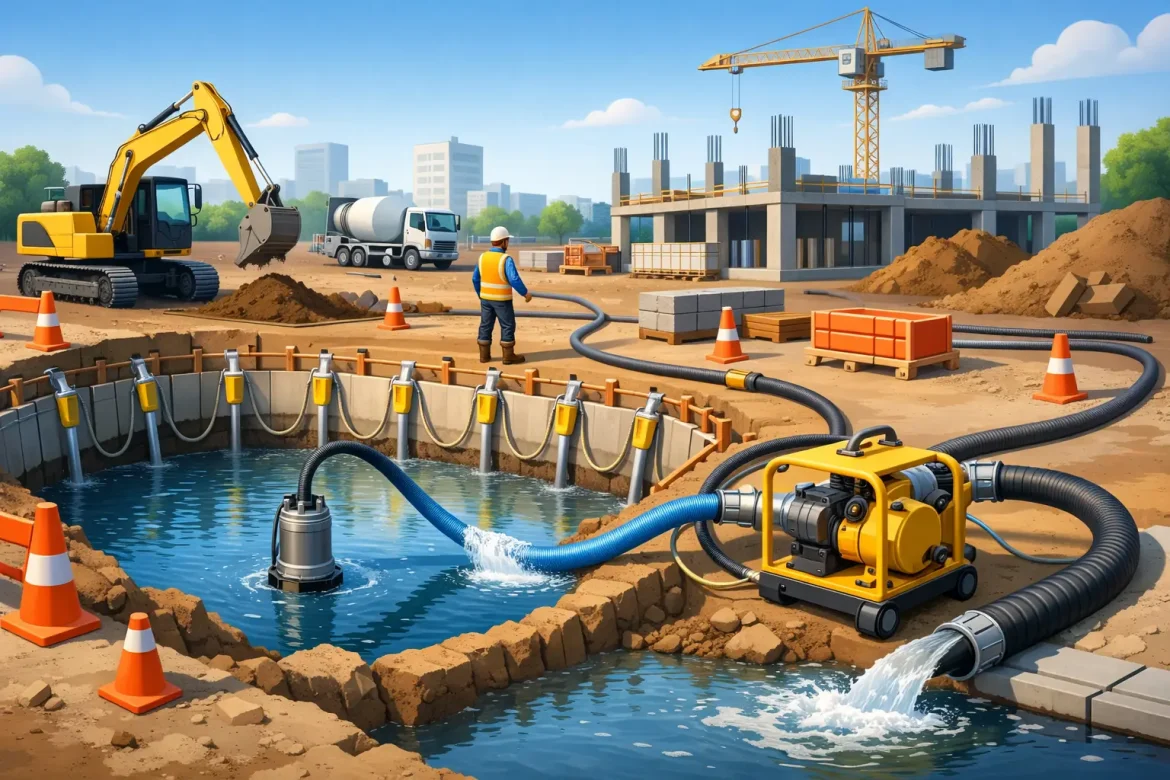
Groundwater can turn a planned excavation into a safety, programme and cost problem within hours. Water entering a trench, basement dig, shaft or service pit can soften formation soils, reduce slope stability, obstruct plant access and delay follow-on trades. This construction site dewatering guide sets out the practical decisions that help project teams control water before it controls the job.
The right approach is rarely just a matter of putting pumps in a sump. Effective dewatering begins with an accurate reading of site conditions and continues through installation, monitoring, treatment and discharge management. The objective is clear: maintain dry, stable and workable conditions while protecting the surrounding environment, nearby assets and the construction programme.
What a construction site dewatering guide must address
A dewatering plan should manage the complete water pathway, not only removal from the excavation. That means identifying where water is coming from, how quickly it is likely to enter, where it can be collected, how it will be treated if required, and where it can be discharged or reused.
Groundwater is only one source. Rainfall runoff, leaking services, perched water, tidal influence and water trapped in variable fill can all affect an excavation. A system sized only for average groundwater inflow may be overwhelmed during a storm or when an unexpected sand lens connects to the excavation.
Before selecting equipment, establish the required drawdown. The target water level must sit sufficiently below the proposed formation or working level to maintain stable ground conditions. The exact depth depends on the soil profile, excavation geometry, construction method and engineering requirements. Over-pumping is not automatically better. Excessive drawdown can increase settlement risk around neighbouring structures or services and may create unnecessary treatment and disposal costs.
Start with site investigation, not pump selection
Bore logs, groundwater monitoring data, geotechnical reports and service information provide the starting point. They should be read alongside the construction sequence, because the water-control requirement changes as an excavation deepens, shoring is installed or permanent drainage works come online.
Site investigation should confirm soil permeability, groundwater levels and seasonal variation. Coarse sands and gravels generally transmit water readily, while silts, clays and layered ground can produce less predictable inflows. In mixed conditions, a system that performs well in one part of the excavation may be inadequate only metres away.
Nearby receptors also matter. These may include existing buildings, rail corridors, roads, buried utilities, waterways, wetlands or contaminated land. Lowering groundwater can affect surrounding ground, while discharging untreated water can create environmental exposure. In Western Australia and Queensland, local ground conditions and approval requirements can vary significantly between sites, so the design needs to respond to the actual location rather than a generic specification.
A practical pre-start review should bring together four matters: expected inflow and peak inflow, target drawdown, ground response to pumping, and the discharge or reuse pathway. If one of these remains uncertain, allow for monitoring and contingency capacity rather than assuming the initial arrangement will cover every condition.
Choose the dewatering method for the ground and depth
The best method depends on the excavation depth, soil permeability, required drawdown, available footprint and duration of works. Equipment should be selected as part of a system, including headers, pipework, filtration, backup power, controls and discharge management.
Wellpoint dewatering
Wellpoint systems are commonly used for shallow to moderate excavations in permeable sands and similar ground. A series of small wellpoints is installed around the excavation and connected to a header line and vacuum-assisted pump. The arrangement can provide even drawdown across a broad work area and is often well suited to trenching, basement excavations and civil works.
Wellpoints need sound installation and a properly sealed vacuum system. Leaks in connections, poor wellpoint development or unsuitable filter selection can sharply reduce performance. Where the required drawdown exceeds the effective lift of a single stage, staged wellpoints or a different method may be necessary.
Deep well dewatering
Deep wells are generally better suited to deeper excavations and higher-permeability aquifers. Submersible pumps installed in drilled wells can achieve substantial drawdown without filling the excavation with multiple surface pumps and suction lines. They are often used on major civil, mining and infrastructure projects where water-bearing formations extend below the excavation base.
Deep wells require careful design to avoid drawing fines into the system, damaging pumps or causing localised ground movement. Test pumping and monitoring during commissioning provide valuable confirmation that the well yield and drawdown response match design expectations.
Sump and open pumping
Sump pumping collects water that enters an excavation through graded drains, cut-off trenches or local collection points. It can be a cost-effective option in competent ground with manageable seepage, particularly for temporary works or rainfall control. It is not a substitute for groundwater control where seepage can erode soil, destabilise batters or cause base heave.
The main risk is that water flowing through exposed ground carries fine material with it. That can lead to piping, loss of ground and undermining beneath slabs, shoring or adjacent assets. Sumps should therefore be positioned and protected to limit erosion, with flows assessed rather than simply chased around the excavation as conditions worsen.
Build discharge management into the design
Pumped water is not automatically suitable for release. Its quality may be affected by suspended sediment, pH, hydrocarbons, saline groundwater, acid sulfate soil conditions or historic contamination. The treatment requirement must be determined by water quality, discharge criteria and the approved destination.
A treatment train may include settlement, filtration, pH adjustment, oil-water separation, chemical dosing or other controls. The treatment approach must match the expected contaminants and flow rates. A settlement tank that works under normal flow can be ineffective when pumping rates increase after heavy rain.
Discharge lines also deserve the same attention as the pumps. Poorly routed hose can create trip hazards, erode ground, obstruct access or send sediment-laden water towards drains and waterways. Secure pipework, protected crossings, controlled outlets and regular inspections are basic site disciplines that prevent avoidable incidents.
Where practical, reuse can reduce demand for imported water. Subject to water quality and project requirements, treated water may be suitable for dust suppression, wash-down or other non-potable construction uses. It depends on the quality of the water and the controls required to prevent cross-contamination.
Commission, monitor and adjust
Dewatering is an active construction control, not a set-and-forget installation. Commissioning should verify pump duty, drawdown, flow rates, discharge performance and alarm response before the excavation reaches its most critical stage.
Monitoring points inside and outside the excavation help confirm whether groundwater is responding as expected. Flow meters, water-level measurements and water-quality checks create a record that supports operational decisions and environmental compliance. The frequency should reflect the risk profile: a deep excavation near sensitive infrastructure needs closer attention than a remote, shallow work area.
Site teams should also know what a change in performance looks like. A sudden fall in pump flow may indicate a blocked screen, damaged hose or falling groundwater level. A rising water level may point to equipment failure, a new inflow pathway or insufficient capacity. Increased turbidity can signal that fines are being mobilised and needs prompt investigation.
Backup arrangements are essential where water control protects personnel, excavation stability or critical programme activities. Duty and standby pumps, backup power, high-level alarms, spare hoses and a defined response process all reduce the consequence of a failure. The required level of redundancy should be proportionate to the consequences of water returning to the excavation.
Keep safety and environmental controls visible
Wet excavations introduce hazards beyond groundwater itself. Soft edges, slippery accessways, submerged services, unstable batter faces and electrical equipment near water all require active management. Dewatering infrastructure must be integrated with the site safety plan, including exclusion zones, access routes, electrical protection and emergency response procedures.
Environmental controls need the same discipline. Inspections should check for leaks, overtopping tanks, damaged bunds, uncontrolled runoff and changes in discharge clarity. Records of pumping volumes, water-quality testing, maintenance and incidents help demonstrate that the system has been managed responsibly.
Avoid the failures that cost programmes time
The most expensive dewatering problems usually start with assumptions. Allowing for only dry-weather inflow, specifying pump capacity without considering pipe losses, or treating discharge as an afterthought can leave a site exposed when conditions change. Equally, installing a technically sound system without daily inspection can allow a minor fault to become an excavation shutdown.
Bring the dewatering specialist into planning early enough to influence excavation staging, discharge arrangements and temporary works design. That allows equipment, treatment capacity and monitoring to be sized for real conditions rather than forced into a constrained site after water has already delayed the works.
For project teams, the useful test is simple: if a pump stopped tonight or rainfall arrived before shift start, would the excavation remain safe and recoverable? A clear answer comes from a dewatering plan that has been tested in the field, monitored throughout the works and adjusted before small changes become major delays.