
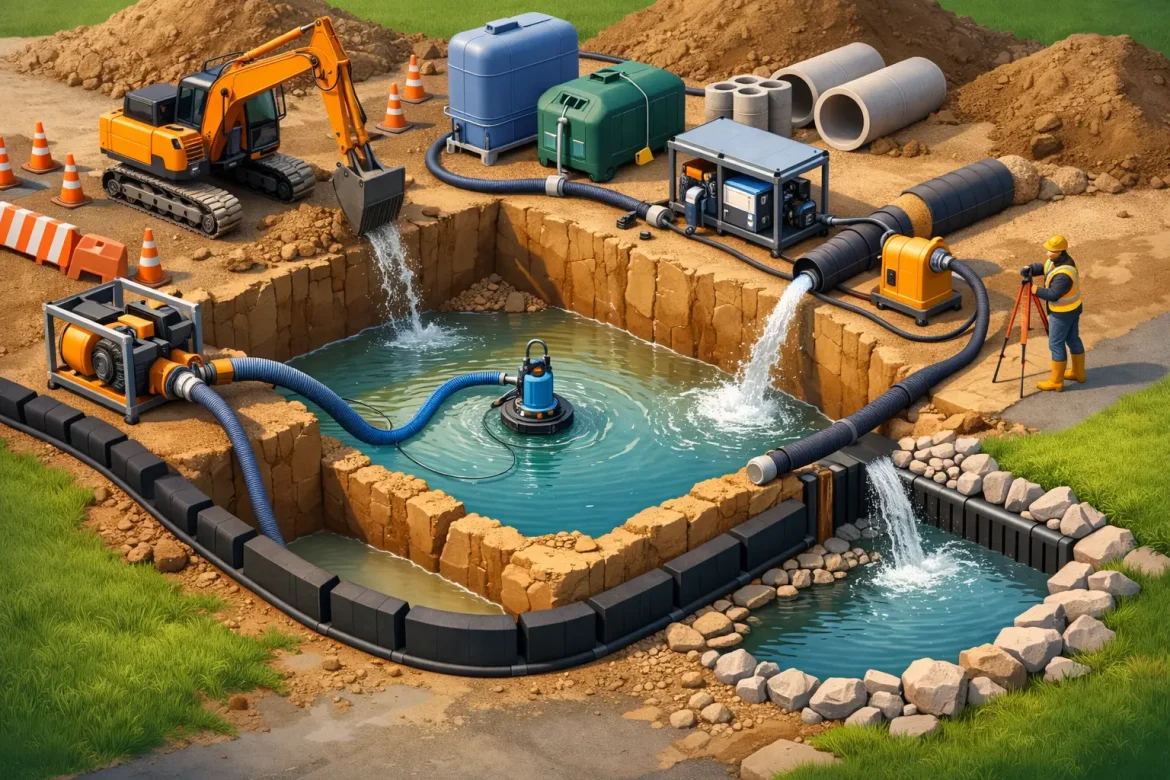
Water in an excavation is rarely just a pumping problem. It can soften formation soils, undermine batter stability, obstruct access, delay concrete works and create a discharge compliance issue in the same shift. To control excavation water safely, the site needs a planned system that manages both groundwater and surface water before they affect people, programme or permanent works.
For civil, construction and mining projects, the right approach depends on ground conditions, excavation depth, inflow rates, nearby assets and the quality of water being removed. A pump placed in the bottom of a trench may provide short-term relief, but it is not always a safe or effective dewatering strategy.
Start with the water source and ground conditions
The first question is not which pump to use. It is where the water is coming from and what its removal could do to the surrounding ground.
Surface water may enter from rainfall, upstream drainage, washdown activities or poor site grading. Groundwater may seep through excavation faces, rise through the base, or enter rapidly through permeable sand and gravel layers. In some locations, perched water tables or fractured ground can produce variable inflows that change quickly after rain or as excavation advances.
This distinction matters. Surface water is often managed by diversion, bunding, sumps and temporary drainage. Groundwater may require a purpose-designed system such as wellpoints, deep wells, eductor wells or controlled open pumping. If groundwater is removed too aggressively without considering the soil profile, it can cause settlement outside the excavation, affect adjacent services or alter ground support conditions.
A pre-start assessment should consider available geotechnical data, bore logs, expected groundwater levels, soil permeability, excavation geometry and nearby structures. On constrained urban sites, the influence of dewatering beyond the excavation boundary deserves particular attention. On remote infrastructure and mining work, access, power supply, redundancy and discharge management may be the bigger operational constraints.
Control excavation water safely with the right method
Dewatering methods should suit the formation and the work being protected. A system that performs well in coarse sand may be ineffective in low-permeability clay, while an oversized system can increase operating cost and create unnecessary drawdown.
Sump and open pumping
Sump pumping is commonly used where water collects at low points and inflows are manageable. Water is directed through graded drains or shallow trenches to a lined sump, then pumped out. It is practical for surface water and localised seepage, particularly where the excavation base remains stable.
The trade-off is that uncontrolled open pumping can draw fine material into the flow. This can lead to erosion, piping, loss of ground and turbid discharge. Sumps need to be positioned away from active work areas where possible, protected from collapse and maintained so sediment does not reduce capacity.
Wellpoint dewatering
Wellpoint systems are generally effective in shallow to moderate excavations in permeable soils. A series of closely spaced wellpoints is installed around or alongside the work area and connected to a header line and vacuum-assisted pump. The system lowers groundwater before it enters the excavation, providing a drier and more stable working environment.
Wellpoints require careful installation depth, spacing and vacuum management. Poorly sealed connections, unsuitable filter selection or insufficient wellpoint coverage can reduce performance quickly. The goal is not simply to remove water. It is to achieve controlled drawdown that supports safe excavation and planned construction activity.
Deep well dewatering
For deeper excavations or higher groundwater volumes, deep wells can provide the capacity needed to lower water levels beneath the excavation base. Submersible pumps are installed in screened wells, often around the perimeter of the work zone.
Deep wells can be highly effective, but design and monitoring are critical. Pumping rates, drawdown response and groundwater levels need to be reviewed throughout the works. Where there are nearby structures, existing bores, sensitive environments or underground services, the system must be managed with clear trigger levels and response actions.
Keep water out before it enters
Dewatering is more reliable when the site also prevents avoidable water from reaching the excavation. This is basic site control, but it is often overlooked when works accelerate or weather changes.
Temporary diversion drains, bunds and graded access areas can direct clean stormwater away from open excavations. Stockpiles should not block drainage paths or sit where sediment-laden runoff can wash into a sump. Where practical, cover exposed materials and maintain sufficient freeboard in sumps and treatment tanks before forecast rain.
Access arrangements also matter. Plant moving through wet approaches can damage temporary drains, compact flow paths and track sediment across the site. Daily inspections should check that drainage controls are still functioning after rain, plant movements and changes to excavation staging.
Treat and discharge water responsibly
Pumped water is not automatically suitable for discharge. It may contain suspended sediment, hydrocarbons, high salinity, acid-forming material, construction residues or naturally occurring contaminants. The discharge pathway must be considered before pumping begins, not when a sump is close to overflowing.
Treatment may involve settlement tanks, sediment basins, filtration, dosing, oil-water separation or other site-specific controls. The appropriate solution depends on water quality, discharge volume and the approved receiving point. In some cases, reuse for dust suppression or construction activities may be viable, provided water quality and project requirements allow it.
A disciplined discharge plan identifies where water will go, what quality criteria apply, how performance will be checked and who is authorised to make adjustments. It also accounts for wet-weather conditions, when higher flows and sediment loads can overwhelm an otherwise adequate setup.
Do not assume clear-looking water is compliant. Turbidity, pH, electrical conductivity and hydrocarbon indicators may need monitoring, depending on the project conditions and approval requirements. Keep records of inspections, sampling, treatment maintenance and discharge events. These records support compliance and make it easier to identify recurring problems before they become costly.
Build safety controls into daily operations
An excavation can change materially in a day. Pump failure, a storm cell, a blocked discharge line or an unexpected groundwater seam can turn a stable work area into a hazardous one. Dewatering controls need to be part of the daily site routine, not treated as a separate subcontractor activity.
Key operational controls include:
- protecting pumps, hoses and electrical connections from damage, flooding and vehicle traffic
- providing backup pumping capacity or standby equipment where water ingress could stop critical works
- securing discharge hoses to prevent scour, uncontrolled release or trip hazards
- inspecting excavation faces, batters, shoring and the base for signs of erosion, softening or instability
- setting clear escalation procedures for rising water, failed treatment, exceedances or changing ground conditions.
Workers need to understand the limits of the system. If water is rising, the excavation is showing distress or pumping creates visible soil movement, work should stop while the condition is assessed. No production target justifies entering a compromised excavation.
Pump and generator placement should also be practical for maintenance and refuelling without exposing workers to edge hazards. Electrical equipment requires appropriate protection and inspection, particularly in wet areas. Hoses and pipes should be routed so they do not obstruct emergency access, plant routes or pedestrian movement.
Monitor performance, not just water levels
A dry excavation can still be experiencing ground movement. Effective control means monitoring the response of the excavation and surrounding area, not simply checking whether pumps are running.
Track water levels in wells, sumps or standpipes against agreed target levels. Review pump flows and operating hours to identify changes in inflow. A sudden increase may indicate rainfall infiltration, a new permeable layer, a damaged line or changing groundwater conditions. Conversely, reduced flow can signal blocked screens, pump wear or loss of vacuum.
Where the risk profile warrants it, monitor settlement, vibration, turbidity and discharge quality as well. The level of monitoring should match the consequences of failure. A shallow isolated trench does not need the same regime as a deep basement excavation beside critical infrastructure.
This is where specialist experience adds value. Dewatering Solutions applies field knowledge of Western Australian and Queensland ground conditions to select workable methods, respond to changing site conditions and keep water management aligned with safety, environmental and programme requirements.
Plan for change, especially before rain
The strongest dewatering plans have allowances for changing conditions. Review capacity before major excavation stages, concrete pours, tie-in works and forecast rainfall. Confirm backup equipment is tested, fuel is available, treatment capacity is adequate and nominated personnel know what action to take after hours.
A controlled excavation gives crews room to work safely and gives the project team confidence that progress is not dependent on luck with the weather. Treat water control as a live construction system, inspect it often and adjust it before the ground tells you that it is too late.