
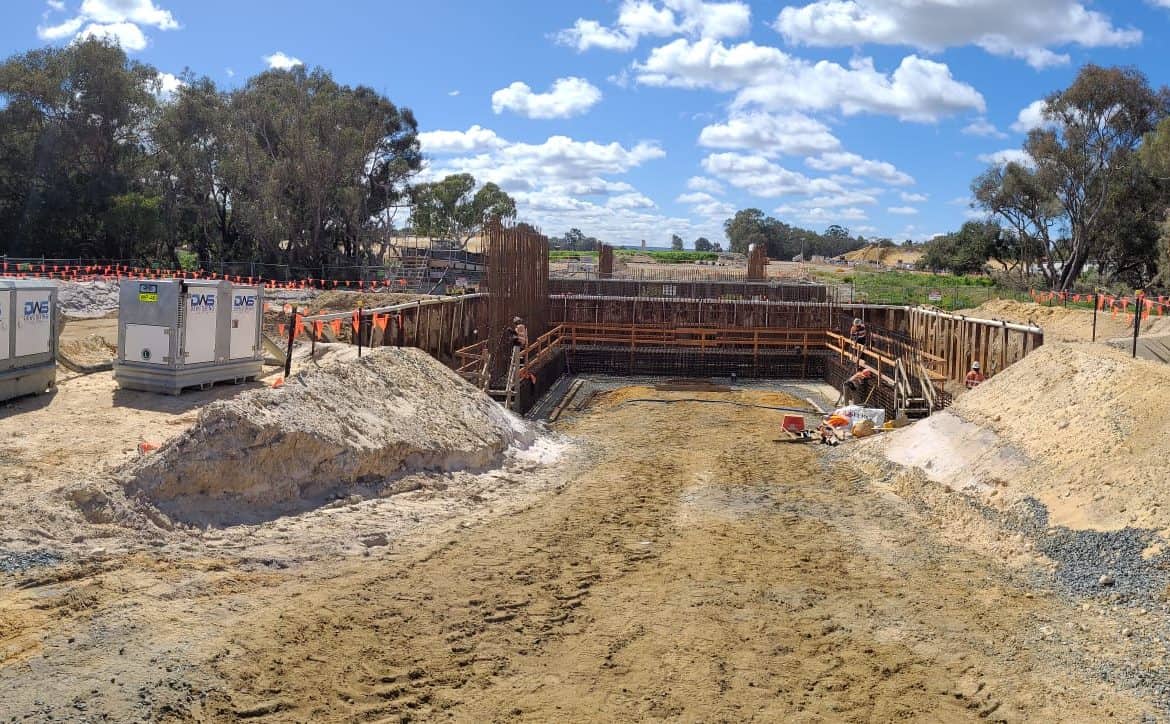
When groundwater starts moving faster than the programme, problems stack up quickly. Excavations soften, plant access becomes unreliable, environmental controls come under pressure and crews lose productive hours waiting for a site to stabilise. A groundwater management plan is what separates controlled site conditions from expensive rework, compliance issues and avoidable delays.
For project managers, engineers and principal contractors, the plan is not a box-ticking exercise. It is an operational tool that needs to reflect actual ground conditions, construction staging, discharge constraints and the consequences of getting it wrong. On complex sites across Western Australia, that usually means balancing dewatering performance, environmental obligations and budget discipline at the same time.
What a groundwater management plan needs to achieve
A useful plan starts with a practical objective – keep the site safe, keep the works dry enough to proceed and do it without creating a bigger problem somewhere else. That sounds straightforward, but the detail matters. Groundwater control can affect excavation stability, adjacent assets, pavement performance, buried services, water quality and downstream discharge points.
A strong plan defines how groundwater will be identified, controlled, monitored and managed through each project stage. It should be aligned to the actual construction methodology, not written in isolation from it. If the excavation depth changes, if shoring methods change, or if wet season conditions arrive earlier than expected, the groundwater strategy may need to change as well.
This is where many projects lose time. A plan based on generic assumptions often looks adequate on paper, but under site pressure it can fail because inflows are higher than expected, the formation is more permeable, or discharge water requires treatment before release. Good planning reduces the chance of those surprises becoming critical path issues.
Why generic dewatering assumptions cause trouble
Groundwater behaves differently across WA, even within the same project footprint. Variable stratigraphy, perched water, tidal influence, clay lenses and seasonal shifts can all change how water enters an excavation and how effectively it can be removed. Assuming one method will suit the entire job is rarely the safest or most cost-effective approach.
For example, a shallow trench might be manageable with sump pumping in one area, but a deeper excavation in more permeable ground may require wellpoints or deep wells to lower groundwater before digging begins. If the plan does not account for these differences, the site can end up reacting to water instead of controlling it.
The commercial impact is usually broader than pumping costs alone. Lost productivity, wet spoil handling, undercutting, imported fill, programme extensions and environmental non-conformances can quickly outweigh the cost of getting the plan right at the start.
Building a groundwater management plan around site reality
The best plans are built from field evidence, design intent and construction sequencing. That means using available geotechnical information, historical site data, hydrogeological indicators and practical knowledge of local conditions to define a control strategy that can be delivered on site.
Start with the ground model
Before selecting equipment or forecasting pumping rates, the project team needs a realistic understanding of the subsurface. Soil and rock profiles, permeability, groundwater levels, recharge sources and likely inflow pathways all affect system design. On some sites, the main issue is steady seepage. On others, it is rapid inflow through sands, gravels or fractured material.
The ground model does not need to be academic. It needs to be accurate enough to support decisions. If confidence in the subsurface profile is low, staged verification and contingency planning become even more important.
Match the method to the works
A groundwater management plan should identify the dewatering method that best suits the excavation geometry, target drawdown, construction sequence and surrounding environment. Wellpoint systems can be highly effective for shallow to moderate drawdown across linear works and broad excavations. Deep wells are often better suited to deeper excavations or where higher volumes need to be controlled. Sump and open pumping can work in low-permeability conditions or for localised collection, but it is not always appropriate where formation stability is critical.
There is no single best method in every case. The right approach depends on soil response, available footprint, power supply, discharge options, noise constraints and the level of control required. In many projects, a combination of methods performs better than a single-system approach.
Plan discharge and treatment early
Removing groundwater is only half the task. The plan must also address where the water goes, what quality standards apply and whether treatment is required before reuse, storage or discharge. This is where environmental compliance can tighten quickly.
If pumped water contains suspended solids, hydrocarbons, elevated salinity or other contaminants, treatment requirements may affect equipment selection, holding capacity and site layout. Waiting until pumps are running to resolve discharge management is a common source of delay. Early planning keeps approvals, controls and monitoring aligned with project delivery.
Monitoring is what makes the plan usable
A groundwater management plan is only effective if site teams can verify that it is working. Monitoring should not sit at the back of the document as an administrative afterthought. It is central to managing risk.
Water levels, pumping volumes, drawdown response, discharge quality and surrounding ground behaviour all provide evidence of system performance. On some sites, monitoring nearby structures, services or settlement-sensitive assets is just as important as measuring the water itself.
The practical question is not whether monitoring is needed. It is what level of monitoring is proportionate to the risk. A straightforward trenching package may need a simpler regime than a deep basement excavation near existing infrastructure. The plan should set trigger levels, define responsibilities and make clear what actions follow if results move outside expected limits.
Without that discipline, the team can miss early signs of underperformance. By the time groundwater starts affecting production, the recovery options are usually more expensive.
The safety and environmental side cannot be separated
Groundwater management is often discussed as a productivity issue, but on active project sites it is also a safety and environmental control. Wet excavations increase slip risk, compromise access, affect temporary works performance and can destabilise batters or trench walls. Water also changes how people and plant move through the site.
Environmental exposure runs alongside those risks. Uncontrolled discharge, sediment mobilisation, drawdown impacts beyond the work area and poor handling of contaminated water can create serious project consequences. A good plan addresses these interactions directly instead of treating them as separate workstreams.
That includes clear site procedures, maintenance requirements, backup capacity and response protocols for pump failure, power interruption, storm events or unexpected inflows. Reliable performance comes from preparation, not optimism.
Procurement decisions can weaken the plan
Even a well-prepared strategy can underperform if procurement is driven by lowest upfront cost rather than whole-of-project value. Dewatering scopes are sometimes packaged too narrowly, with limited allowance for changing conditions, monitoring adjustments or treatment needs. That may reduce the quoted figure, but it often increases programme and commercial risk later.
Project teams usually get better outcomes when they assess groundwater contractors on field capability, local experience, response time, safety systems and ability to adapt under live site conditions. The contractor does not just supply pumps. They influence excavation readiness, sequencing reliability and compliance performance across the job.
That is especially relevant in WA, where local ground conditions and project logistics can vary sharply between metro, regional and remote sites. Practical site knowledge is not an optional extra. It affects how quickly systems are installed, how reliably they perform and how effectively problems are resolved when conditions shift.
What decision-makers should look for in a plan
A credible groundwater management plan should be easy for delivery teams to act on. It should clearly set out the groundwater risks, the selected control method, design assumptions, discharge pathway, monitoring regime and contingency measures. It should also align with the construction sequence and define who is responsible for what on site.
If the document is technically correct but difficult to implement, it will not protect the programme. The most effective plans are written with operations in mind. They tell the project team what needs to happen, when it needs to happen and how performance will be checked.
That practical focus is what turns planning into project control. For contractors managing tight programmes, live interfaces and commercial pressure, that is the real value. Dewatering Solutions sees this regularly across civil, mining and infrastructure works – the projects that perform best are usually the ones that treat groundwater management as an early operational priority, not a late response to wet ground.
A groundwater management plan should give the site fewer surprises, not more. If it is grounded in real conditions, supported by monitoring and built for execution, it becomes one of the simplest ways to protect programme certainty before water starts affecting everything else.