
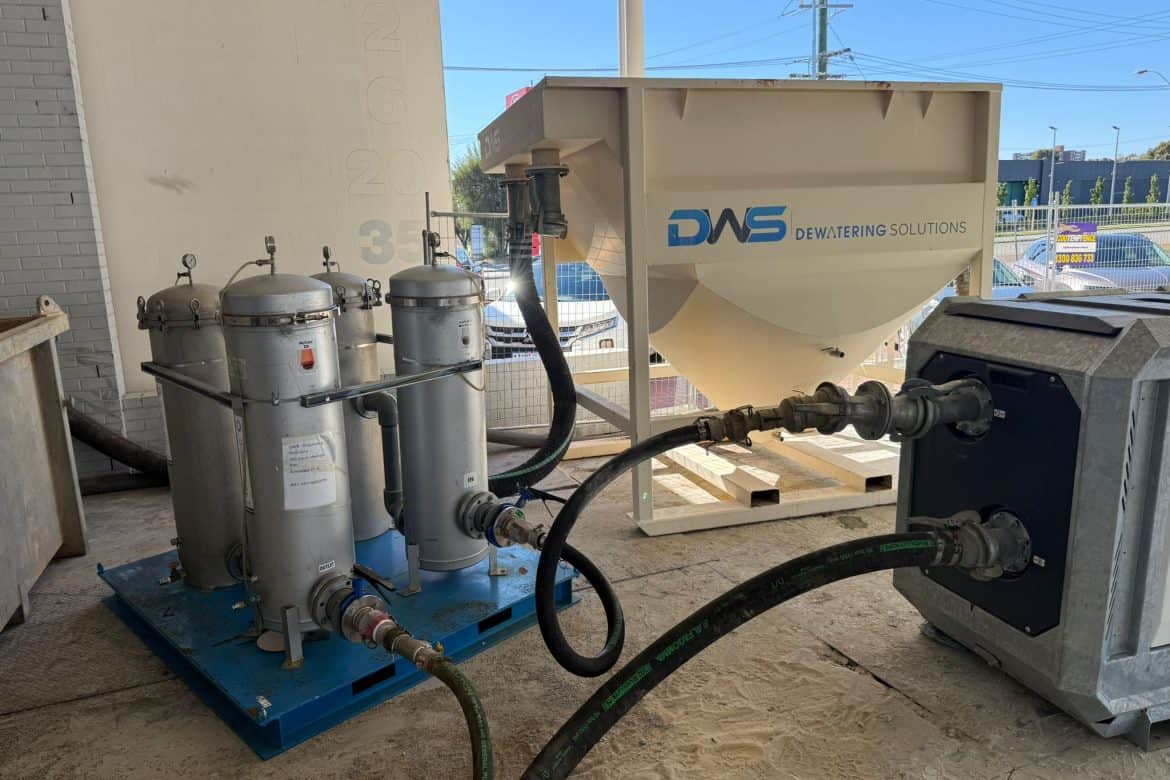
When pumped water starts carrying fines, hydrocarbons, elevated metals or unexpected turbidity, the issue is no longer just dewatering. It becomes a water quality problem with direct consequences for discharge compliance, site safety and project progress. That is where groundwater treatment matters. On active construction, mining and civil sites, treating water properly is often the difference between steady production and a job slowed by environmental risk, rework or regulator scrutiny.
For project teams, the challenge is rarely abstract. Water has to be removed to keep excavations stable, foundations workable and crews safe. But once that groundwater is brought to surface, it must be managed according to what it contains, where it is going and what conditions apply to the site. A treatment approach that works on one project can be inadequate on the next, even when the pumping system looks similar on paper.
What groundwater treatment involves on site
Groundwater treatment is the process of improving pumped groundwater so it can be discharged, reused, reinjected or otherwise managed in line with environmental and operational requirements. In practice, this usually means removing suspended solids, reducing turbidity, separating hydrocarbons, adjusting pH or addressing dissolved contaminants before water leaves the treatment train.
On many sites, the first treatment step is straightforward settlement. If the groundwater is carrying sediment from excavation activity or disturbed formations, a tank, pond or clarifier may be enough to reduce the solids load before discharge. But field conditions often push the system beyond simple settlement. Fine clays remain in suspension, iron oxidises after pumping, rainfall changes influent quality, or a legacy land use issue introduces contamination that requires a more controlled response.
That is why treatment needs to be viewed as part of the broader water management system, not as an afterthought bolted onto a pump line. The performance of wells, pumps, storage, dosing and discharge controls all affects treatment outcomes.
Why groundwater treatment fails when it is treated as a box-ticking exercise
The most common mistake is assuming water treatment is just a permit requirement to satisfy at the end of the chain. In reality, groundwater quality can shape the dewatering method, equipment selection, footprint and running cost from day one. If those factors are ignored during planning, sites often end up with undersized treatment systems, poor water residence times and operational bottlenecks that hit productivity.
There is also a tendency to underestimate variability. Groundwater conditions can change across a single site and over the life of a project. Early-stage testing may suggest low turbidity and manageable pH, then bulk excavation exposes different strata and the treatment system starts struggling. A static design on a dynamic site is a risk.
For principal contractors and project managers, the practical consequence is simple. If treatment cannot keep up with inflows or cannot consistently meet discharge targets, pumping may need to be slowed or stopped. That puts excavation sequencing, concrete works, access and safety controls under pressure very quickly.
Matching the treatment approach to the water quality risk
There is no single best method for groundwater treatment because the right system depends on both contaminant profile and site constraints. Suspended solids and turbidity are common starting points, particularly on civil and trenching works, but they are not the whole picture. Dissolved metals, low or high pH, hydrocarbons and salinity can each drive a different treatment response.
Where sediment is the main issue, settlement tanks, lamella clarifiers or filtration can be effective, provided the flow rate and particle size are properly considered. Very fine material may require chemical dosing to promote flocculation before solids can settle out. That adds another layer of control, because overdosing can create its own water quality issues and poor dosing discipline usually leads to inconsistent results.
If hydrocarbons are present, oil-water separation becomes necessary, often alongside containment and monitoring controls. If acidic or alkaline groundwater is involved, pH correction may be required before discharge. Where dissolved contaminants are the problem, treatment can become significantly more specialised and may affect whether discharge is viable at all.
This is where experience counts. A treatment train should reflect actual site chemistry, expected flow variability, available space, maintenance demands and discharge criteria. The cheapest equipment arrangement upfront is not always the lowest-cost option once downtime, labour and compliance exposure are taken into account.
Groundwater treatment and dewatering must be designed together
Projects run more smoothly when treatment is integrated with the dewatering plan from the outset. Pumping rate influences retention time. Well layout affects solids loading. Header arrangement and balancing can change how consistently water arrives at the treatment plant. Even the location of tanks and discharge points affects access, refuelling, maintenance and emergency response.
Treating these systems separately often creates friction onsite. Dewatering crews focus on drawdown targets, while environmental controls focus on discharge quality, and the treatment system sits between them carrying the operational burden. A coordinated design avoids that split. It allows the project to manage groundwater quantity and groundwater quality as one system with shared performance targets.
This is particularly important on constrained sites where laydown area is limited or where staging changes over time. Temporary works need to remain workable as excavation progresses, traffic routes change and production pressure increases. A treatment setup that looks acceptable in a pre-start meeting can become impractical once the site is fully active.
What good treatment performance looks like in the field
Reliable groundwater treatment is not just about meeting a number on a test sheet. It should support the pace of the job without creating constant intervention. In field terms, that usually means stable flow handling, consistent discharge quality, clear monitoring records and equipment that can be maintained without disrupting critical works.
Good performance also shows up in what does not happen. There are fewer stoppages caused by dirty discharge water. There is less rehandling of water around the site. Sediment does not accumulate where it should not. Crews are not forced into reactive workarounds because the treatment unit has become the weak point in the system.
For sites with tight programmes, reliability matters as much as treatment capability. A technically sound process still needs to withstand dust, heat, variable inflows and the practical realities of operating around live construction or mining activities.
Compliance matters, but so does constructability
Environmental compliance is a core driver of groundwater treatment, and rightly so. Discharge quality, receiving environment sensitivity and approval conditions all need to be understood before water is released. But compliance in isolation is not enough. The system also has to be buildable, operable and responsive under site conditions.
A treatment design may look comprehensive in principle but fail in practice if it requires excessive manual handling, constant chemical adjustment or more space than the project can spare. Similarly, an over-engineered solution can add unnecessary cost and complexity where a simpler treatment train would have met the requirement more efficiently.
The best outcome is usually a controlled, fit-for-purpose system with enough flexibility to handle changing conditions. That means realistic contingency planning, sensible monitoring frequencies and clear triggers for adjustment when water quality shifts. It also means understanding when the site needs escalation rather than trying to force a basic setup to do a specialist job.
Groundwater treatment in Western Australian and Queensland conditions
Local ground conditions can materially affect treatment performance. In parts of Western Australia and Queensland, projects may encounter variable geology, elevated iron, fine sediments, saline influence or legacy contamination risks depending on the sector and location. Those factors change how quickly water settles, how chemistry behaves once pumped to air, and what treatment controls are needed to maintain compliance.
That local knowledge becomes valuable when decisions need to be made quickly. A team that understands the likely behaviour of site water in regional conditions can often identify treatment risks early, refine the dewatering approach and avoid the stop-start cycle that drives cost into temporary water systems.
For that reason, contractors with real field experience tend to approach groundwater treatment conservatively where it matters and practically where it counts. They know that water quality on paper is only part of the story. The rest is how that water behaves under actual pumping conditions, in actual weather, on an actual live site.
Choosing a contractor for groundwater treatment
For procurement and delivery teams, capability should be judged on more than equipment lists. The real test is whether the contractor can assess the water risk properly, build a treatment system that suits the programme and keep it operating reliably under changing site conditions.
That means asking practical questions. How will the treatment train cope with variable inflow? What is the plan if turbidity spikes after rainfall or excavation into a new layer? How will monitoring be managed? What maintenance is expected, and who owns response if discharge quality starts trending the wrong way?
A dependable specialist should be able to answer those questions plainly. They should understand the link between dewatering performance, treatment performance and construction sequencing. Most importantly, they should be able to execute safely and consistently without shifting risk back onto the principal contractor.
On demanding sites, groundwater treatment is not a side issue. It is part of keeping the job moving, keeping people safe and keeping the project inside its environmental and commercial boundaries. When it is planned early and managed properly, it stops being a source of disruption and starts doing what it should – supporting predictable site performance.
If your project is about to expose groundwater, the right time to think about treatment is before the first pump starts, not after the first discharge fails.