
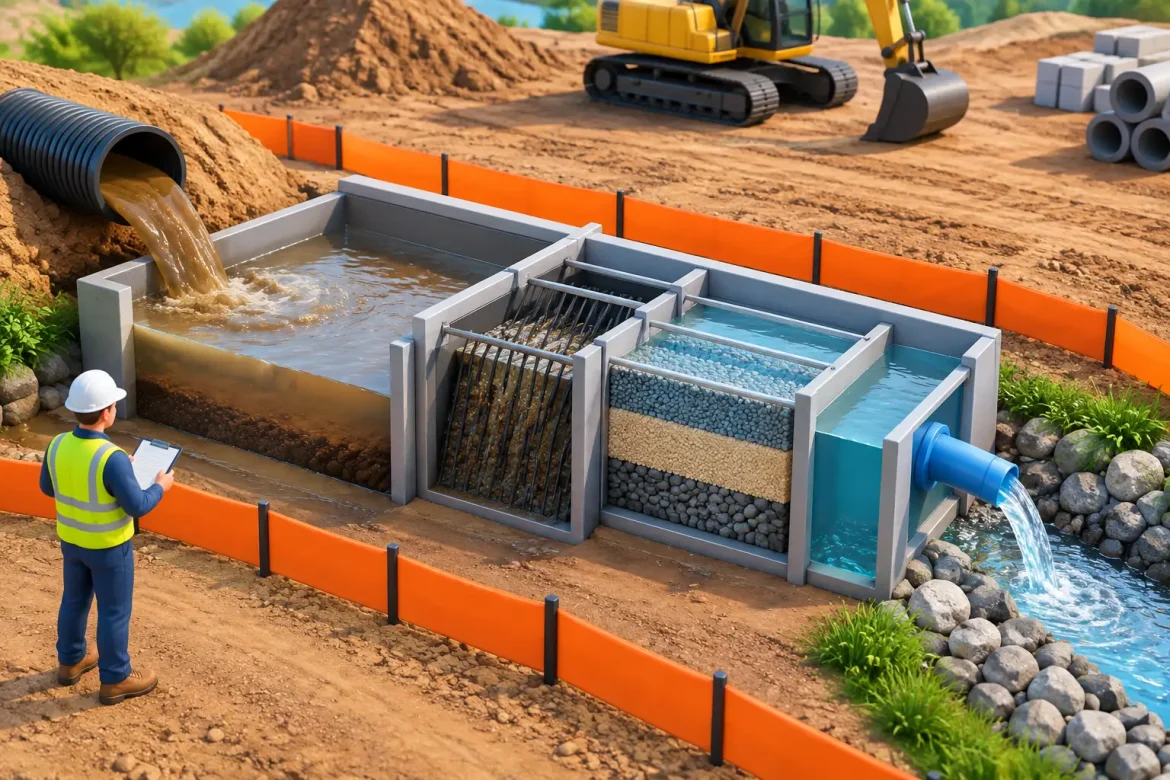
A discharge point can look acceptable at the start of a shift and become a compliance, erosion or programme problem within hours. Rainfall, excavation changes, vehicle movement and a rising groundwater table can all alter water quality quickly. To manage dirty water discharge effectively, project teams need to treat it as an active site control, not simply a pumping task.
For construction, civil and mining projects, the objective is straightforward: keep work areas dry and stable while ensuring water is contained, treated, monitored and released or reused only in line with the project’s approval conditions. Achieving that objective requires planning before water is encountered, disciplined operation while pumping is underway, and clear accountability when conditions change.
Start with the water, not the pump
Dirty water is not a single category. It may be groundwater carrying fine sediment from an excavation, stormwater runoff from disturbed ground, water affected by concrete washout, hydrocarbon residue, saline conditions, acid sulfate soils or naturally occurring metals. The source and likely contaminants determine what controls are appropriate.
A pump selected only for flow rate may keep an excavation dry, but it does not solve the discharge challenge. High pumping rates can stir up sediment in a sump, overwhelm a settling system or scour an unprotected outlet. Conversely, a well-designed dewatering system can lower groundwater progressively, reduce sediment mobilisation and deliver a more consistent influent to treatment equipment.
Before work begins, review site investigations, groundwater information, proposed excavation depths, nearby drainage lines and discharge constraints. Clarify whether water can be discharged under project conditions, sent to sewer under an approval, reused for dust suppression, retained for treatment, or removed off site. This decision should be made early enough to protect the construction programme and allow for the right equipment footprint.
Build dirty water discharge controls into the dewatering plan
A practical dewatering plan connects groundwater control, water treatment and discharge management. It identifies where water will collect, how it will be pumped, what treatment stages are needed, where treated water will go and how performance will be checked.
The plan should also account for changing site conditions. A shallow sump arrangement may be suitable for a short, dry excavation in stable ground. It may not be suitable after prolonged rain, when fine material has been disturbed or when the excavation deepens. Well point or deep well systems can offer better groundwater control in suitable conditions, but they still require a managed discharge pathway.
At a minimum, the operating plan should define:
- expected flow rates, peak flows and rainfall allowances;
- likely water quality risks and required testing;
- treatment equipment, storage capacity and contingency measures;
- approved discharge or reuse locations and protection requirements;
- inspection, monitoring and record-keeping responsibilities.
This level of detail prevents a common site failure: water management being handed from one crew to another without a clear understanding of what must happen between the pump outlet and the final discharge point.
Separate clean water from dirty water
The most cost-effective litre of dirty water is often the litre that never becomes dirty. Divert clean stormwater around active excavation areas where practical. Keep stockpiles, access routes and exposed soil away from drains, and use bunding or diversion controls to prevent runoff entering sumps.
Separation reduces treatment volumes and gives sediment basins or tanks more time to work. It also reduces the risk that a short rainfall event turns a controlled dewatering system into an uncontrolled discharge. On constrained sites, even temporary drain protection and sensible grading can make a material difference.
Choose treatment for the actual risk
Sediment is a frequent issue, but it is not the only one. A basic settling tank may be effective for heavier particles, while fine clays and silts can remain suspended long after pumping stops. These materials may require staged settlement, filtration or appropriately managed chemical dosing to achieve the required water quality. The treatment approach must suit the water and be operated by personnel who understand the process.
Where hydrocarbons are a risk, source control is essential. Maintain plant away from drainage paths, use designated refuelling areas and respond quickly to spills. Oil-water separation may form part of the treatment train, but it should not be treated as a substitute for good site housekeeping.
Water chemistry can also change the solution. High salinity, elevated metals, low pH or acid sulfate soil impacts can limit reuse options and require specialist assessment. Releasing chemically affected water to land or a waterway because it appears clear is not an acceptable control. Visual clarity is useful, but it is not a water-quality result.
A treatment train is often more reliable than a single device. For example, a calm collection sump can reduce turbulence before water passes through settlement tanks, filtration and a final contained discharge point. The exact arrangement depends on flow, available space, contaminant type, approval conditions and the consequences of a system upset.
Protect the discharge point
A compliant treatment setup can still fail at the final metre. Discharging at excessive velocity can scour soil, damage drains and mobilise sediment downstream. The outlet needs to be stable, protected and located where inspections can occur safely.
Use energy dissipation and erosion protection where needed, and do not position hoses where they can be crushed by plant or redirected without authorisation. Temporary pipework should be secured, clearly identified and checked regularly for leaks, disconnected couplings and bypasses. On larger sites, pipe plugs and isolation controls may be needed to prevent dirty water entering live drainage networks during works.
The discharge route must remain visible in the site’s daily operations. If a new access track, stockpile or crane pad blocks the intended pathway, the water plan needs to change before pumping resumes. This is where coordination between the dewatering contractor, superintendent and construction team matters most.
Monitor conditions and respond early
Managing discharge is not a set-and-forget activity. Site teams should inspect pumps, sumps, treatment units, hoses, storage volumes and outlets at a frequency suited to the risk. High-flow operations, rainfall events and changing excavation conditions warrant closer attention.
Monitoring should be tied to the requirements of the project and any relevant approvals. Depending on the discharge pathway and risk profile, this may include visual checks, turbidity, pH, electrical conductivity, flow volumes or laboratory testing. Records should show when checks occurred, what was observed, any results obtained and what action was taken if limits or trigger levels were approached.
Trend information is valuable. A gradual increase in turbidity may indicate a damaged filter, overloaded settlement tank, unstable sump or a change in the groundwater source. Acting at that point is usually faster and less expensive than responding after an uncontrolled release, regulator enquiry or work stoppage.
Plan for wet weather and system failure
Every active water management system needs a realistic contingency. Pumps fail, power is interrupted, rainfall exceeds forecasts and a treatment unit may require maintenance at the wrong moment. The question is not whether conditions can change, but whether the site has capacity and authority to respond.
Provide backup pumping where loss of groundwater control could affect excavation stability or worker safety. Maintain sufficient contained storage or alternative treatment capacity for short-term peaks. Keep spare hoses, fittings and critical consumables available, and make sure the team knows who can authorise a change to discharge arrangements.
Emergency procedures should address both water quantity and water quality. Pumping water away from an excavation into an unsuitable location simply moves the problem. A controlled pause, contained storage or approved alternative route is often the safer decision.
Assign ownership across the project team
Water management often falls between scopes. The excavation crew needs dry working conditions, the environmental team manages compliance requirements, and the dewatering operator runs the equipment. If responsibilities are not defined, critical checks can be missed.
Nominate a person responsible for the operating condition of the dewatering and treatment system, while ensuring site management understands the limits of the approved arrangement. Changes to excavation sequencing, incoming water volumes or discharge locations should be communicated before they affect the system.
Specialist support is particularly valuable where ground conditions are variable, discharge restrictions are tight or the consequences of delay are high. Dewatering Solutions applies site-based groundwater control and treatment experience to help project teams manage these interfaces without losing sight of safety, programme and cost.
A well-managed discharge is rarely noticed because the excavation stays workable, the outlet remains controlled and the records are in order. That is the standard worth designing for: water managed with enough discipline that it never becomes the reason the job stops.