
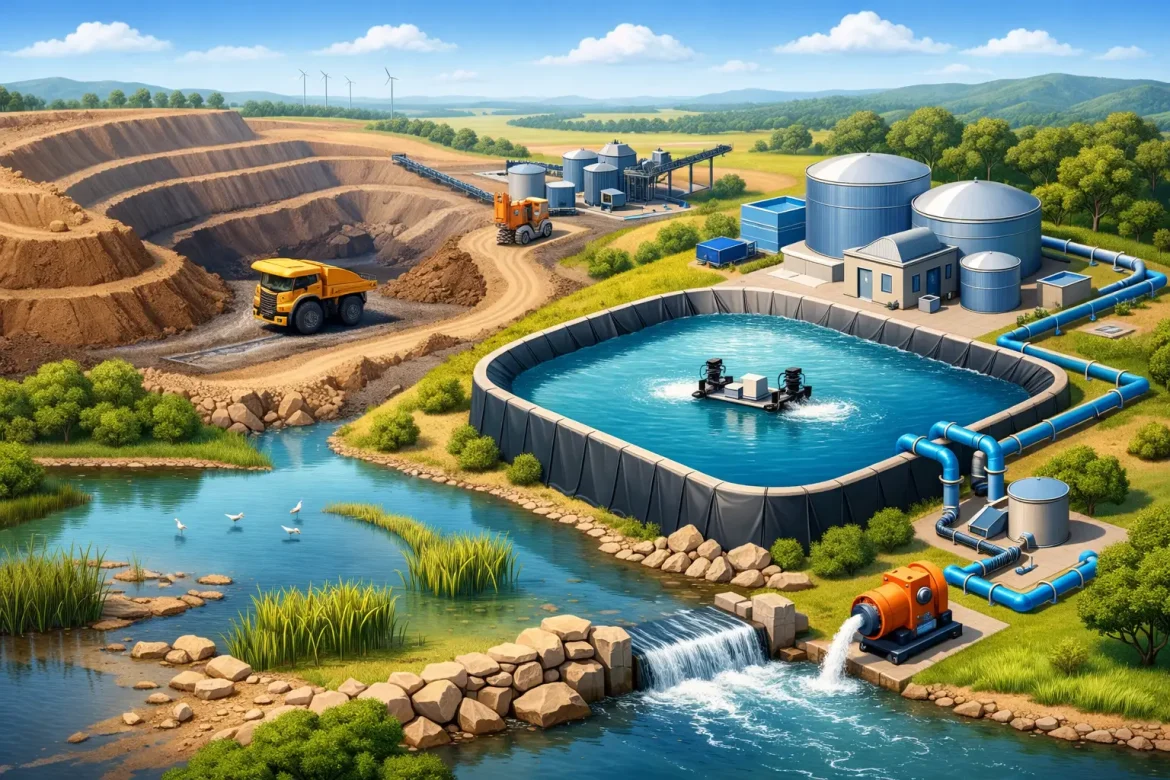
Mine water rarely becomes a critical issue because of one large inflow. More often, it develops through small gaps in planning: a changing groundwater level, an undersized sump, wet-season runoff entering a work area, or discharge water that does not meet site conditions. This Queensland mine water guide sets out the practical controls project teams should consider before water affects access, safety, environmental performance or production.
For mine operators, principal contractors and project engineers, the objective is not simply to remove water. It is to control the right water, at the right rate, through a system that can be safely operated, monitored and adapted as site conditions change.
Queensland mine water guide: start with the water balance
A workable mine water plan begins with a site-specific water balance. This should identify where water enters the operation, where it is stored or used, where it needs to go, and what quality requirements apply at each point. Treating all site water as the same is a common and costly mistake.
Potential sources include groundwater seepage into pits and excavations, rainfall runoff, pit lake water, process water, washdown water, sediment-laden runoff and water released from dewatering bores. Each source can carry different risks. Groundwater may require sustained drawdown to maintain stable working conditions, while stormwater may demand fast collection and temporary storage during a high-intensity event.
The balance should also account for seasonal variation. Queensland sites can experience extended dry periods followed by intense rainfall, so a system designed around average conditions may not be adequate when access roads, pit floors or treatment capacity are under pressure. Review rainfall assumptions, catchment areas, storage capacity and pump duty against credible peak conditions, not only normal operating flow.
Just as importantly, identify the receiving point for every water stream. Water may be reused for dust suppression or processing, directed to a sediment basin, treated before discharge, transferred to storage, or managed under a specific approval condition. The intended destination determines the treatment, monitoring and containment needed upstream.
Select dewatering for ground conditions, not convenience
The most appropriate dewatering method depends on geology, permeability, excavation depth, required drawdown, water quality and the time available to install the system. A pump that moves water quickly is not necessarily a dewatering solution. If it does not lower pore pressures or keep inflows under control, the excavation can remain unstable and difficult to work in.
Well point systems are often effective in shallow, permeable soils where controlled drawdown is required across an excavation footprint. Deep well dewatering can suit deeper excavations or mine areas where groundwater must be lowered over a larger zone. Sump and open pumping may be suitable for managing localised inflows and surface water, but it should not be relied on as the sole control where unstable ground or high groundwater pressures are present.
There are trade-offs in every approach. A lower-cost temporary pumping arrangement may appear attractive early in a project, but repeated relocations, poor access, excess sediment handling and standby requirements can quickly erode savings. Conversely, a more engineered system can be unnecessary where inflows are minor, ground is competent and the work is short duration. The right decision comes from field data and realistic operating requirements.
Before installation, confirm bore logs, groundwater information, expected inflow rates, target water levels and likely pumping duration. Where data is limited, staged testing can be more valuable than committing to equipment capacity based on assumptions. Pump testing also helps establish whether fine materials are likely to migrate, whether well efficiency is adequate, and whether drawdown could affect nearby infrastructure or environmental receptors.
Treat water quality as an operational issue
Mine water management is not only a volume problem. Water quality can determine whether water is suitable for reuse, requires treatment, or must be contained until an approved management pathway is available.
Key parameters will vary by site and approval conditions, but commonly include pH, electrical conductivity, turbidity, total suspended solids, hydrocarbons, dissolved metals and sulphate. Acid-forming materials, saline groundwater, process residues and disturbed soils can all affect quality. Water that looks clear may still be unsuitable for discharge or reuse, which is why sampling needs to inform decisions rather than follow a paper exercise.
Treatment should match the contaminant and the required outcome. Sediment control may involve settling, flocculation, filtration or a combination of these measures. Oily water requires separation and managed disposal. pH adjustment, chemical dosing or more specialised treatment may be needed for water with dissolved contaminants. Each option creates its own operational obligations, including chemical handling, sludge management, testing, maintenance and contingency capacity.
Where practical, separating clean water from dirty water is one of the most effective controls available. Diverting upgradient runoff away from disturbed areas reduces the volume requiring treatment. Keeping fuels, workshops and laydown areas out of drainage paths reduces contamination risk. These measures are often simpler and less expensive than increasing treatment capacity after the fact.
Build compliance into daily site operations
Mine water controls must align with the site’s environmental authority, water management plan, discharge conditions and internal procedures. Conditions differ between projects, so teams should avoid copying limits or monitoring programs from another operation. A system that was acceptable on one site may be non-compliant on the next because the receiving environment, water quality, discharge point or approval framework is different.
Compliance is strongest when the people operating the system understand the purpose of each control. Pump operators need clear instructions on where water can be transferred, what alarms or readings require escalation, how to manage spills, and when a discharge must stop. Supervisors need current records showing volumes pumped, sampling results, rainfall events, treatment performance and any departures from the approved process.
Monitoring equipment should be selected for site conditions and maintained accordingly. Online instruments can provide useful trend data and early warning, but they do not remove the need for verification, calibration and representative sampling. Manual observations remain valuable, particularly after heavy rain, system changes or a change in water source.
A practical monitoring program links results to actions. For example, a rising turbidity trend should trigger investigation of basin performance, pumping rates, sediment disturbance or treatment dosing before a limit is approached. The same principle applies to declining groundwater levels, increasing well drawdown, reduced pump efficiency or unexpected water quality changes.
Plan for wet weather, failures and changing mine conditions
A mine water system should be designed for normal operation and prepared for abnormal events. Wet weather is the obvious test, but power loss, blocked lines, failed pumps, flooded sumps, damaged bunds and unavailable treatment equipment can produce the same result: uncontrolled water where the site cannot afford it.
Contingency planning should cover backup pumping capacity, emergency power where required, spare hoses and fittings, overflow pathways, additional storage, response contacts and clear decision authority. It also needs to be tested in the field. A contingency plan that relies on equipment stored off site or unavailable operators is unlikely to protect a live excavation during a storm.
Mine conditions change throughout the project. As pits deepen, catchments expand, haul routes move and work fronts progress, the original water management arrangement may no longer suit the site. Regular reviews should occur after major excavation stages, significant rainfall events, changes to the mine plan or evidence that pumping performance is deteriorating.
Manage water systems as part of production planning
Water control is often treated as a supporting service, yet it has direct influence on excavation rates, geotechnical performance, equipment access and workforce safety. Including dewatering and treatment requirements in short-term planning helps avoid the familiar situation where production is ready to move but water infrastructure is not.
This requires coordination between operations, environment, maintenance and contractors. The dewatering contractor needs sufficient notice of changing work areas and anticipated depths. Environmental personnel need visibility of planned transfers or discharges. Maintenance teams need pump and power requirements built into their schedules. Procurement teams should assess capability, response times and proven field experience, rather than comparing hire rates alone.
For complex sites, a specialist water contractor can provide value by connecting the design intent to day-to-day execution: installing and maintaining systems, monitoring performance, responding to changing ground conditions and keeping records that support site obligations. Dewatering Solutions approaches mine water work with this operational focus, because a system only performs when it is properly installed, actively managed and maintained under real site conditions.
The best time to solve a mine water problem is while the work area is still dry, access is open and there are options available. Treat water planning as a live production control, and it can protect far more than compliance – it can protect the programme, the ground and the people working on it.