
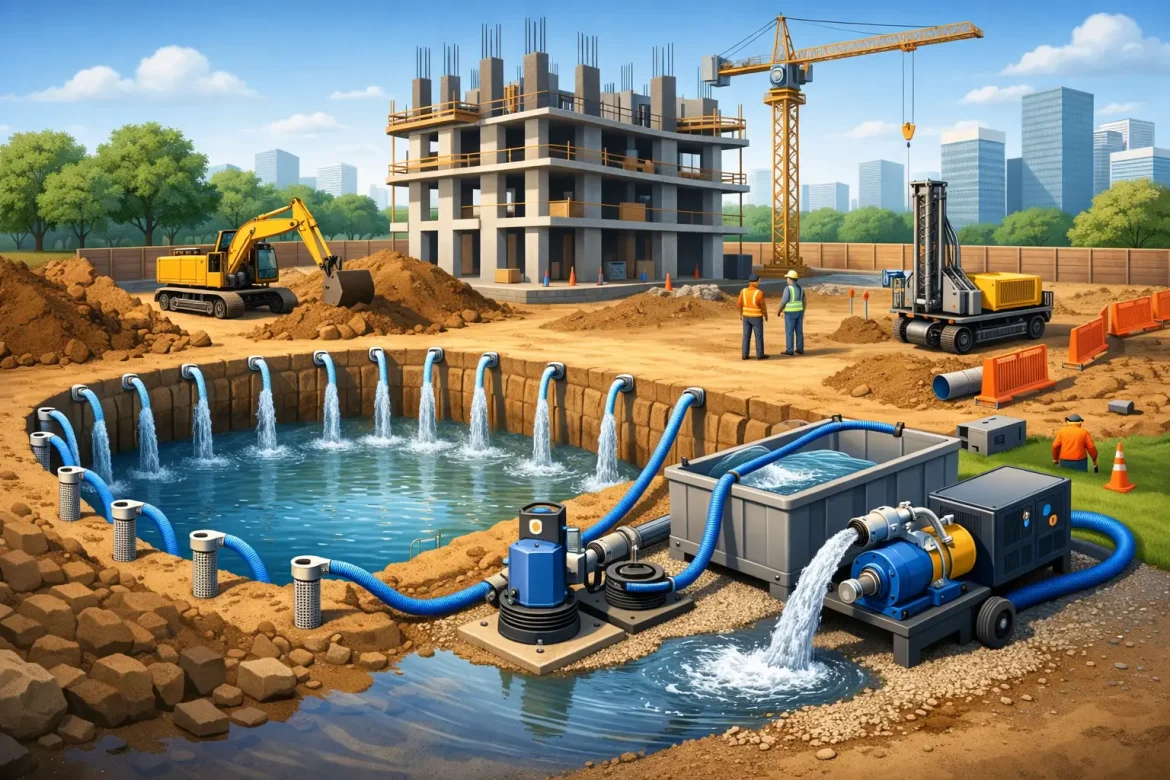
A trench that looked dry at pre-start can become a high-risk excavation after one groundwater inflow, a rain event or a change in tide. The question, when is dewatering required, should be answered during planning, not once water is pooling around plant, workers and freshly prepared formation.
For construction, civil and mining projects, dewatering is required whenever water prevents safe, stable, compliant or productive work. That can mean lowering groundwater before an excavation starts, removing surface water during earthworks, or managing inflows to keep a shaft, pit, trench or foundation area workable. The right response depends on the ground conditions, excavation depth, water source, programme and discharge requirements.
When is dewatering required before excavation?
Dewatering is generally required before excavation where groundwater is expected to rise into the proposed dig, or where rainfall and surface runoff cannot be controlled by normal drainage alone. It may also be necessary where the excavation will cut through permeable sand, gravel, fractured rock or other water-bearing strata.
The immediate issue is often visible water. The more significant issue is what that water does to the ground. Saturated soils can lose bearing capacity, soften at formation level and slump at trench faces. In granular ground, uncontrolled seepage can carry fine material with it, creating erosion, voids or instability around the excavation.
A site does not need to be fully flooded before action is required. If groundwater is likely to affect access, excavation support, concrete preparation, pipe bedding or worker safety, a planned dewatering system should be considered before mobilisation of the main works.
Common project triggers
Dewatering is commonly required where one or more of the following conditions apply:
- Groundwater levels sit above the planned excavation base or are likely to recover quickly after pumping.
- Water is entering trenches, pits, basements, shafts or service corridors through the floor or sidewalls.
- Wet ground is reducing plant access, haul road performance or safe footing for crews.
- The excavation requires a dry, stable formation for piling, services installation, concrete works or pavement construction.
- Rainfall, runoff, tidal influence or nearby watercourses are causing recurring water accumulation.
- Environmental controls require water to be captured, treated, tested or discharged under defined conditions.
These triggers can occur separately, but they often combine. A deep excavation in sandy ground, for example, may require groundwater drawdown for stability and surface-water controls to manage rain events. Treating only the visible water may leave the underlying risk unresolved.
Water changes the excavation risk profile
The need for dewatering is closely tied to the excavation method and ground behaviour. Water increases the load on support systems and can compromise the stability assumptions made during design. It can also slow every activity that follows, from trimming and surveying to installing services and pouring concrete.
In trenches, water can undermine sidewall stability and make it difficult to maintain a safe working area. In larger excavations, elevated pore water pressure can cause base heave or uplift, particularly where low-permeability layers sit beneath the excavation. In mining and industrial work, inflows may affect pit access, production areas, sumps and environmental management systems.
There is also a practical programme consideration. Waiting until the excavation is wet before arranging pumps, pipework, treatment equipment and discharge approvals can create avoidable downtime. A dewatering scope planned around the construction sequence gives the project team more control over cost, safety and access.
Match the method to the water source and ground
Not every wet excavation needs the same solution. Sump and open pumping can be effective where water is mainly surface runoff or limited seepage that can safely flow to a collection point. It is often a straightforward option for shallow works, provided it does not draw fines from the formation or destabilise excavation faces.
Where groundwater must be lowered across a wider area, wellpoint dewatering may suit relatively shallow excavations in permeable soils. A series of closely spaced wellpoints can reduce the water table around trenches, service corridors and foundation works.
Deep well dewatering is generally considered for deeper excavations, higher groundwater volumes or more substantial drawdown requirements. The wells are installed to target the relevant aquifer, allowing water levels to be managed below the excavation base. This approach requires sound hydrogeological assessment, appropriate pump selection and ongoing monitoring.
The trade-off is clear: a simpler pumping arrangement may cost less to establish, but it can become expensive if it causes repeated stoppages, excessive sediment handling or poor ground performance. Conversely, a more engineered system needs up-front planning, yet may protect a critical programme where the excavation must remain dry for weeks or months.
Dewatering is required when discharge needs control too
Removing water from an excavation is only part of the job. The water must be managed responsibly from the point of extraction to its approved discharge, reuse or disposal pathway. Sediment, turbidity, pH, hydrocarbons, salts, metals and acid sulfate soil risk can all affect how water is handled.
A project may require settlement tanks, filtration, oil-water separation, pH adjustment, flocculation or other treatment before discharge. Sampling and monitoring requirements should be established early, particularly where water may be released to stormwater, waterways, sewers or the surrounding environment.
In Western Australia and Queensland, discharge obligations can vary by site, receiving environment and project approvals. Assuming that clear-looking water is suitable for discharge is a costly mistake. Clear water can still contain dissolved contaminants or have chemistry outside permitted limits.
Dewatering may also be required to prevent off-site impacts. Seepage from an excavation, uncontrolled pumping or poorly directed discharge can affect neighbouring properties, roads, waterways and sensitive environments. The system should therefore include suitable pipework, containment, erosion controls and a defined response to pump failure or heavy rainfall.
Plan it from investigation through to monitoring
A reliable dewatering plan starts with site information. Bore logs, groundwater monitoring data, nearby drilling records, rainfall history, tide data where relevant and geotechnical reports all help establish what the system must achieve. Trial bores or pump testing may be worthwhile on complex sites, especially where excavation depth, variable geology or high inflows could affect the programme.
The design objective should be specific. It may be to maintain groundwater at least a defined distance below formation level, prevent seepage through excavation faces, keep a pipe trench dry during installation, or manage a forecast inflow rate during mining works. A clear objective makes it easier to select equipment, estimate operating costs and measure performance.
Monitoring remains necessary after the system starts. Water levels, flow rates, pump run times, turbidity and treatment performance can show whether the system is achieving the required drawdown without creating unintended impacts. Standby pumps, backup power and routine inspections are equally important where a pump failure could flood active works or compromise an excavation.
For high-consequence projects, dewatering should be treated as an operational control, not hired equipment left to run unattended. The difference is in disciplined installation, monitoring, maintenance and rapid response when site conditions change.
Make the decision before water controls the programme
Dewatering is required when water threatens the safe execution, stability, quality or compliance of the work. The earlier that risk is identified, the more options are available to manage it efficiently. A properly scoped system can protect formation, maintain access, support environmental obligations and keep critical activities moving.
Before breaking ground, confirm where the water will come from, how far it must be lowered, how it will be treated and where it can go. That practical preparation is often what keeps a manageable groundwater issue from becoming a programme-critical site problem.