
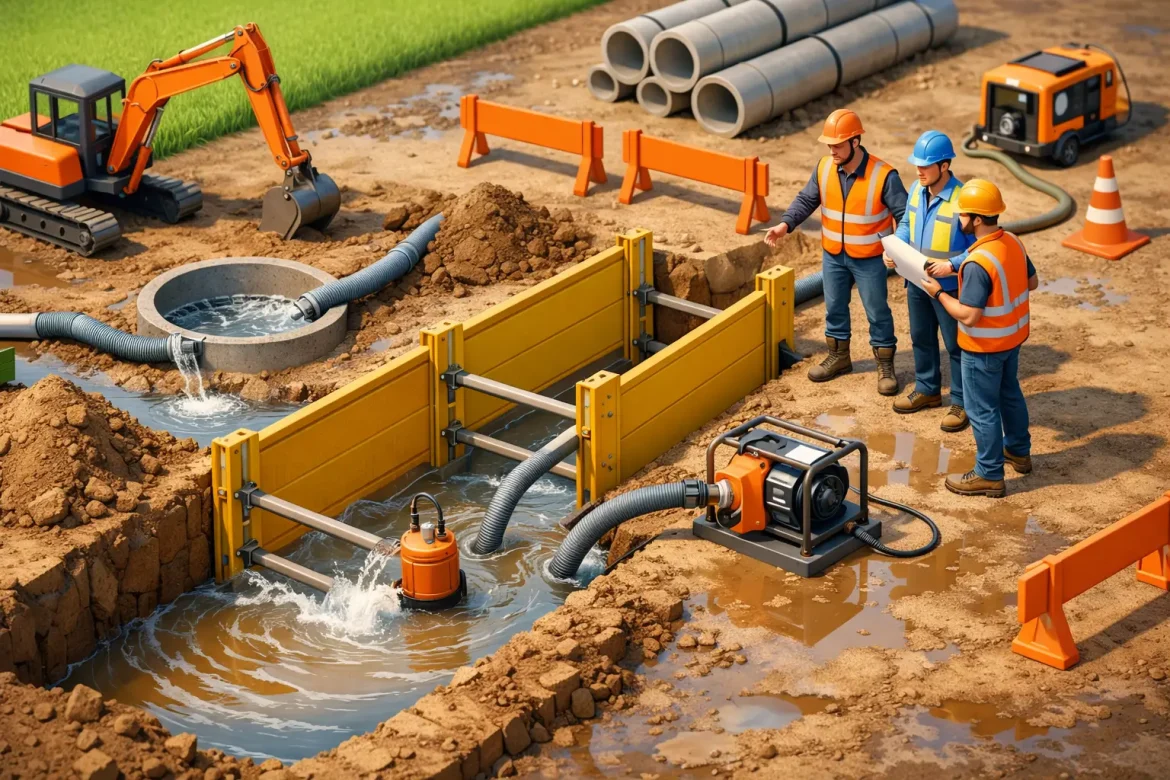
A trench can be dry at pre-start and unsafe by smoko. A rising groundwater level, a burst service or overnight rain can turn a workable excavation into a schedule-critical problem, stopping crews, affecting shoring and creating immediate safety exposure. To prevent trench flooding delays, water control needs to be planned as part of the excavation methodology, not treated as a pump hire requirement once water is already in the trench.
For civil, construction and mining projects, the cost of lost time is rarely limited to pumping. Flooded trenches can delay pipe installation, compromise bedding material, destabilise trench walls, restrict access for plant and trigger environmental controls. The most reliable response starts before excavation, with a dewatering approach matched to ground conditions, trench geometry and the work sequence.
Why trench water becomes a programme issue
Trench flooding has several possible sources, and each calls for a different control. Groundwater may seep through sandy or fractured strata. Surface runoff may enter from an unprotected batter, haul road or adjacent hardstand. Rainfall can collect in low points faster than a small sump pump can remove it. A damaged or unidentified service can also introduce water under pressure.
The practical risk is not simply the volume of water visible in the trench. Water changes the behaviour of the ground. Fine material can migrate with seepage, softening the formation and undermining bedding. Increased pore-water pressure can reduce soil strength around the excavation. In deep or narrow trenches, this can affect the suitability of the support system and prevent people from safely re-entering the work area.
A pump placed in the bottom of a trench may remove standing water, but it will not necessarily lower groundwater pressure outside the excavation. That distinction matters. Where inflows are persistent or the ground is prone to instability, an engineered dewatering system is often required to keep the trench dry and maintain stable conditions during construction.
Plan to prevent trench flooding delays before digging
The best time to identify water risk is during planning, when there is still flexibility in the programme and excavation method. Review available geotechnical information, nearby bore data, service records and the site drainage layout. These sources provide a starting point, but they should be tested against actual site conditions.
Groundwater can vary considerably across one project. A trench that remains dry in dense clay may encounter substantial inflow several metres away where it crosses a sand lens, old drainage line or weathered rock seam. Seasonal conditions also matter. In Western Australia and Queensland, rainfall patterns, tidal influence near coastal sites and local aquifer conditions can alter the required approach.
A site investigation should establish the expected water table, soil profile, permeability and likely recharge sources. It should also consider what sits around the trench: existing structures, pavements, underground services, waterways and contaminated ground can all affect the dewatering design and discharge options.
The excavation sequence is equally important. A short trench installed and backfilled on the same shift may suit sump and open pumping in favourable ground. A long, deep services trench that will remain open for several days may need wellpoints or deep wells installed ahead of excavation. Selecting the method according to the actual construction duration helps avoid paying for an underperforming temporary solution, then paying again to recover the programme.
Select the dewatering method for the ground
There is no single system that suits every trench. The right choice depends on depth, soil permeability, anticipated inflow, available space and the consequences of ground movement.
Sump and open pumping
For shallow excavations in stable, low-permeability material, a properly located sump and pump may be sufficient. The sump should sit below the work area and be protected with suitable filter media where needed to reduce soil loss. It must be sized for realistic inflows, including rainfall, rather than average dry-weather conditions.
This is often the most economical approach, but it has limits. If water continually seeps through the trench base or wall, open pumping can draw fines into the sump and create local instability. It is a water removal method, not always a groundwater control method.
Wellpoint dewatering
Wellpoints are effective for lowering groundwater around shallow to moderate-depth excavations in permeable sands and silts. Installed along one or both sides of the trench, they draw down the water table before and during excavation. This keeps water out of the work zone rather than relying on pumps within it.
System spacing, depth and pump capacity need to reflect the soil profile and target drawdown. A system that is too widely spaced or started too late can leave wet sections along the alignment, creating uneven site conditions and delaying successive work fronts.
Deep well dewatering
For deeper excavations or more demanding groundwater conditions, deep wells may be the more suitable option. They can provide greater drawdown and are often used where the excavation extends beyond the practical operating range of wellpoints. Deep wells require careful design, installation and monitoring, particularly where excessive drawdown could affect nearby assets or ground behaviour.
A capable dewatering contractor will assess the trade-off between system cost and programme protection. The cheapest initial option is not always the lowest-cost decision if it cannot maintain dry, stable trench conditions through the required construction window.
Build water control into daily trench operations
Dewatering performance is maintained through disciplined site management. Pumps, hoses, power supply and discharge lines need inspection before each shift, not only after a failure. A blocked suction strainer, damaged hose or tripped power supply can allow water to build quickly, especially overnight or during rain.
Assign clear responsibility for checking water levels and equipment condition. The crew should know the acceptable operating level, the trigger point for escalation and who has authority to stop work. Water observations should be recorded alongside trench inspections, particularly after rain, changes in excavation depth or installation of new shoring.
Keep surface water away from the excavation. Shape temporary drainage so runoff is directed away from trench edges, maintain diversion drains and avoid locating spoil piles where they channel water back towards the work area. Where practical, keep spoil and heavy plant back from the edge to protect the excavation and preserve access for dewatering equipment.
Temporary works and dewatering must be managed together. Changes to batter angles, shoring configuration, trench boxes or excavation staging can change the inflow pattern and access to sumps or wellpoints. If the excavation method changes, review the water control plan before crews proceed.
Prepare for rainfall and equipment failure
A contingency plan is what separates a manageable weather event from a multi-day recovery effort. Check weather forecasts as part of short-term planning, but do not rely on forecasts alone. Have standby pumping capacity available where the programme is sensitive, along with backup power or a response plan for power loss.
The contingency should cover more than extra pumps. It should identify where water can be safely discharged, how sediment will be managed, who inspects the trench after an event and what conditions must be met before re-entry. Following significant rainfall or inundation, the excavation support and surrounding ground should be assessed by a competent person before work resumes.
For high-consequence work, remote level alarms or regular out-of-hours inspections may be justified. The right level of redundancy depends on the likely inflow and the impact of losing a shift. A critical pipeline tie-in with a narrow possession window warrants a different level of preparation than a short, easily recovered excavation.
Manage discharge without creating another delay
Moving water out of a trench is only half the task. Discharge must be managed to prevent erosion, sediment release, nuisance flows, contamination issues or breaches of project and environmental requirements. Water quality can change during pumping, particularly where fine sediments, hydrocarbons or naturally occurring contaminants are present.
Allow for settlement, filtration or treatment where required, and confirm the approved discharge point before pumping begins. Discharging across an active work area or towards a watercourse may solve the immediate trench problem while creating a compliance issue that stops the job later. Discharge hoses should be secured, protected from plant traffic and checked throughout operation.
Dewatering Solutions applies this site-based approach by considering groundwater control, treatment and discharge as one coordinated scope. That helps project teams maintain production while meeting their safety and environmental obligations.
Treat water control as production protection
Trench flooding is predictable in the sense that every excavation has identifiable water pathways, even when the exact inflow rate is uncertain. Early investigation, suitable system selection, daily monitoring and a credible wet-weather response give the project team control over those pathways.
A dry trench is not the end goal by itself. The goal is a stable, safe excavation that stays available for the work planned in it. When dewatering is designed around that outcome, crews can keep moving with fewer interruptions and far less pressure on the programme.