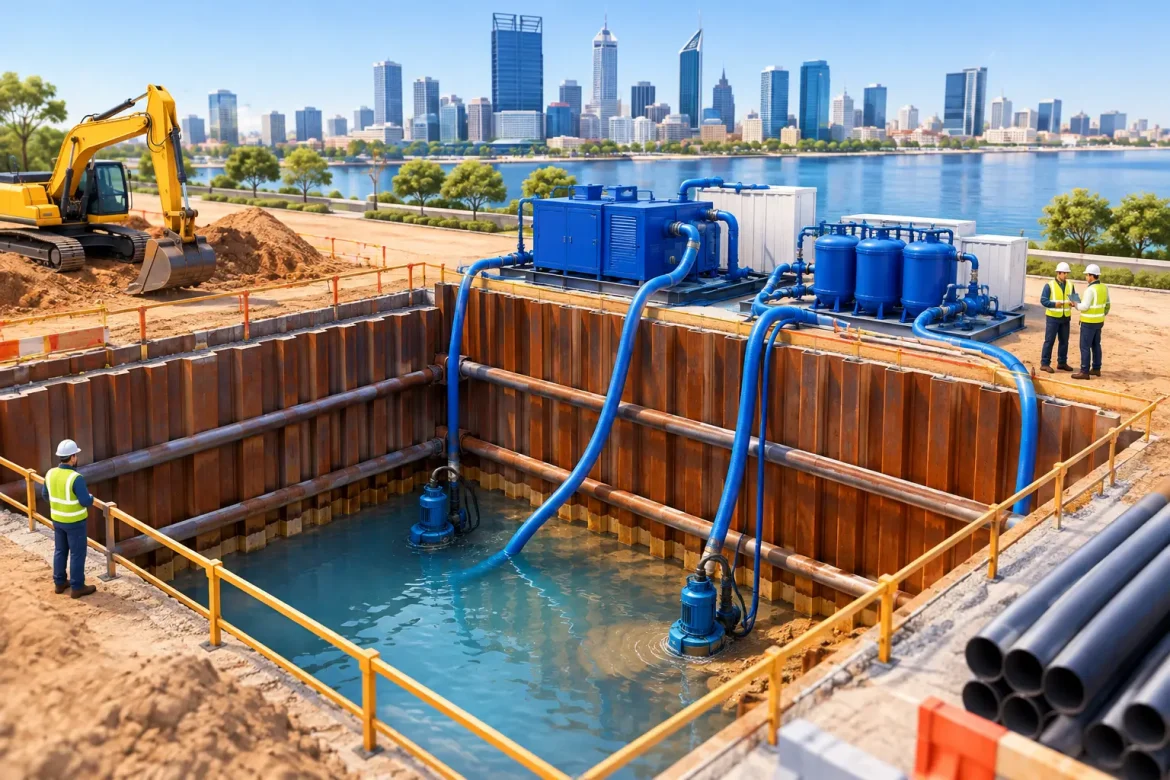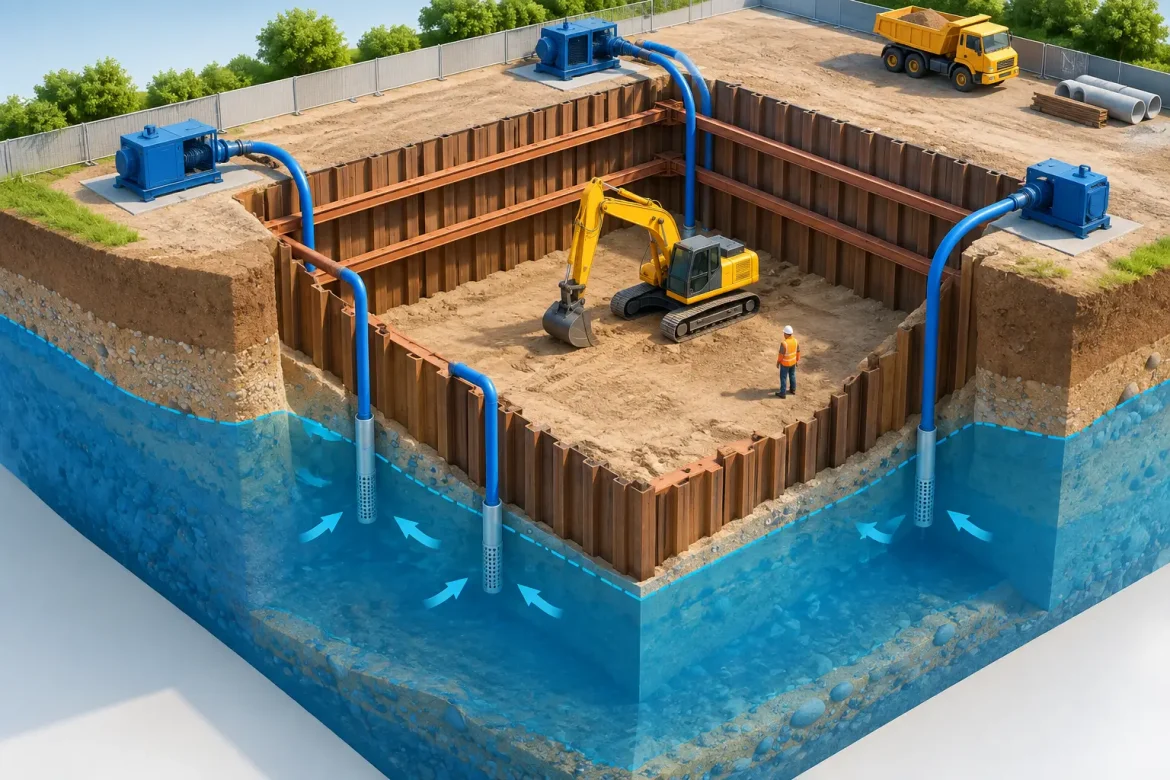

A dewatering system can be moving the required volume of water and still create a compliance issue if the discharge is carrying fine sediment off site. For project teams asking when is turbidity testing required, the practical answer is: whenever an approval, discharge condition, receiving environment or treatment risk makes water clarity a measurable control point. It is not a test to add after a complaint or a visibly dirty discharge. It should be built into the site water management approach before pumping begins.
Turbidity is a measure of how much suspended material scatters light in water. It is commonly reported in nephelometric turbidity units (NTU). On construction, civil and mining sites, elevated readings are often caused by silts, clays, drilling fines, disturbed soils or runoff entering an excavation. High turbidity does not automatically prove contamination, but it can signal that sediment controls or treatment processes are not performing as intended.
When is turbidity testing required for dewatering?
There is no single NTU limit or testing frequency that applies to every Australian project. The requirement comes from the controls governing the particular discharge. For a site in Western Australia or Queensland, that may include the project environmental management plan, development or works approval conditions, a discharge permit, water authority requirements, a client specification, or the conditions attached to releasing water into a drain, waterway or sensitive land area.
Testing is commonly required where water is discharged beyond the project boundary, particularly if it enters a stormwater network, creek, wetland, groundwater recharge area or marine environment. The receiving environment matters. A controlled discharge to a contained, approved location may have a different monitoring regime from water released near a high-value waterway or environmentally sensitive area.
It is also frequently required when the dewatering water passes through a settlement tank, sediment basin, clarifier, filter unit or other treatment train. In this setting, turbidity readings provide evidence that treatment is operating effectively before water leaves the controlled system. If readings trend upward, the site team can intervene before a non-compliant discharge occurs.
A further trigger is changed site conditions. Excavation progressing into finer material, a heavy rainfall event, nearby earthworks, a well redevelopment activity or a sudden increase in pump flow can all increase the sediment load. Even where routine testing is not prescribed daily, these events can justify additional checks under the project’s environmental controls.
The approval and discharge pathway comes first
The most reliable way to determine the required testing is to trace the complete water pathway: where the water is extracted, where it is treated, where it is discharged and what it may affect after discharge. This should be resolved during planning, not after pumps and pipework are already installed.
Start with the relevant approval documents and site management plans. They should identify whether turbidity must be monitored, the applicable trigger values or discharge criteria, the testing method, frequency, reporting requirements and response actions. Where the wording is unclear, the principal contractor or environmental representative should confirm the requirement with the responsible regulator or asset owner before discharge commences.
The distinction between a trigger value and an absolute limit is critical. Some approvals set a numerical limit that must not be exceeded. Others require action when monitoring shows a material change from background conditions. In those cases, baseline samples upstream or outside the influence of the works may be needed to establish a defensible comparison.
Do not assume that visually clear water meets the required standard. Fine clay particles can remain suspended and create a high turbidity reading while the water appears relatively clear in a hose, tank or sample bottle. Conversely, naturally coloured water from organic material may look darker without having a high suspended-sediment load. Field measurement provides a more reliable operational control than appearance alone.
Situations that need closer monitoring
Turbidity testing should be more frequent where the discharge risk is higher or water quality is likely to vary. This is particularly relevant on projects with variable ground conditions, high pumping rates or tight discharge constraints.
Higher-risk situations commonly include:
- discharge to waterways, drains, wetlands or areas with known environmental sensitivity;
- excavations in dispersive clays, silts or highly weathered ground;
- treatment systems relying on settling time, chemical dosing or filtration;
- pumping following significant rain, flooding, well cleaning or changes to excavation activity; and
- projects with a history of sediment complaints, non-conformances or changing discharge conditions.
Frequency should reflect the risk, not simply what is convenient for the crew. A stable, low-risk system may only need testing at the frequency set by its approval. A newly commissioned treatment plant or a system responding to a rainfall event may warrant testing at start-up, at regular intervals during pumping and after adjustments are made. The objective is to detect loss of control early enough to prevent off-site impact.
Turbidity is not the whole water-quality picture
Turbidity is valuable because it gives site teams a quick indication of suspended solids, but it does not identify every possible water-quality concern. Groundwater quality can also be affected by pH, electrical conductivity, hydrocarbons, dissolved metals, salinity, iron, manganese or other parameters relevant to the site history and receiving environment.
This creates an important trade-off. A site that only tests turbidity may be able to demonstrate that sediment treatment is working, while overlooking another parameter that limits discharge. On the other hand, over-testing for a broad suite of laboratory parameters where there is no credible risk can add cost and delay without improving environmental performance.
A fit-for-purpose monitoring plan uses available site investigation data, land-use history, approval conditions and discharge destination to select the right parameters. Turbidity is often a frontline field check. It should sit alongside, rather than replace, the broader water-quality controls required for the project.
How to obtain useful and defensible readings
Reliable turbidity data begins with a clear sampling procedure. The testing point should represent the water actually being discharged, normally after treatment and before it enters the receiving environment. Sampling upstream of a filter or settlement process may be useful for assessing treatment performance, but it does not prove final discharge quality.
Field meters need to be calibrated and maintained in accordance with the manufacturer’s instructions. A reading taken with an uncalibrated meter is difficult to defend and can lead to poor operational decisions. Record the date, time, location, weather conditions, discharge flow or pump status, result, meter identification and the person who took the sample. Where samples are sent to a laboratory, maintain the required chain-of-custody documentation.
Consistency matters as much as the instrument. Take samples from a representative flow, rather than from stagnant water in a sump corner or sediment that has settled in a hose. If discharge quality varies through the day, a single early-morning sample may not reflect the actual risk. Site teams should understand what a rising trend means and who has authority to stop, divert or recirculate discharge.
What to do when turbidity is above the criterion
An elevated turbidity result should trigger a controlled response, not a rushed attempt to dilute the reading. First, verify the measurement by checking the meter, sampling point and procedure. If the result is confirmed, isolate or hold the discharge where the system allows, then identify the likely source of sediment.
The cause may be insufficient retention time, excessive pump flow, disturbed material entering the sump, damaged filter media, overloaded settlement tanks or poor chemical dosing. Corrective actions can include reducing flow, adding settlement capacity, cleaning sumps, repairing containment, changing filter media or redirecting water for further treatment. The selected action should address the cause rather than mask the symptom.
Document the event, response and follow-up results. This protects the project team if questions arise later and helps improve the system for the next stage of works. Repeated high readings are usually a sign that the treatment design or operating method needs review, not simply more frequent sampling.
For complex dewatering scopes, turbidity testing works best as part of disciplined water control: a system designed for the ground conditions, monitored against clear criteria and adjusted before sediment becomes a programme, safety or environmental problem. That approach keeps the focus where it belongs – on protecting the site, the receiving environment and the delivery of the works.